
Early Ball-Tracking Skills for Toddlers
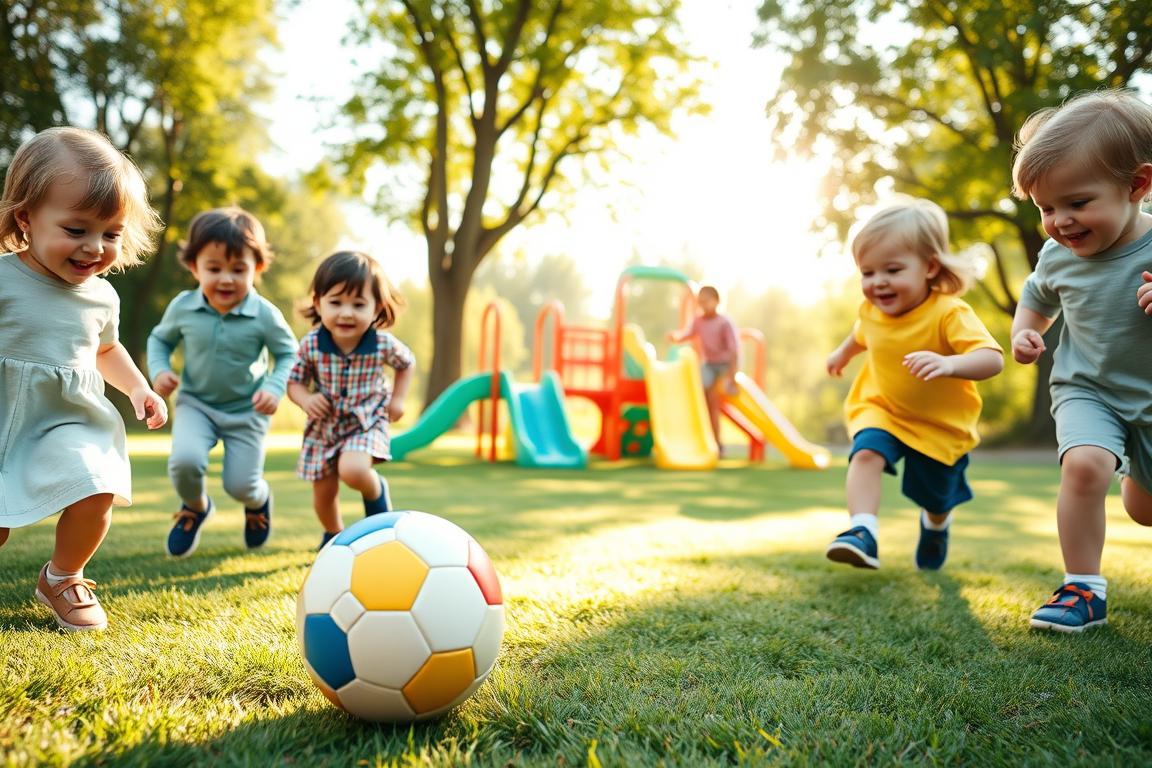
I guide you through simple play that builds early ball-tracking skills for toddlers with warmth and clear steps you can try today. I want you to feel confident using a single large, light ball to help your child watch, reach, and move with joy.
A plain ball can spark big gains in hand-eye coordination and motor skills without pressure. Start with a soft ball about eight inches wide, offer bright colors, and make space on the floor so play stays safe and easy.
My tips keep sessions short and fun. You will learn what tracking looks like by age, how to run quick activities, and what simple tools to use. Small wins matter — they boost confidence and invite kids into group games later.
Key Takeaways
- Use one large, soft ball to practice watching and reaching.
- Short, playful activities build hand-eye coordination and motor skills.
- Keep sessions low-pressure and celebrate small wins.
- Progress varies by child; focus on movement, not exact age targets.
- Simple tools and clear cues make play easy for busy families.
What ball-tracking is and why it matters
Watching and moving with a ball is a simple, powerful way children learn to link sight and motion. I define ball-tracking as watching a moving object with the eyes and moving the body and hands to meet it.
Why this matters: Ball-tracking builds hand-eye coordination, balance, and timing. These benefits help daily play and set a base for later sports. Large, light balls give more time to react and make practice less stressful.
Clear definition and key benefits
- Your child watches a moving ball, lines up their body, and uses hands to meet or guide it.
- This supports motor skills and smooth movement in simple, repeatable steps.
- Short activities that focus on eyes and hands speed learning and boost confidence.
What to expect by age
Babies begin by tracking slow objects like bubbles, balloons, or scarves. Toddlers often roll and push a large ball and may hug a big ball to catch around age two.
Preschool children start to reach with both hands and may catch a small ball around ages four to five. Full catching often comes between six and nine, as coordination and timing improve.
I find that keeping play short, joyful, and repeated across the week leads to steady development. Try simple cues and gentle practice to help children develop this core motor skill.
Learn simple footwork and movement ideas in my linked guide to help transfer these basic abilities into active play: soccer footwork tips for young players.
How to teach early ball-tracking skills for toddlers at home
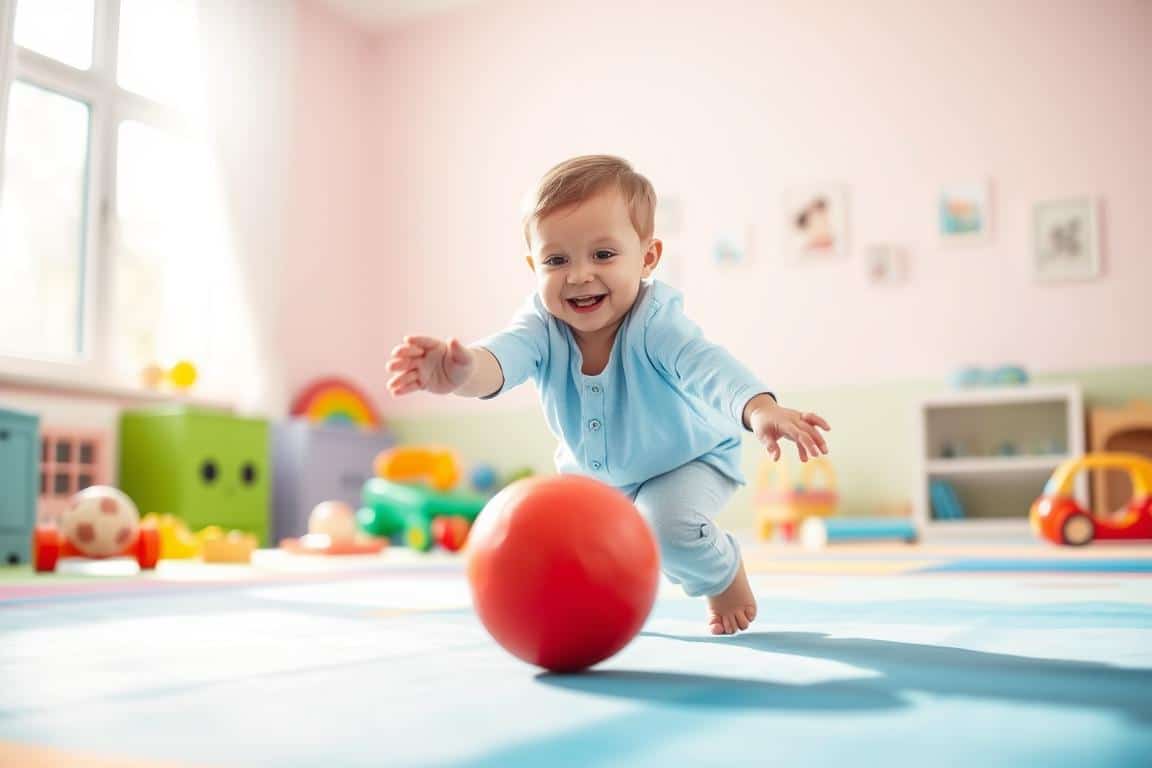
Sit across from your child, spread your legs to make a lane, and roll a large, light ball slowly so eyes and hands meet.
Start seated rolling play: Roll gently back and forth. Praise each reach. Increase distance as control improves.
Switch to a beach ball: Tap it up and back with hands. The slow float gives extra time to watch and touch. Use soft taps and cheer effort.
- Body-part strikes: Try hands, knees, elbows, and gentle kicks. Change angle and height so the body learns to move.
- Targets: Turn a box or bucket on its side, or roll between two cones. Aim practice builds focus and rolling accuracy.
- Visual tracking aids: Add balloons, bubbles, or scarves. They drift slowly and make following an object fun.
- Short coaching cues: Say “Eyes on the ball,” “Soft fingers,” or “Move hands to the ball.” Use playful names like “Butterfly hands.”
- Keep sessions short: Do a few simple activities, stop before fatigue, and celebrate small wins to encourage repeat play.
| Activity | What to use | Goal | Quick cue |
|---|---|---|---|
| Seated roll | Large, light ball | Eye-hand sync | “Roll to me” |
| Beach ball taps | Beach ball | Touch control | “Soft fingers” |
| Target roll | Box or cones | Aim and focus | “Roll through” |
| Float tracking | Balloons/bubbles | Visual tracking | “Eyes on it” |
Safety, setup, and steady progression for your child
A calm setup and the right ball make steady progress much easier and more fun for your child. Start by clearing a small area with no sharp edges and soft flooring if possible. Keep siblings at a distance so your child can focus.
Pick the right ball size and space
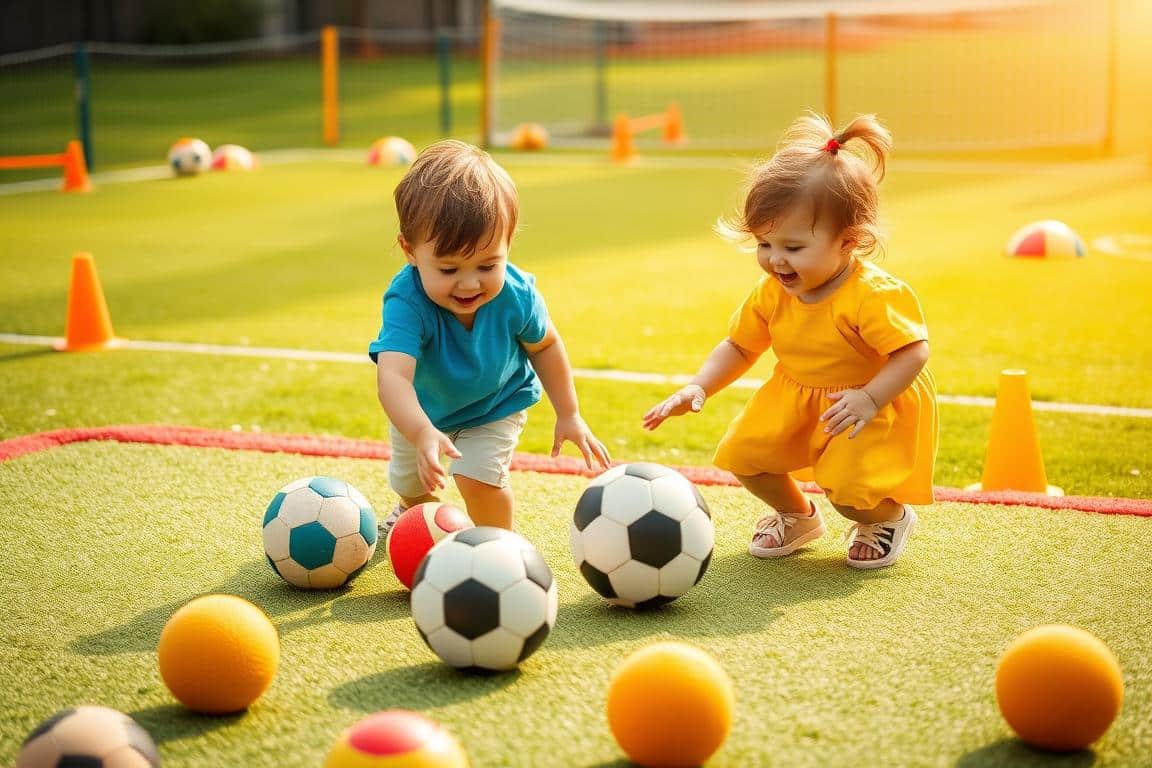
Begin with a ball about eight inches wide and light in weight. Use beach balls to slow flight and give more time to watch and reach. Offer a few colors and sizes so children develop flexible tracking across objects.
Progress checks: distance, speed, color variety, and confidence
Watch simple signs of growth: rolls that go farther, quicker taps, aiming into a box, or switching colors without losing focus. Small wins mean the child is gaining hand-eye coordination and motor development. Increase distance or add a gentle ramp as confidence grows.
Common errors and quick fixes to build success
- Trapping on the chest — model hands out and say “Move hands to the ball.”
- Looking away or closing eyes — cue “Eyes on the ball.”
- Rigid arms — show bent elbows and say “Soft fingers” or “Butterfly hands.”
| Challenge | What to use | Quick cue | Goal |
|---|---|---|---|
| Slow roll | Large, light ball | “Roll to me” | Eye-hand sync |
| Float taps | Beach ball | “Soft fingers” | Touch control |
| Target aim | Box or cone | “Roll through” | Aim and focus |
Keep sessions brief and regular. Praise effort and form, not just catches. Little, steady practice will help develop lasting motor and tracking ability in your child.
Conclusion
You can start right now with one light ball and a tiny, safe space to play together. Pick one or two short activities that feel fun. Roll, tap a beach ball, or aim at a simple target.
Keep cues in your pocket — “Eyes on the ball,” “Soft fingers,” and “Move hands to the ball.” Use them gently and praise effort. Repeat short sessions across the week so time works for your routine.
Rotate balls and add a scarf or a balloon for variety. Celebrate small wins like steadier eye contact, smoother hand shape, or a clean roll into a box. These moments show real motor development and build confidence.
As your child grows, mix in simple games and light passes. Enjoy the shared play — it makes learning steady, social, and fun for both of you!