
How to Help Toddlers Love Soccer – Fun Tips for Parents

I remember the first time my child chased a ball and grinned ear to ear; that simple joy started a long, happy run with soccer. I’ll show small, friendly steps you can use at home that keep play short, fun, and free of pressure.
Play together for a few minutes after school. Short sessions build motor skills, social habits, and better sleep without turning play into practice. Let your child lead and celebrate tiny goals like tapping the ball with both feet.
More than three million U.S. parents pick this game for kids ages 4–6 because it boosts movement and teamwork. Trust the coach, keep sideline chats calm, and ask feel-good questions after a match. For quick ideas and at-home drills, visit simple beginner activities.
Key Takeaways
- Keep practice short and playful to match your child’s age and energy.
- Use warm praise and tiny, clear goals to build confidence.
- Play at home often; it makes the game feel safe and fun.
- Trust coaches and keep sideline pressure low.
- Small-sided play gives more touches and faster learning.
Start with Play: Make soccer simple, short, and fun at home
You can spark interest in the game with just a few lively minutes in the yard. Keep things light. Follow your child’s lead and celebrate small wins.
Turn free play into soccer time
Kick a ball around. Play chase or roll the ball and let them catch. These games build basic skills without formal training.

Keep sessions short
Stop before your child gets tired. Aim for 3–5 minutes per session. Short sessions leave kids wanting more.
Focus on smiles, not scores
Remove pressure. Let mistakes happen. Praise effort and curiosity.
- Start at home with simple games like roll-back or gentle tag.
- Use small spaces so movement stays safe and fun.
- Let your child pick the game. Choice keeps engagement high.
- Avoid side-coaching; ask one quick question after play.
| Session Length | Main Focus | Quick Activity |
|---|---|---|
| 1–3 minutes | Warm-up, smiles | Ball roll and chase |
| 3–5 minutes | Skill touch | Tap with inside of each foot |
| 5–8 minutes | Game feel | 1v1 to small goal, switch roles |
How to help toddlers love soccer with positive habits
D A few kind words after the game turn effort into lasting joy for your child.
Start with warm praise. Say things like, “I loved how you kept trying,” or “I saw you smile when you kicked the ball.” Keep praise specific and short.
Use warm praise and ask feel-good questions after games
Ask two simple questions. Try, “What was your favorite moment?” and “When did you feel proud?” Let your child answer first. Do not compare them with other players. Skip talk about wins or losses.
Set tiny goals and celebrate effort
Pick one tiny goal each week. A good example is “tap the ball with both feet.” Celebrate progress, not perfection. Remind your player it is okay if they miss the goal.
- Keep training light: 5–10 minutes of playful practice beats long sessions.
- One thing per week: Let the child choose the next small skill.
- Sidelines: Cheer calmly and trust the coach during the game.
- Talk with the coach: Align on the program and learn one simple focus for next time.
| Focus | Quick guideline | Time |
|---|---|---|
| Warm praise | Be specific and short | 1–2 minutes |
| Tiny goals | One clear, child-led goal | Weekly |
If your child feels stressed, pause. Give a drink and change the game. Joy comes before the love game.
For more on calm sideline tips and being a supportive parent, see great soccer parent.
Build skill through playful formats, simple gear, and a supportive team culture
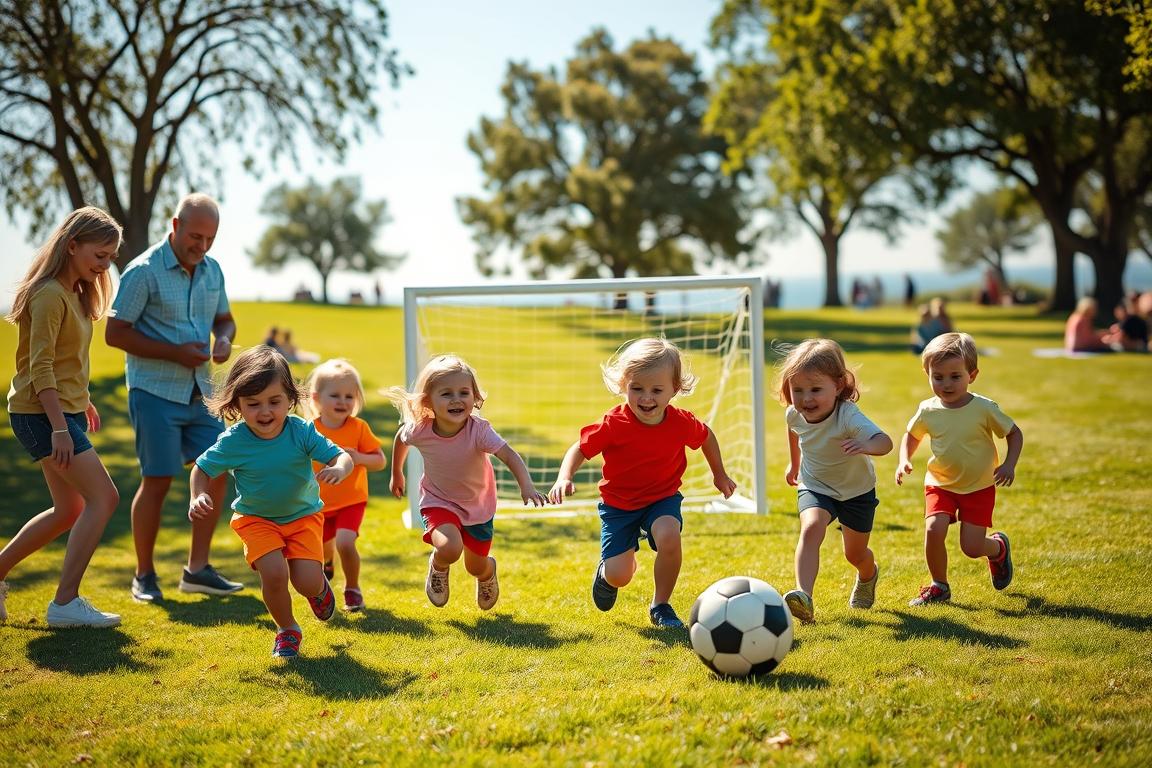
Small-sided play and simple gear speed learning while keeping play joyful. Short formats give each player more touches and faster decisions. That means more practice in less time and less pressure for little ones.
Try small-sided and futsal-style games
Choose 2v2 or 3v3 to increase contact with the ball. Use an indoor court or a tight field. Mistakes happen fast and teach fast.
Teach friendly principles of play
Use kid words: “spread out” for width, “look up” for scans, and “help a friend” for support. On defense say, “slow them down” and “back your buddy up.”
Watch clips, track simple metrics, and build the club community
Watch short clips and ask: what went well, what to try next, and one thing a teammate did well. Track scans before receiving, effort plays, and happy minutes.
- Bring pop-up goals, cones, a ladder, and a clipboard.
- Keep sessions short and playful; set one fun goal like “find two passes forward.”
- Model calm sidelines, trust the coach, and connect with the soccer team and club program.
Conclusion
A few minutes of joyful play today can shape a confident player tomorrow. Keep training light and let your child lead. Short sessions build skills and keep the game fun.
Next steps: Start simple at home. Ask one feel-good question after each session. Pick one tiny skill for the week and repeat it in short minutes of play.
Use small-sided games, trust the coach, and connect with your club community. Pack a small bag: ball, cones, pop-up goal. Your steady, warm support grows confidence and makes the love game part of family time.