
Core Stability Exercises for Young Players
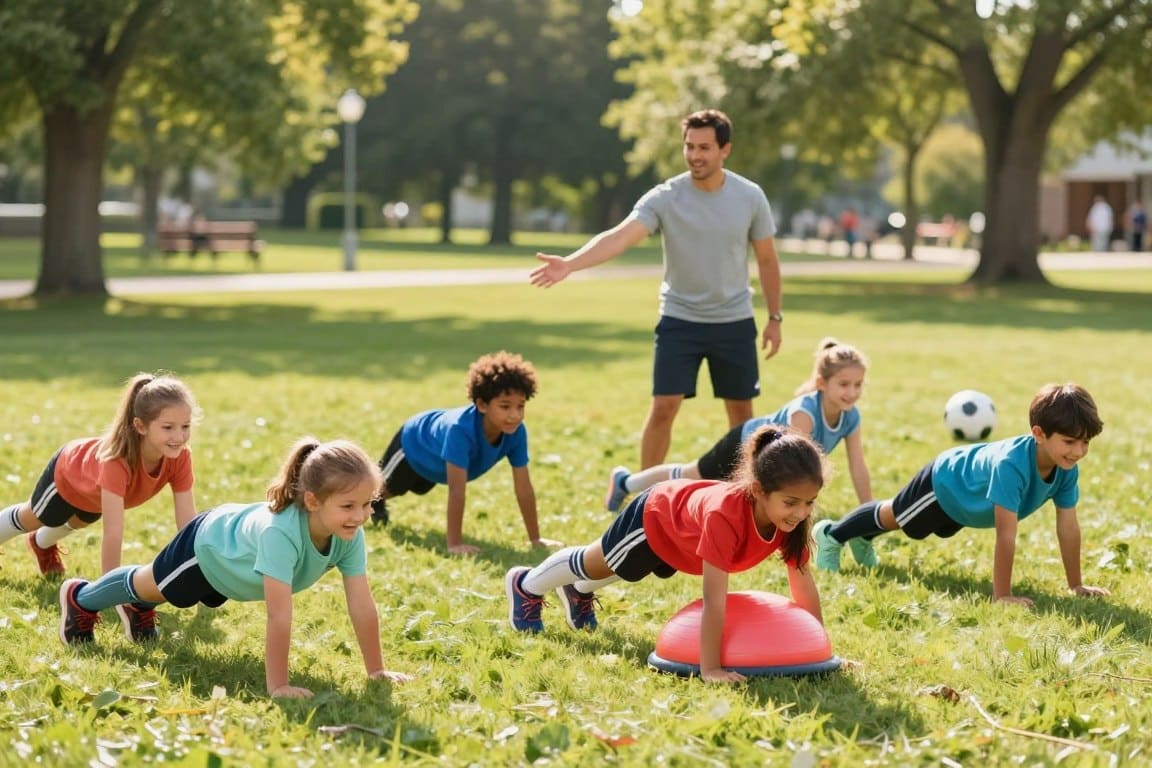
I keep things simple and fun so you can help your child improve balance, strength, and movement quickly. core stability exercises for young players is an easy starting point that helps the body transfer power between the legs and the upper half during sprints and kicks.
Why this matters: a steady midsection lets kids produce force, control direction, and stay upright in fast play. I use short steps and playful drills so kids stay engaged and parents feel confident coaching at home.
You’ll get clear rules to keep kids safe, a realistic weekly plan tied to practice, and a long list of floor drills with no gear. I show simple progressions so control comes first, then challenge. Start small, have fun, and watch their performance grow.
Key Takeaways
- Simple, play-based routines build lasting strength and movement.
- Short sessions before or after practice fit busy schedules.
- Floor drills require no equipment and are safe for kids.
- Progressions let you add challenge as control improves.
- I keep coaching cues short and easy to follow at home or the field.
What core stability means for youth soccer players
A strong midsection helps kids run, turn, and kick with more confidence. I keep language simple so parents and kids can use the ideas right away.
Core muscles that support the spine, pelvis, and hips
FIFA defines this area as the muscles around the trunk and hips that steady the spine and pelvis. These muscles hold the body upright and link leg work to arm motion.
How control helps balance, power, and change of direction
Good control keeps a child steady when they run, stop, and cut. Strong mid muscles let a player push more power into a kick and sprint. A steady trunk lets the legs move fast during sharp direction shifts.
Common signs of poor trunk control during movement
- Wobbling when they stand on one leg.
- Tipping forward or back during a run.
- Twisting at the waist while kicking or turning.
Quick coach check:
During warm-up ask: “Can you balance on one foot for three seconds and stay still?” If they wobble, add short holds to warm them up.
| Muscle group | Role | Simple cue |
|---|---|---|
| Abdominals | Hold front of trunk, aid breathing | Zip belly to spine |
| Back extensors | Keep spine tall during play | Long neck, chest up |
| Hip muscles | Drive legs and steady pelvis | Squeeze glutes on push |
Safety and form rules before you start
Before you start, let’s agree on a few simple safety and form rules. Keep language short. Use cues kids can hear and follow.
Keep a straight line from head to feet
Main goal: keep a straight line from head to feet in every plank position. Think of a board from head to toes.
Stop low-back sag and rib flare during planks
Squeeze the core and glutes to stop low-back sag. Tell kids to “keep ribs down” so the front of the body stays steady.
Choose short holds with good tension instead of long holds
Short holds with high effort build better strength than long contests. If form is clean, lower the time and raise the effort.
Use pain as a stop sign, not a challenge
Stop rule: pain means stop, rest, and check form or ask a pro. No one keeps going through pain.
- Quick 10-second fixes: reset knees, reset hands, reset breathing.
- Check head, back, and feet alignment before each hold.
How to fit core work into a youth soccer week
Here’s an easy weekly plan that adds brief trunk training without stealing practice time. I keep it short and clear so you and your child can be consistent.
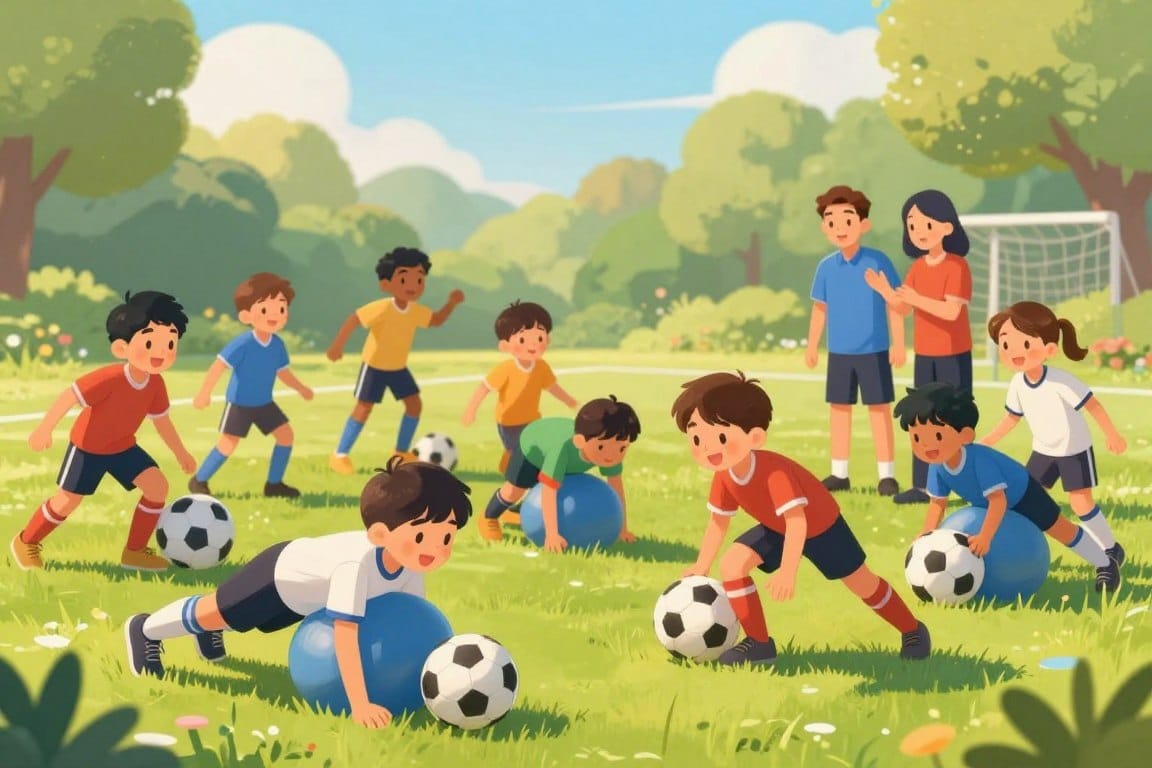
Pre-training activation (10–15 minutes)
What it is: a quick wake-up for the midsection before practice. Use 1 set of 4–6 drills. Pick moves that use 6 reps or 10–15 second holds.
Post-training development (up to 30 minutes)
Do this once a week. Aim for 2 sets of 6 drills. Targets are 8–12 reps or 15–30 second holds. Stop early if form drops.
Simple set, rep, and time targets
Choose 4–6 drills from the lists later in this article. Follow the numbers below so coaches and parents can run it fast.
| Session | Frequency | Duration | Sets | Reps / Hold |
|---|---|---|---|---|
| Pre-training (low) | 1 per week | 10 min | 1 | 4–6 drills, 6 reps or 10–15s |
| Pre-training (max) | 2 per week | 15 min | 1 | 4–6 drills, 6 reps or 10–15s |
| Post-training | 1 per week | Up to 30 min | 2 | 6 drills, 8–12 reps or 15–30s |
| Coach tips | Weekly | — | Use small groups | Stop 10–15s before form breaks |
Quick picks: use the shorter pre session to “wake” the trunk. Use the longer post session to build strength. Keep it fun and simple—small steps win.
Core stability exercises for young players that build a strong base
Start with simple moves that teach control and make practice feel like play. I teach the basic positions first so kids learn to move well before adding speed or load.
Prone isometric hold on the floor (plank)
Setup: forearms on the floor, body in one straight line, squeeze glutes. Hold short and tight.
Coaching cue: “Zip belly, long neck.” Aim for 10–15 seconds and good breathing.
Side plank for hip and trunk support
Setup: stack legs, hips forward, body straight from head to feet. Use elbow under shoulder.
Coaching cue: “Make a straight star.” Hold clean and short—no sagging or twisting.
Balancing dog (bird dog) for arm and leg control
Setup: hands under shoulders, knees under hips. Lift opposite arm and leg slowly.
Coaching cue: “Reach and freeze like a statue.” Keep the trunk steady—no tipping.
Glute-hamstring lifts to support hips and back
Setup: lie on your back, feet flat, lift hips strong into a bridge. Pause at the top.
Coaching cue: “Squeeze glutes, slow down.” Short holds build hip power and back support.
- Teach the base moves first—control before challenge.
- Good control looks like no tipping, no twisting, and steady breathing.
- Kid goal: “freeze like a statue” for 10–15 seconds with calm breaths.
| Move | Key setup | Short cue |
|---|---|---|
| Plank | Forearms, straight line | Zip belly |
| Side plank | Legs together, hips forward | Make a star |
| Bird dog | Hands under shoulders, lift opposite limbs | Reach & freeze |
Tip: If you want longer plans to pair with these moves, see my simple endurance plans at endurance plans.
Fun prone drills that teach full-body tension
On your belly is where we play. These moves teach a steady line from the head down through the trunk.
Sea Lion head lift
Lie on your belly and lift the head 4–5 inches. Keep the head level with the spine. Hold brief and breathe.
Nosey Sea Lion forearm push-up
Push up to your forearms and hold 3–5 seconds. This adds gentle shoulder work and helps build safe strength.
Seal push-ups
Push to straight arms, hold a slow five count, then lower with control. Move slow—no rushing.
Superman hold
Lift chest, arms, and legs a little. Start at 5 seconds. Build to 20 seconds as form stays clean. This hits back muscles and glutes.
Football roll
Roll a ball away and back using both arms. Then try single-hand rolls. This drills arm and trunk control without speed.
Volume idea:
- Start with 4–6 reps or short holds. Add reps or a few seconds as form stays clean.
| Move | Short cue | Reps / Time |
|---|---|---|
| Sea Lion | Head level to back | 4–6 lifts |
| Nosey Sea Lion | Forearms, hold tight | 3–5s holds |
| Seal push-up | Straight arms, slow down | 5 count hold x 4 |
| Football roll | Roll away and back | 6–8 reps with ball |
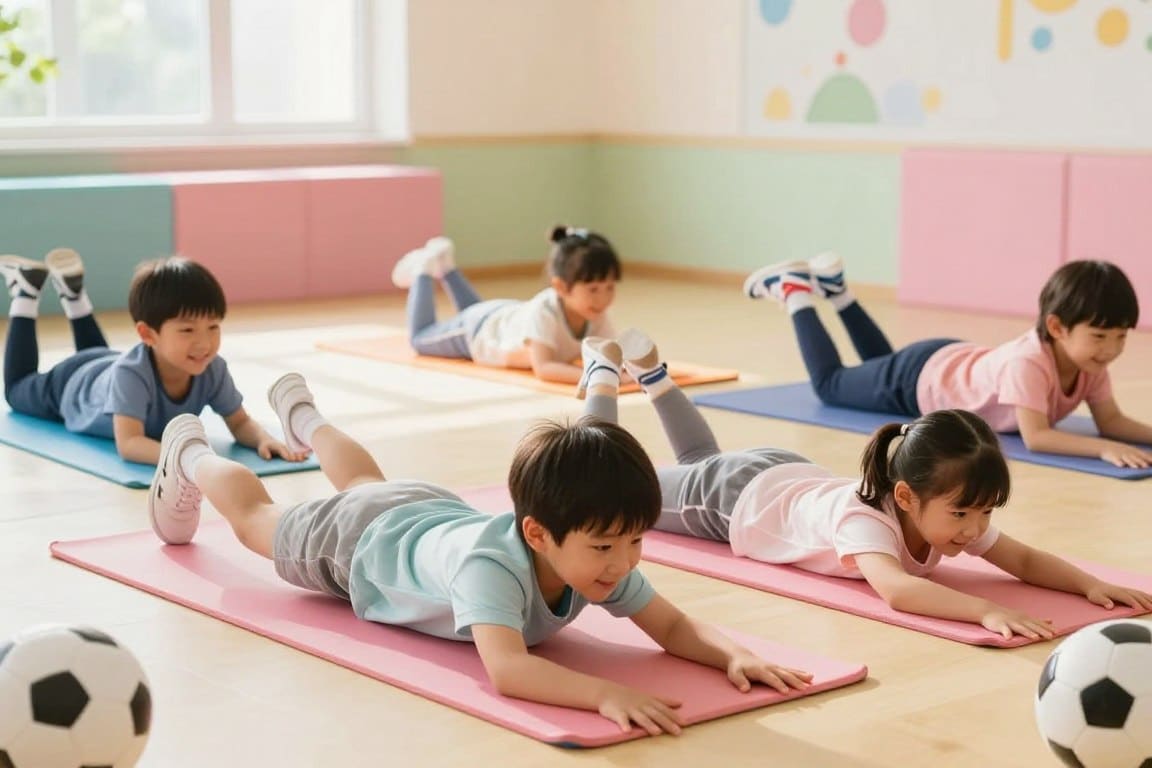
Supine drills for front-of-body strength and control
Supine means on your back — an easy way to train the front of the body with clear steps and safe progressions. These moves teach small head lifts, full-body curl, gentle partner pressure, ball timing, and hip-knee control.
Chin raises — neck and upper trunk control
Lie on your back with knees bent. Lift the head just an inch — a small, controlled nod. Count 3 to start and build to 5 clean reps.
Safety: keep the chin tucked. No big crunches — tiny lifts only.
The Egg hold — total-body flexion
Have the child curl into a tight egg shape: knees to chest, arms around shins. Start at 5 seconds and work up to 20 seconds with calm breathing.
Tip: make it fun — call it a snuggly egg to keep kids engaged.
Breaking the Egg — gentle partner press
With the child in the Egg, a partner places light pressure on the knees for 2–3 seconds. Pressure is gentle — the goal is steady control, not a shove.
Coach note: switch roles and count presses to track progress.
Back catch with a ball — head and trunk timing
Child lifts head slightly and you toss a soft ball to catch over the chest. Lift, catch, relax. Count catches or set a short time to keep it playful.
Static cycling — hips, knees, and steady breathing
Lie on the back and pedal legs with hips and knees at 90 degrees. Keep the trunk steady and breathe steady. Track cycles or time (20–40 seconds) to measure progress.
| Drill | Start targets | Safety cue |
|---|---|---|
| Chin raises | 3 reps → 5 reps | Chin tucked, small lift |
| Egg hold | 5s → 20s | Relaxed breathing, knees hugged |
| Back catch | Count catches or 30s | Soft toss, lift head slightly |
| Static cycling | 20–40s or count cycles | Hips/knees ~90°, steady trunk |
Quick tracking ideas: count lifts, count catches, or time holds. Keep notes simple — small wins build steady control and confidence.
Weight-bearing and animal walks for hips, shoulders, and core
Animal walks add playful challenge while training feet, hands, and legs to work together. These are “hands on the ground” drills that build strong hips and shoulders. Keep cues simple and make each move a mini game.
Crab walk — shoulder and hip support
Setup: hands flat, feet flat, lift hips. Walk forward, back, or sideways.
Coaching cue: “Hips up, hands steady.” Short sets keep form sharp.
Crab football — feet control and quick direction change
Use small goalposts and kick the ball while crab-walking. Score to one side, then switch.
Game idea: 30-second rounds. Kids practice feet control and fast direction changes.
Frog move — legs, hip placement, and hands on the floor
Rule: keep the legs outside the arms as you hop forward. Stay low and soft.
Make it a race over short distances to keep it fun and fast.
Wheelbarrow walks — arm strength and trunk support
Partner holds near the helper’s hips first, then move toward the knees as the child gets stronger. Short distances and slow steps win.
Wall and table push progressions
Start with wall push-ups (aim for 10 reps). Move to table push-ups with a light rock, then elbow-bend push-ups. Keep a straight back and steady hips.
Half-kneeling ball toss — split stance control
Half-kneel and toss a soft ball 10 times, then switch legs. This trains a steady hip position and better balance during movement.
- Quick wins: make each drill a 30–60s game.
- Swap roles so kids play helper and mover.
- Count reps or points to track progress — small steps add up.
| Drill | Main focus | Start target |
|---|---|---|
| Crab walk | Shoulders & hips | 20–30s rounds |
| Crab football | Feet control & direction | 3 short rounds |
| Wheelbarrow | Arms & trunk | 10–15m with helper |
Progressions when the basics feel easy
Once a move looks steady, a gentle upgrade helps turn control into strength. Progress only when the basic drill looks clean—no tipping, no wobble, and calm breathing. Use shorter time and higher effort: do 2–3 sets of 15–30 seconds when work gets harder.
Plank with alternating arm reach
Main goal: reach with one arm without letting the trunk rotate. Keep hips level and eyes down.
Start with small reaches. Pause, breathe, and return. Only add reach when the base hold is steady.
Alternating superman reaches
Lift opposite arm and leg slowly. Add a 1–3 second pause at the top to build control.
Cue: “Reach, freeze, lower.” If the back tips, reduce range or reps.
Side position with leg work
Move legs slightly apart in the side plank. Then add small leg lifts to raise load on the hips and side body.
Short holds and tight form beat long shaky time. Keep breaths steady.
Seated alternating leg raises
Sit tall and lift one leg at a time. Reduce arm support as the child holds posture longer.
Keep the chest up and hands light on the ground. Progress only when posture stays tall.
Copenhagen plank (optional)
This targets the inner hips and pelvic control with a horizontal line. Use it only with older kids who hold clean positions.
Start short. Use 2 sets of 15–20 seconds and watch for hip drops.
Simple progress rule: move up only when the basic drill looks steady. Shorter time, higher effort, and clean form win every time.
| Progression | Goal | Start target |
|---|---|---|
| Plank arm reach | No trunk rotation | 2–3 sets x 10–15s |
| Alternating superman | Controlled pause (1–3s) | 2 sets x 6–8 reps |
| Side leg lifts | Higher load on hips | 2 sets x 10 lifts |
Conclusion
Finish small and steady—short sessions done well beat long messy ones.
Good trunk work gives kids better control, balance, and cleaner movement. Pick a small number of drills and repeat them each week. Keep the number low and the practice fun.
Start this week with one short pre-training block (10–15 minutes) and one post-training block (up to 30 minutes). Aim for 1 set on warm-up days and 2 sets on development days. Use short time targets and simple reps.
Focus on clean form and calm breathing rather than big numbers. This training links to steadier feet, smoother changes of direction, and better speed and performance on the field.
Keep it simple, keep it fun—and stop if pain shows up.