
Best Warm-Up Exercises Before Kids Soccer Practice
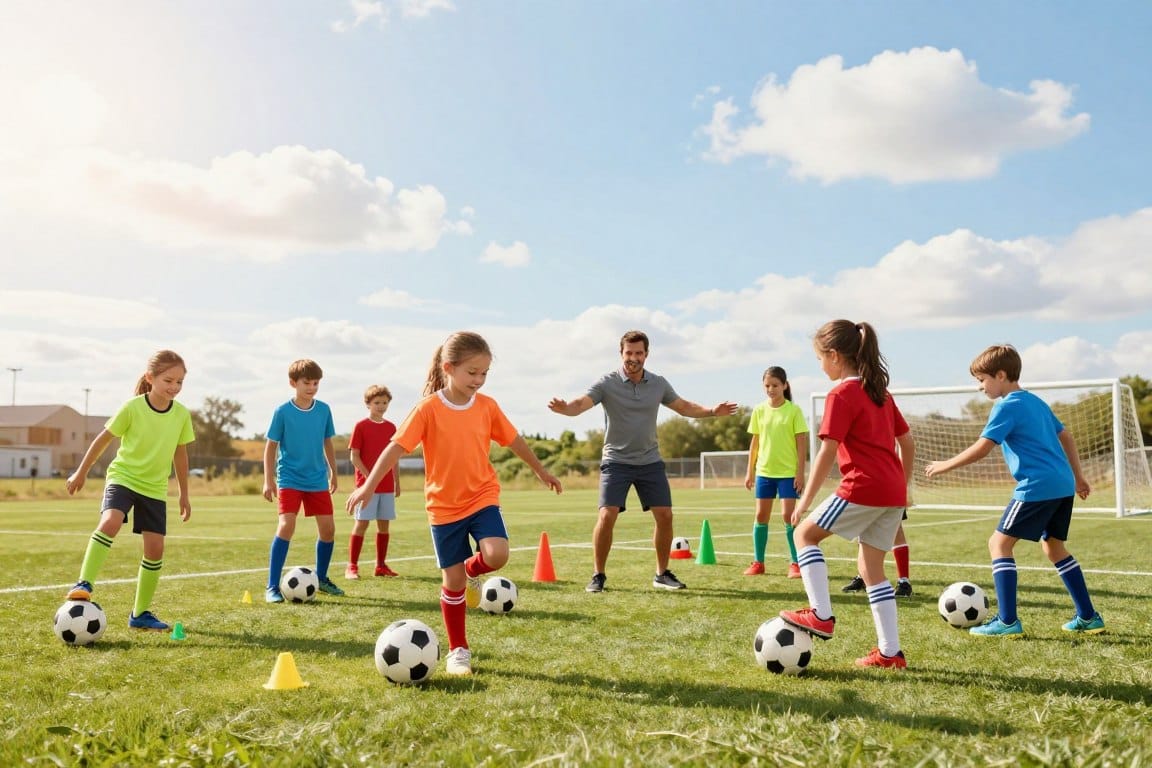
I believe a short, simple routine makes practice start calm and joyful. This guide shows you a repeatable plan that helps young players move well, feel ready, and cut the risk of injury.
What you get: a clear, 15–20 minute flow you can run with ages 3–12. I explain how to keep it active, avoid long static holds, and build heart rate and range of motion the right way.
Use just cones and a ball. Optional tools like a ladder or hoops add variety and fun. I keep the steps simple so you and your group repeat them every practice and kids know what to do.
Key Takeaways
- Plan about 15–20 minutes for the routine to boost performance and safety.
- Focus on active movement that raises heart rate and uses full range of motion.
- Keep it simple and fun so players stay engaged without pressure.
- Gear needs are minimal: cones and a ball; ladders or hoops are optional.
- Repeat the routine each practice so children learn the flow and feel confident.
What a good youth soccer warm-up does for the body
Start with slow moves that wake up the body and breath. I keep the language simple so parents can say it on the field.
Raise heart rate and breathing rate
A steady build raises the heart and breathing rate. This step gets oxygen flowing to the muscles. It prevents a sudden jump into hard running.
Lubricate joints and improve range of motion
Active motion helps “lubricate” the joints. That makes turns and first sprints feel smoother. Better joint motion means fewer stiff steps on the first run.
Prepare muscles, tendons, and ligaments
Warm muscles and elastic tendons handle cutting, kicking, and jumping better than cold tissue. I tell parents: start easy, add effort, then add speed last.
- Simple rule: start easy, build effort, add speed at the end.
- Kids have natural flexibility; they need moving stretches more than long holds.
- Good body prep helps athletes move with control and fewer aches.
Want more on flexibility? See flexibility exercises for kids to link warm movement to practical drills.
Static stretching vs dynamic stretching before soccer
I use movement that matches the game so the body learns useful motion.
Why long-held stretches can lower performance
Static stretching means holding a pose for 30 seconds or more — like touching toes and staying there, the gym-class classic.
Holding long stretches right before practice can blunt power and speed. That drop in performance shows up when players sprint or change direction. Research shared by Tom Condone at US Youth Soccer notes static stretching before a session can reduce athletic output and does not reliably prevent injury.
Why movement-based stretches fit game actions
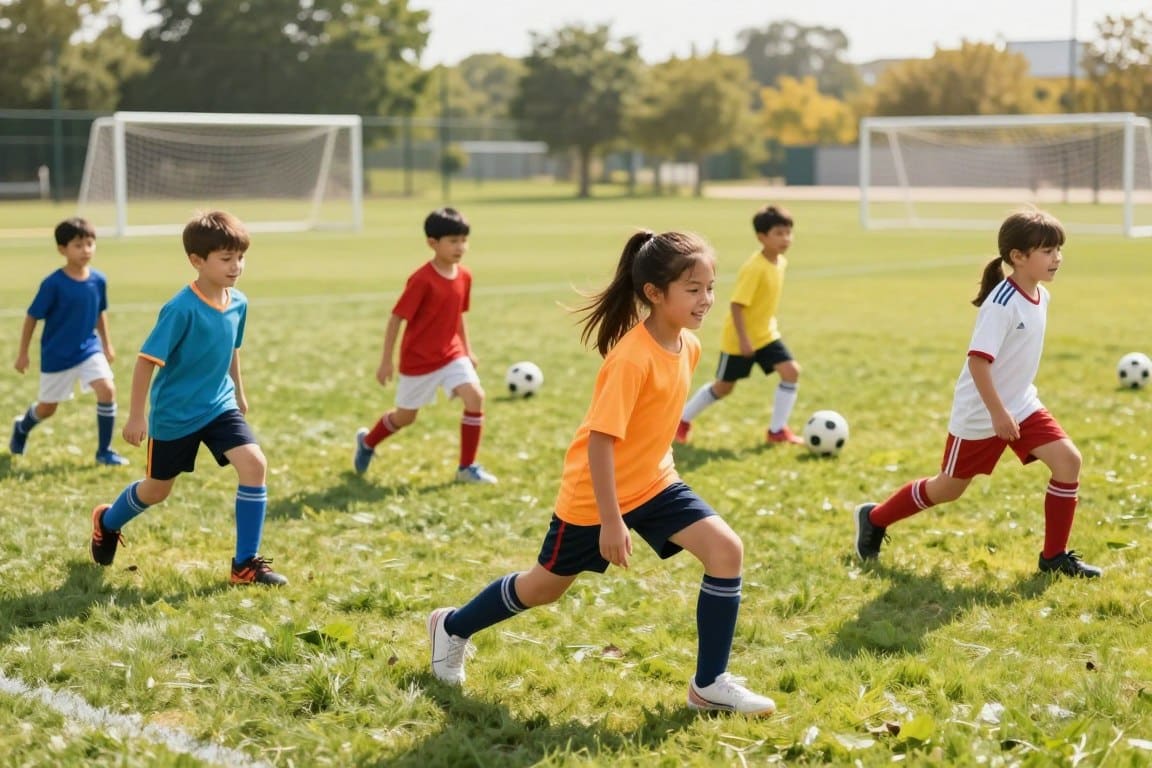
Dynamic stretching uses motion — swinging legs, walking lunges, arm circles — and moves joints through a full range. It prepares muscles for quick starts, cuts, and kicks.
- Dynamic movement mirrors the actions soccer players use in a match.
- It links directly to common drills and the stop-start nature of the game.
- Simple rule: move first, hold later — save long holds for after practice.
| Type | What it feels like | Effect on performance |
|---|---|---|
| Static stretching | Long, still holds (30+ sec) | Can lower short-term speed and power |
| Dynamic stretching | Movement through full range | Warms muscles for running and quick cuts |
| When to use | After practice or during cool-down | Use before play only for gentle mobility |
best warm-up exercises before kids soccer that you can run in fifteen to twenty minutes
Run a short, repeatable 15–20 minute flow that gets every player moving and smiling. I keep the plan simple so you can run it with a big group.
Set up a simple cone runway for safe movement and spacing
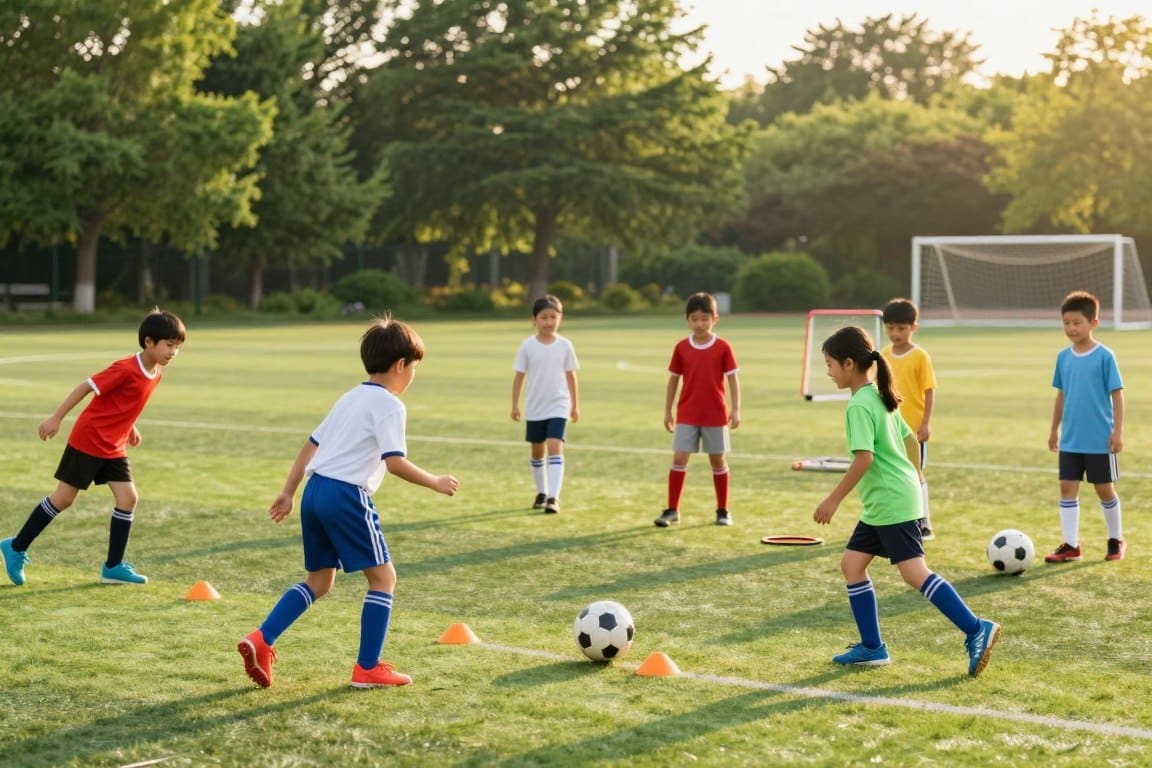
Place two parallel lines of cones about 4 yards apart and 20 yards long. This creates a clear lane for movement and protects players when they change direction.
Start slow with an easy jog to wake up legs and lungs
Begin with a light jog down the runway. Add skips, high steps, and heel flicks on the return.
Add dynamic stretching moves that use full motion
- Knee hugs, arm circles, and lunges.
- Leg swings, inchworms, and squats.
- Keep each move short and active — no long holds.
Use soccer-ready footwork and build speed safely
Mix side shuffles, backpedals, and karaoke for quick feet and body control. Add two or three short sprints only after players feel warm.
Add light ball touches and coordination options
Introduce light passing and gentle dribbling late in the flow. Use ladders, hoops, or cones to train quickness, listening, and coordination.
| Phase | What to do | Time |
|---|---|---|
| Wake | Easy jog + mobility | 5 min |
| Move | Footwork + dynamic moves | 7–10 min |
| Link | Light ball touches + short sprints | 3–5 min |
Safety rule: keep driven passing and hard shots out until the end to reduce pulls to hamstring, quad, or groin. Finish with a low-power passing pattern or a dribbling line to move straight into drills and training.
Warm-up games that keep kids focused and having fun
Playful games get attention fast and warm bodies even faster. I use short rounds so every player stays involved. Games build focus without long talks and teach useful movement and skills.
Red Light, Green Light — stops and explosive speed
Line players on one side. On “green” they dribble or jog forward. On “red” they stop sharply. Repeat in quick bursts to train fast starts and quick stops.
Sharks and Minnows — dribbling under pressure
One or two “sharks” try to steal the ball. Minnows keep control and cross the zone. This gives lots of touches and improves dribbling and scanning skills.
Hospital Tag — balance and change of direction
Tagged players do a safe balance task (single-leg hop). Keep contact low and rules clear. This drill trains coordination without rough play.
Small-sided play as arrival activity
Set up 2v1 or 2v2 on one side. Let early arrivals play short games. Scale the area for age and rotate quickly. Short rounds keep fairness and fun.
Quick tip: For more ideas try this collection of 10 fun soccer games to run when players arrive.
Conclusion
A quick 15–20 minute flow builds readiness and keeps spirits high.
My simple goal is clear: get the body warm, wake the muscles, then add the ball. This readies players and helps performance while lowering injury risk.
Follow one rule: start slow, build effort, and save top speed and hard passing for the end. Pick dynamic exercises that mirror game movement and match your drills and training.
Use this checklist before every practice: cones set, easy jog, dynamic moves, quick feet work, short bursts, light ball and passing touches.
When attention drops, bring in a short game — fun keeps players moving. Choose one 15–20 minute routine and run it for a month, then tweak based on what the players enjoy.