
Effective Daily Soccer Practice Routines for Kids
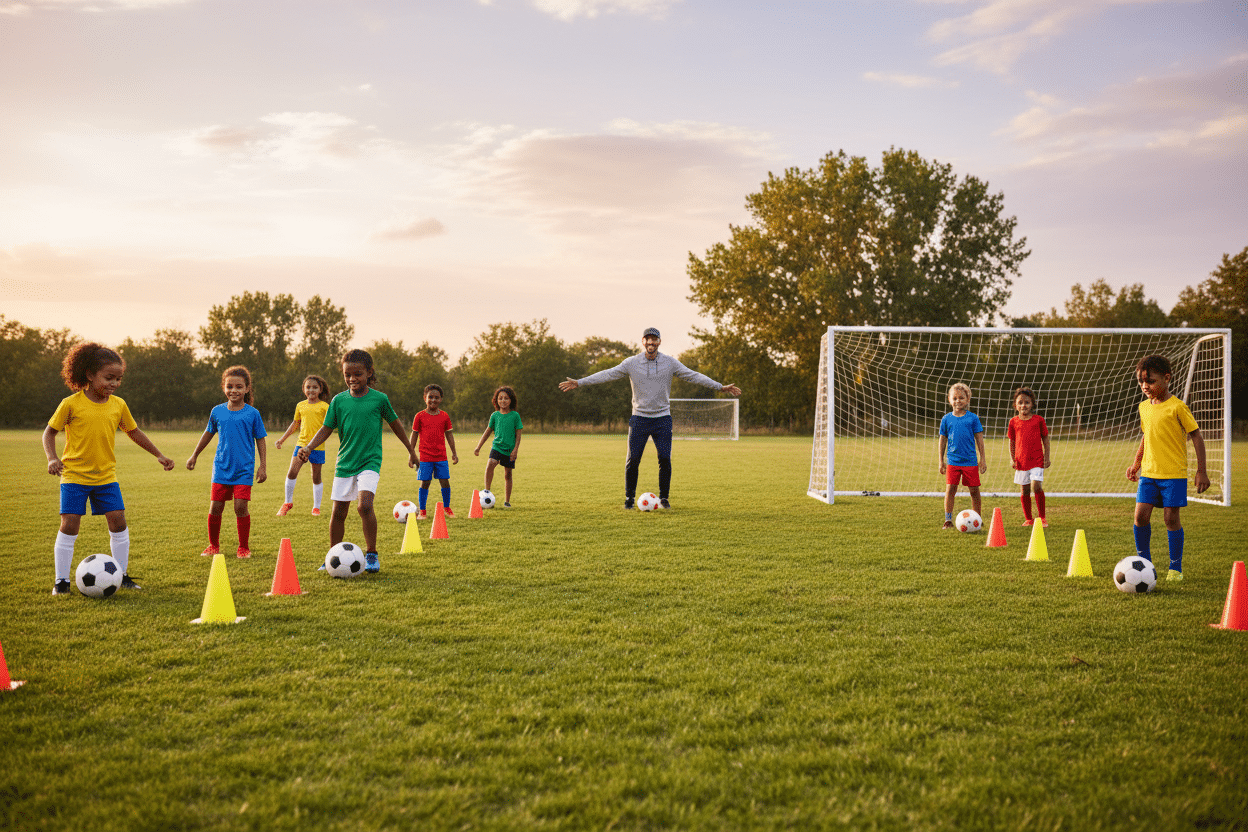
Watching your child light up with confidence as they master a new move is one of parenting’s great joys. Effective daily soccer practice routines for kids can unlock that potential, turning a simple game into a foundation for growth and fun.
This sport is loved everywhere for a good reason. It’s incredibly accessible. Your young player just needs a ball, some open space, and a couple of cones or jackets to mark a goal. You don’t need fancy equipment or a big field to start.
I want to help you build simple, consistent activities that fit into your family’s busy life. You’ll see how regular, short sessions make a huge difference. They build muscle memory and comfort with the ball.
This guide gives you a complete framework. We’ll cover warm-ups, skill-building, and fun game-like situations. You can start using it today to support your child’s journey.
Key Takeaways
- Soccer is a globally popular and highly accessible sport for children.
- Consistent, short practice sessions are more effective than occasional long ones.
- Simple routines build muscle memory and boost a young player’s confidence.
- Effective training focuses on fun, fundamental skills rather than complexity.
- You can create a successful practice with minimal equipment in any open space.
- Structured activities prepare children for recreational leagues and team play.
- A good routine fits seamlessly into your family’s daily schedule.
Daily Soccer Practice Routines for Kids: An Overview
The years between five and twelve are a special window for learning athletic skills. This period is often called the golden age for motor development. Young athletes absorb movements and techniques with incredible ease during these years.
The Importance of Daily Practice
Short, regular sessions create better results than occasional long ones. Consistency builds strong habits. It also strengthens muscle memory.
Your child won’t need to think about every touch on the ball. The movements become automatic. This builds a solid foundation for more advanced play later on.
Benefits for Youth Skill Development
Fun is the secret ingredient. When activities are engaging, players learn faster. They are not afraid to make mistakes.
This positive environment helps children of all skill levels. It keeps them motivated and interested. Regular, enjoyable training prepares them for team games. They gain confidence to contribute on the field.
Effective Warm-Up Drills and Conditioning
Warm-up drills are not just about preventing injuries; they spark excitement for the practice ahead. A good start gets hearts pumping and muscles ready. It also makes the main session more productive.
Dynamic Warm-Up Exercises
I love using games to warm up young athletes. They build athleticism and awareness without feeling like work. Two of my favorites are Fox Tails and Hospital Tag.
For Fox Tails, each player tucks a cloth into their shorts. The goal is to grab others’ “tails” while protecting your own. This game develops quick feet and strategic thinking.
Hospital Tag adds a hilarious twist. When tagged, a player holds the touched body part. If tagged again, they hold another spot. A third tag sends them to the “hospital” to dribble a ball five times before returning.
| Activity | Space Needed | Primary Skills | Fun Factor |
|---|---|---|---|
| Fox Tails | 8×8 yard grid | Awareness, agility, quick thinking | High – energetic and competitive |
| Hospital Tag | 10×10 yard grid | Speed, reflexes, ball control | Very High – silly and engaging |
Quick Footwork Routines
After the games, focus on close ball control. Simple footwork exercises build a strong foundation.
Have players move the ball between their feet quickly. Encourage soft touches. This teaches them to keep the ball near their foot during movement.
These routines improve balance and coordination. They prepare players for dribbling and passing drills later in the session.
Skill-Building Drills: Passing, Dribbling, and Shooting
Mastering the ball is the heart of the game, and these activities make skill-building exciting. They turn energy into reliable technique your young athlete can use in a match.
Passing Accuracy Drills
Good passing is about smart choices and clean contact. I love the Triangle Combination drill. Three players form a triangle with cones.
They pass and immediately move to the next position. This teaches quick thinking. Remember, players should use the inside of their foot, never their toes. Pointed toes cause a loss of control.
Dribbling Control Exercises
Dribbling isn’t just running with the ball. It’s about close control and awareness. “Snake in the Grass” is a fun game for this.
Two “snakes” slither to tag dribblers. Players must keep the ball close while avoiding them. “Red Light, Green Light” is another great one. It teaches quick stops and explosive speed on command.
Both drills encourage players to look up. They learn to see the field while managing the ball at their feet.
Shooting Technique Practices
Scoring goals builds huge confidence. Start by teaching proper striking technique. Use the laces for power and the inside of the foot for accuracy.
Connect this to the control they learned in dribbling. A controlled touch sets up a better shot. For more effective tips on improving youth, these drills are a perfect foundation.
Game-Like Exercises to Simulate Real Match Situations
These engaging drills teach decision-making and awareness by replicating the flow of a live game. They move beyond isolated skills and put everything together in a fun, competitive setting.
Small-Sided Scrimmages
Small-sided games are a powerhouse for development. Each player gets far more touches on the ball than in a full-field match. This constant involvement keeps everyone active and learning.
Try a Rondo 5v2. Five passers keep the ball away from two defenders. It builds quick, controlled touches and teamwork under pressure.
Half-Court Soccer compresses the field into half the space. This forces quick attacking and defending decisions. 4v4 to Mini-Goals is another excellent choice. It creates many 1v1 situations and teaches when to pass or dribble.
| Activity | Players Needed | Key Focus | Why It Works |
|---|---|---|---|
| Rondo 5v2 | 7 total | Quick passing, teamwork | Mimics tight-space play in a real game |
| Half-Court Soccer | Two even teams | Attacking & defending in condensed space | Doubles opportunities for key actions |
| 4v4 to Mini-Goals | 8 plus a keeper | Decision-making, 1v1 play | Rewards smart choices like through passes |
Spatial Awareness Activities
Knowing where to move on the field is a critical skill. These games teach players to protect the ball and find open space.
In Pirates of the Pugg, most players dribble in a circle. A few “pirates” try to steal and score on a central goal. It’s chaotic fun that sharpens ball protection.
Sharks and Minnows has “minnows” dribble across a grid while “sharks” try to steal. Players learn to shield the ball and use the available space wisely to survive.
Coaching Tips for Keeping Practice Fun and Engaging
Fun is not a distraction from training; it’s the engine that drives improvement. Your primary goal as a coach is to create an environment where young athletes love to learn.
When players enjoy themselves, they absorb skills faster and stay motivated. Let’s explore how to build this kind of session.
Creating a Positive, Clear Environment
Start with clear, simple instructions. Show the drill first, then let the kids try. This clarity removes confusion and builds confidence.
Always emphasize that mistakes are welcome. A positive vibe encourages risk-taking and creativity on the field. Your feedback should highlight what went well and offer one simple “next time” point for growth.
Mixing Fun with Repetition
The secret is wrapping repetitive skill work in a game. In a activity like Space Wars, you can play the villain. Flop dramatically when a player hits the target with a pass!
They’re practicing passing, but they remember the laughter. Keep sessions moving quickly. Switch drills before focus fades.
This way, the necessary repetition feels like play. Kids look forward to your sessions and the skills stick for good.
Teamwork and Communication on the Field
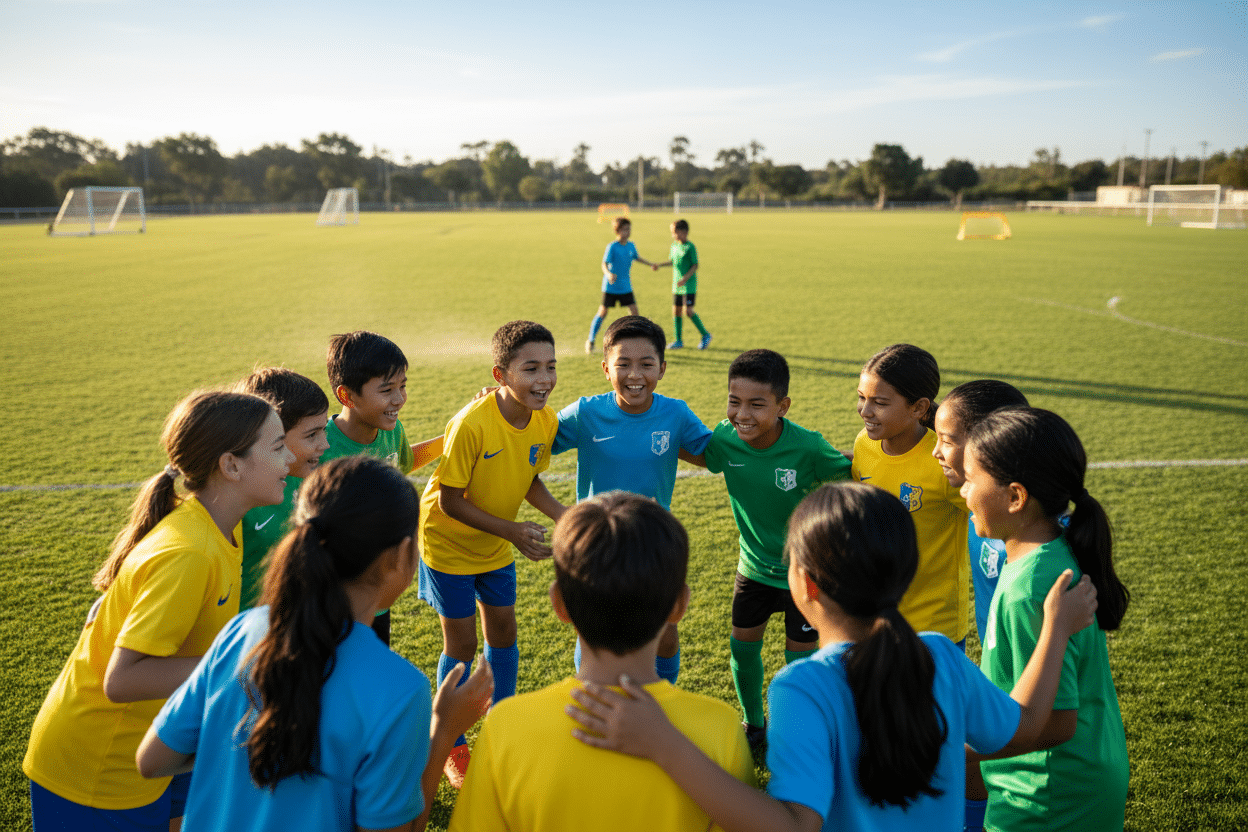
Great teams are built on more than just individual talent. They thrive on trust and clear communication. For young athletes, these skills are as vital as any technical move.
Good teamwork means players support each other. They make smart choices with the ball. This creates a stronger, more effective unit on the field.
Building Trust Among Players
Trust grows when players rely on each other in drills. The Triangle Goal Game is perfect for this. Three players pass and move without the ball to open positions.
This activity teaches them to anticipate a teammate’s next move. Another great one is Snake. Here, a line of players must communicate and move as one while controlling the ball.
It builds coordination and a shared sense of purpose. Bumper Ball introduces shielding. Players learn to protect the ball with their body, trusting their own ability under light defense.
Promoting Effective On-Field Communication
Verbal calls and signals keep a team connected. Gates Passing makes this fun. Partners pass a soccer ball through small goals made of two cones.
They must talk about timing and direction. Soccer Noodle Tag adds pressure. Dribblers must call for the ball from teammates while avoiding defenders.
These youth soccer games teach kids to find open space and speak up. The result is a team that works together, not a group chasing the ball.
Conclusion
Remember, the goal is to foster a lifelong love for the game through positive experiences. Your practice sessions don’t need to be long or complex to build real skills.
Consistency is your secret weapon. Short, regular activities with a ball make a huge difference. Mix fun games like Soccer Spot Shot with skill-focused drills.
Keep it simple. Use cones to mark spaces and create passing gates. Focus on ball control, dribbling, and shooting. A positive environment lets kids learn without fear.
Incorporate teamwork for youth soccer success. Players learn to communicate and work as teams. This way, they see it’s more than just one player with the ball.
You have everything you need. Start today and watch your child’s confidence grow. The coach in you can make this time rewarding for everyone.