
How Soccer Boosts Kids’ Coordination & Fitness
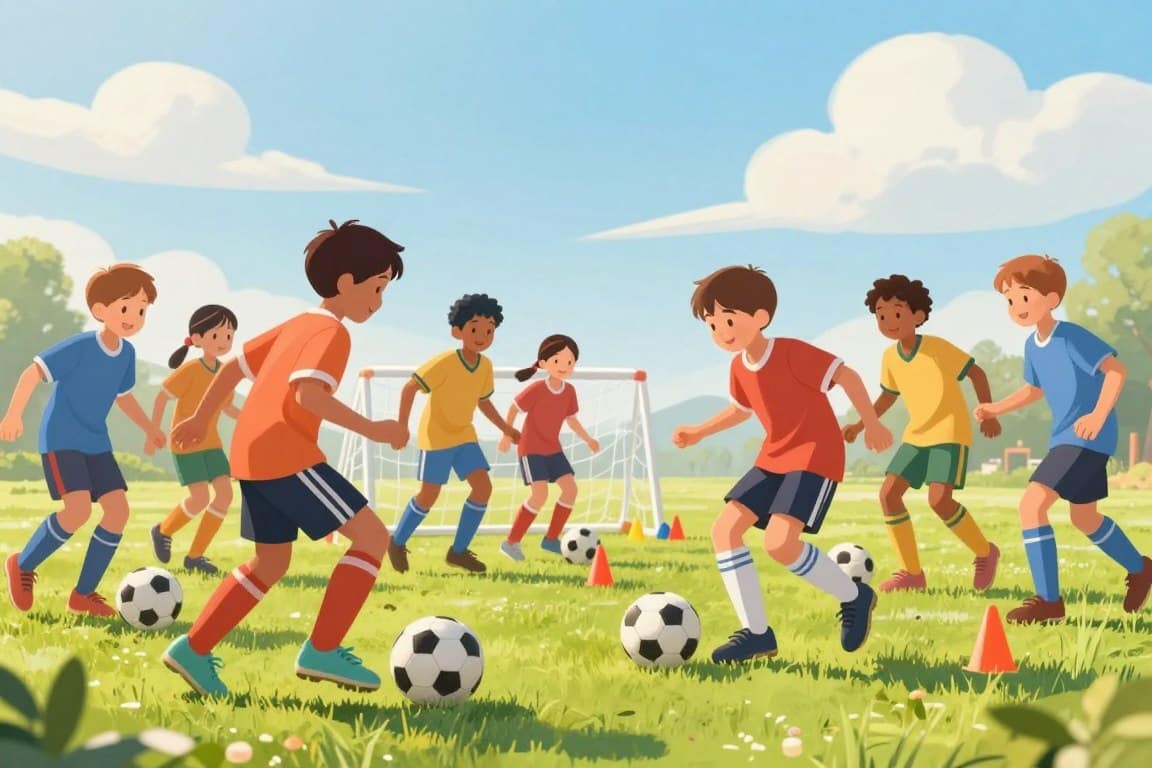
I use the phrase how soccer helps kids coordination because it captures what I see on the field: a simple game that builds balance, agility, and endurance for young players.
As a coach and parent, I watch children learn to move their eyes, feet, and body together. Small drills like dribbling and passing teach control. Games that last 30 to 70 minutes build heart health and stamina in a fun, natural way.
I’ll show clear steps you can try at home to support practice and healthy habits. Expect steady progress — not overnight change — as practice and play add up. Along the way, your child gains confidence, teamwork skills, and a love for movement.
Key Takeaways
- Soccer improves balance, agility, and endurance through simple play.
- Short, regular practice helps motor skill development and fitness.
- Team play builds confidence, focus, and responsibility.
- Adjustments make youth soccer fit ages 3–12 and older beginners.
- Small steps at home support steady, pressure-free progress.
How soccer helps kids coordination on and off the field
Every touch with the ball trains movement and focus. Repeating simple moves — dribbling, passing, and shooting — teaches the body to move with intent.
Coordination basics are easy to spot. Dribbling means small taps to keep the ball close, then quick shifts in speed or direction. Passing is about timing: look, pick a target, and send the ball with the right force. Shooting uses the whole body — plant, swing, and aim.
Foot-eye and balance grow when players control the ball while looking up. Quick stops and turns force a child to shift weight and stay upright. This builds agility and timing for real game moments.
- Fine motor moves: toe taps, inside-foot traps, and sole stops tighten control.
- Agility drills: short sprints, cuts, and reactive games sharpen timing.
- Transferable gains: better hand control at school, steadier hands for scissors, and quicker reactions in other sports.
| Movement | Benefit | Simple drill |
|---|---|---|
| Dribbling | Ball control, foot-eye focus | Tap-and-run around cones |
| Passing | Timing, decision making | Pass-and-move pairs |
| Shooting | Power, balance | One-touch shots from short range |
| Fine touches | Close control, steady feet | Toe-tap sets and cone weave |
Soccer fitness benefits for kids: endurance, strength, and healthy habits
Play on the field gives a steady cardio boost through short bursts and gentle recovery. I watch practice mix running, walking, and rest in fun drills. That steady motion builds safe, lasting endurance and better overall fitness.
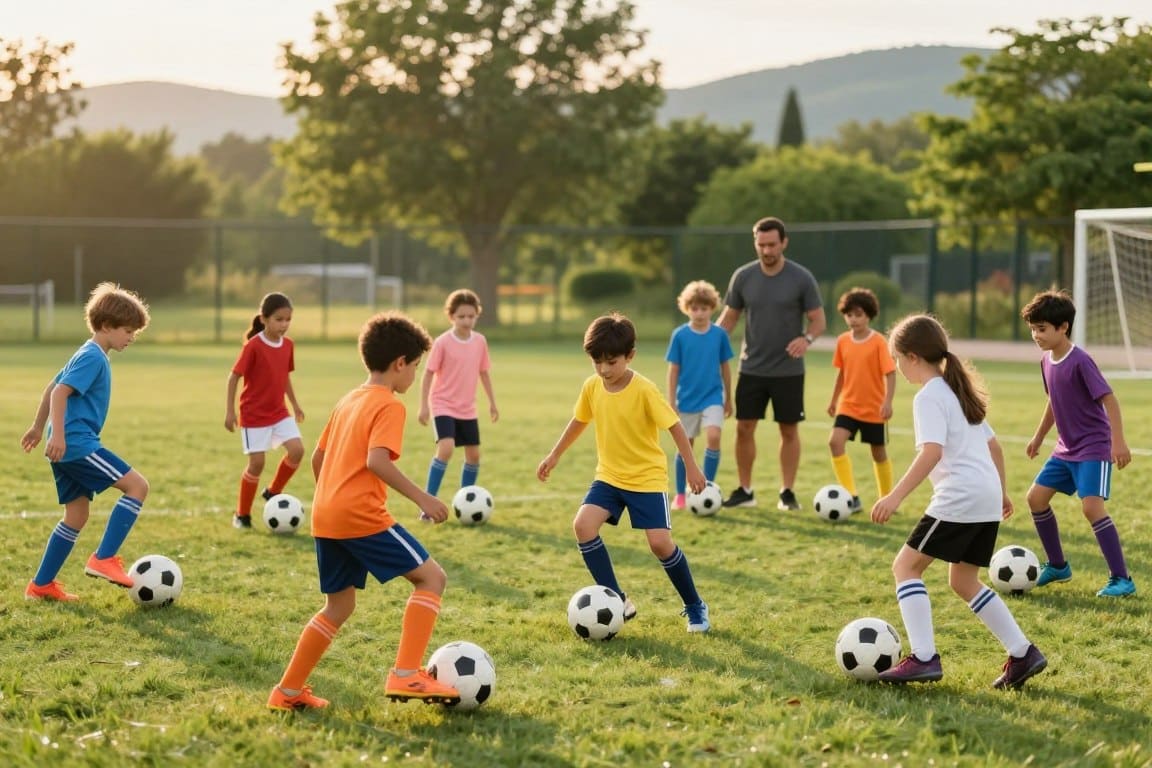
Cardio and stamina from steady movement during games and practice
Children move a lot during a youth soccer game. They sprint, slow down, and jog back. Those repeats raise heart rate in a kid-friendly way and grow stamina over weeks.
Why youth soccer games often last about 30 to 70 minutes and what that builds
Game time varies by age—typically 30 to 70 minutes. That span trains pacing. Players learn to manage energy and keep going when tired. It builds real, usable endurance.
Muscle strength and core stability from running, jumping, and landing
Short sprints, quick stops, and small jumps strengthen legs. Controlled landings and turns engage the belly and back. This boosts balance and core strength for daily play and better health.
- Simple tips: water breaks, light snacks, and regular, fun practice.
- Benefits: more energy for school, easier active play, and better sleep.
- Goal: steady progress and enjoyment, not extreme training.
| Activity | What it builds | Example |
|---|---|---|
| Sprint & Recover | Cardio, pacing | 10-second runs with 30-second walks |
| Jump & Land | Leg strength, core stability | Small hops over cones |
| Stop & Turn | Balance, control | Cutting drills around markers |
| Small-sided game | Endurance, decision-making | 4v4 play for 20–30 minutes |
Confidence, teamwork, and focus kids gain from playing soccer
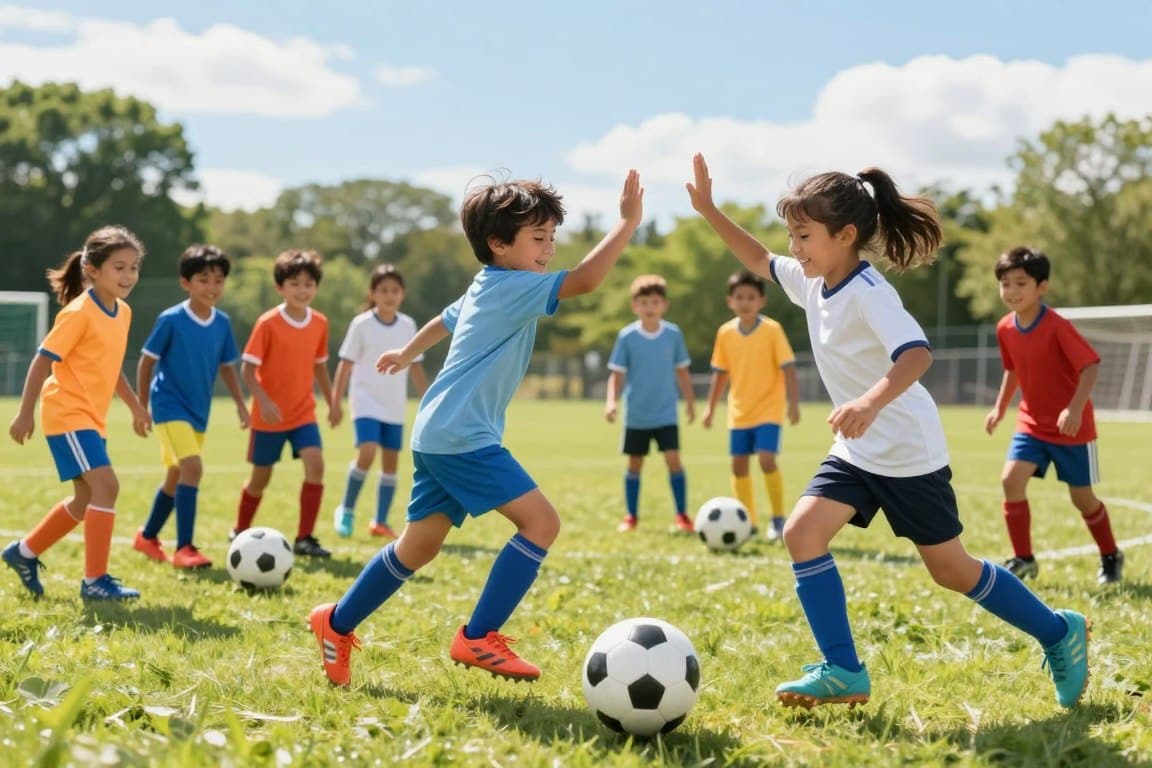
Being part of a team helps a child feel useful and capable. I see steady growth when a player practices and earns small wins. Those wins build real confidence over time.
Confidence growth through practice, small wins, and learning new skills
Try a simple skill, repeat it, then celebrate the moment. One clean pass or a better first touch becomes proof of progress. That sense of success makes a child more willing to try new skills.
Teamwork and social skills from sharing the ball and communicating with teammates
On the field, players share the ball and take turns. Kids learn to call for space, point to open lanes, and use kind words after mistakes. These small acts build strong social skills and real team trust.
Focus and decision-making from reading cues and choosing the right pass
Focus means “eyes up, mind on the next play.” Children watch the field, spot a gap, choose the pass, and act. This clear step-by-step process sharpens attention and quick thinking.
Responsibility habits from showing up on time and preparing for games
Packing gear, arriving on time, and following the coach’s plan are simple habits. They teach routines that help at school and home. These small responsibilities shape how a child faces challenges in life.
| Area | What it builds | Simple example |
|---|---|---|
| Confidence | Belief in ability | Practicing a pass until it improves |
| Teamwork | Sharing and trust | Passing drills with rotation |
| Focus | Quick decision-making | Small-sided games where choices matter |
| Responsibility | Routines and time management | Bringing gear and arriving 10 minutes early |
Conclusion
In plain terms: simple, repeated play builds steady skill and healthy bodies. Short, fun sessions boost balance, timing, and foot-eye control while also improving overall fitness and health.
These activities support motor development—agility, fine touches, and endurance grow with regular practice. Children gain confidence, teamwork, focus, and responsibility that help at school and in life.
Next steps: pick a beginner-friendly program, keep practice short, and praise effort. Try 5–10 minutes of playful ball touches at home, drink plenty of water, and keep routines calm.
For more simple drills and fitness games, look for gentle youth soccer options that make growth fun and pressure-free. The real benefit is steady progress, one small win at a time.