
How to Plan Soccer Practice Schedules for Kids

That first moment you volunteer to coach your child’s team can feel overwhelming. Suddenly, you’re responsible for organizing practice sessions that are both fun and productive.
I want you to know something important. You don’t need years of experience or a special license to create effective sessions for young players.
Planning is really about understanding what makes learning enjoyable at different ages. It’s about keeping things simple and structured.
The key is finding the right balance. You want to teach basic concepts while making sure all the kids want to come back next week.
This guide walks you through everything in a straightforward way. You’ll learn how to structure your session, choose age-appropriate drills, and keep everyone engaged.
My goal is simple. I want you to feel confident stepping onto that field, knowing exactly what to do.
Key Takeaways
- You can be a great coach without prior soccer experience.
- Effective planning balances skill development with fun.
- Age-appropriate activities keep young players engaged.
- A simple, structured approach reduces stress for coaches.
- This guide provides step-by-step plans for successful sessions.
- Focus on creating a positive environment where kids want to participate.
- Confidence comes from having a clear plan for your practice time.
Understanding the Basics of Soccer for Kids
For little ones, the game isn’t about complex tactics. It’s about simple, joyful movement with a ball. Your main job is to introduce a few core ideas and keep everything lighthearted.
Developing Fundamental Skills
Young players need to build a few key skills. These include dribbling, kicking, and running toward the goal.
Dribbling means using gentle taps with your feet to guide the ball. Show them how. I always demonstrate instead of just explaining.
Social growth is just as important at this age. The fun comes from playing together. Try simple coordination games to build teamwork.
Introducing the Simple Rules of Soccer
Start with one big rule. We use our feet, not our hands. Keep this explanation very short.
The object of the game is to score goals. Kick the ball into the net.
I ask questions to get players thinking. “How do we move the ball?” This makes them part of the lesson. It works better than a long lecture.
Essential Elements for a Successful Practice
Think of your practice plan as a simple blueprint for fun and learning. A few key pieces make every session run smoothly and keep young athletes engaged.
Warm-Up Activities and Fun Drills
Skip traditional exercises. Start your warmup with the ball. Try “Toe-tops.” Players place a foot on the ball and alternate feet.
Another good activity is “Tick-Tock.” They knock the ball between their feet. These drills are hard, and that’s okay. I show them I struggle too.
For the youngest players, a 30-minute session once a week is perfect. It matches their focus. Always have a backup activity ready.
Setting Clear Goals and Guidelines
Before each drill, state a simple goal. Say, “This time, we’re working on dribbling.” It gives the activity a clear point.
This way, everyone understands the purpose. Keep instructions to one or two sentences. Clarity is your best tool.
Ensuring Safety with the Right Equipment
Safety is the first rule. Every child needs specific things. The list includes a size 3 ball, shin guards, cleats, and water.
Check this gear at the start. Also, ask parents for help at your first team meeting. A “Team Mom” can organize snacks and pictures.
Most parents want to help. They just need a specific way to contribute. This support makes your job easier.
Soccer practice schedules for kids
Your first decision involves picking a day that fits your life as a volunteer. A reliable routine helps the whole team. I always choose my available day first.
Then I consider parent availability. You will have schedule conflicts. Pick one consistent day and time.
Daily and Weekly Session Planning
Set your practice day. Most families will adjust. This creates stability for your players.
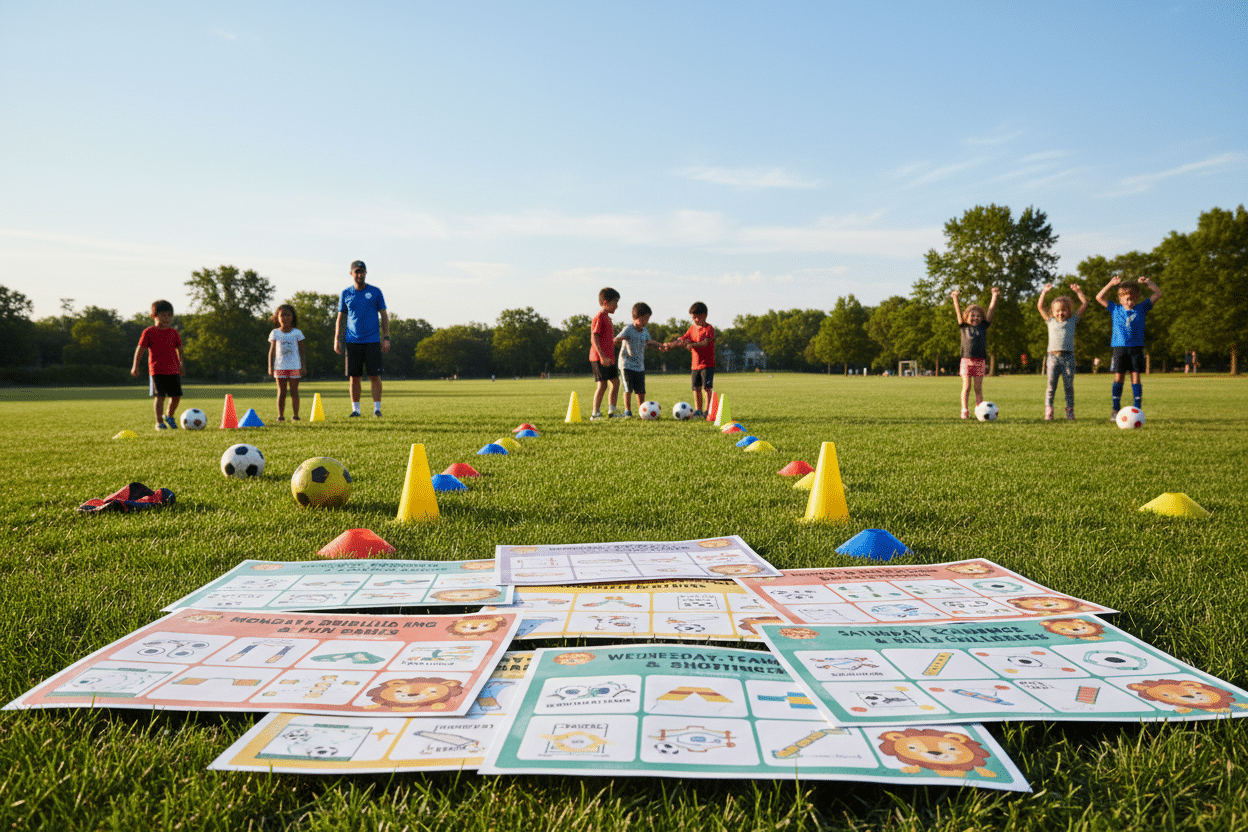
Write your practice plans in advance. I arrive early to set up cones and goals. This preparation saves valuable training time.
Tailoring Drills for Different Age Levels
Match session length to your group. Young athletes aged 3-5 need just 30 minutes. Their focus is on fun games that build coordination.
Older players aged 6-8 can handle 45 to 60 minutes. Kids aged 9-12 often train for a full hour or more.
Break each plan into short blocks. Try a 5-minute warmup, then 15 minutes of skill drills. Follow with a fun game and a brief scrimmage.
Keep your activities flexible. What works for one team might need tweaking for another. Always schedule water breaks.
Sample Practice Plans and Drills
Let’s look at some specific plans you can use right away with your team. These examples give you a clear blueprint. They mix skill-building with pure enjoyment.
Week One to Week Three Breakdown
Start your first session with simple introductions. The Walk the Dog drill is perfect. Players dribble slowly, then kick the ball hard when you yell.
Follow with Race and Score. This activity gets players running and shooting on goal. They love kicking into the net.
Week two introduces the BattleShip game. It teaches kicking accuracy. Players try to knock a ball off a cone.
Add Red Light Green Light for control. It combines dribbling with listening skills. By week three, try an Egg Hunt.
Kids run to find a ball and dribble it back to score. The Wrong Way Game adds hilarious confusion. You tell them to turn around just before they score.
Variety of Games and Activities
Keep things fresh with different games. Catch the Giant gets players running and changing direction. Busy Bees makes kicking fun.
Classic drills like Bull Dog and Sharks and Minnows teach ball protection. One player tries to steal from others in a defined area.
The Ouch game is a top drill for shooting. Players dribble and kick, trying to hit the coach who moves on the field.
For quick fun, use the Popcorn Game. You can also set up four-corner stations as skills advance. These plans work because they disguise learning as play.
This variety gets players excited and helps them love the game. They build skills without feeling like work.
Tips for Engaging Kids and Effective Coaching
Great coaching for young players is more about energy than expertise. Your positive attitude is the most important tool you have. If you are having fun, the kids will too.
Building Fun and Focused Sessions
Young players have very short attention spans. Plan to rotate activities every five to ten minutes. This keeps everyone engaged.
Always have a backup plan. If a drill isn’t working, switch to a simple game like Duck Duck Goose. It gives a mental break and still builds skills.
Learn names quickly. I play a silly game where I pretend to forget. The team loves correcting me, and we all learn faster.
Start each practice the same way. A consistent routine helps players settle in and focus. They know what to expect.
Encouraging Parental Involvement
Parents are a crucial part of your coaching success. Most want to help but need clear information. Ask them directly for specific tasks.
Request help setting up corner cones or organizing snacks. This support makes your job easier and includes families.
Encourage simple ball play at home. Kicking in the yard between sessions helps players improve. It keeps excitement high.
| Coach Focus Area | Why It Works |
|---|---|
| Keep Activities Short | Matches a child’s natural focus, preventing boredom. |
| Be Playfully Silly | Creates a relaxed environment where mistakes are okay. |
| Use Clear, Simple Instructions | Helps young athletes understand and succeed quickly. |
| Involve Parents with Specific Tasks | Builds a supportive team community and shares the load. |
Your main goal is to create a space where every child feels like an important part of the team. Give equal time and encouragement. The best coaches make learning feel like play.
Conclusion
Stepping onto the field with a clear plan transforms coaching from daunting to doable. You now have a straightforward framework to follow.
Your main job is to foster enjoyment and build confidence. The drills and games shared here turn skill development into pure play.
Start with the basic week-one plan. Add new activities as your group grows. Every session should mix warm-ups, skill-building, and scrimmage time.
Don’t aim for perfection. Even seasoned coaches adapt when an activity isn’t working. Celebrate small wins each player makes.
Your success isn’t about deep knowledge. It’s measured by the excitement your team brings to the field. You’re ready to create positive experiences that make young athletes love the game.