
Safe Home Soccer Workouts for Kids on Rainy Days
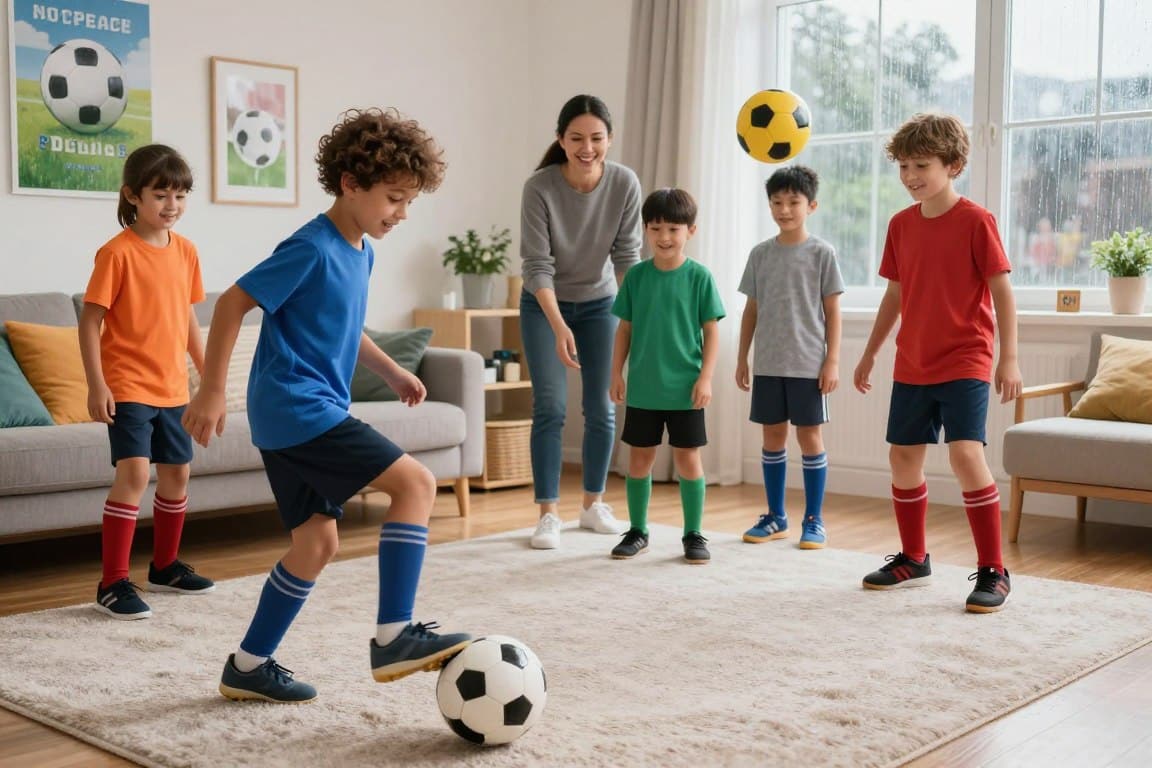
I know how a wet afternoon can wipe out outdoor plans, so I built a simple plan that keeps young players active and smiling indoors.
You’ll find easy drills that fit a living room, hallway, or basement — each drill aims at one clear skill like faster feet or a better first touch.
I’ll show how to set up a small space, pick gentle gear, and run quick practices that protect furniture and boost confidence.
Short blocks, fun mini-games, and repeatable drills make training feel like play. You can mix sections to reach 60 active minutes across the day for children age 6 and up.
Key Takeaways
- Simple room setup and soft gear keep things tidy and practical.
- Short drills build touch, speed, and control in small spaces.
- Mini-games keep the player engaged and motivated.
- You can fit practice into busy schedules with quick time options.
- Repetition builds comfort on the ball and steady skill gains.
Set up a safe indoor soccer space
Start by choosing one room where drills can fit and where clutter can stay out of the way. I like to make that the temporary “soccer zone” for the session. This keeps things simple and fun.
Pick the right room and clear hazards
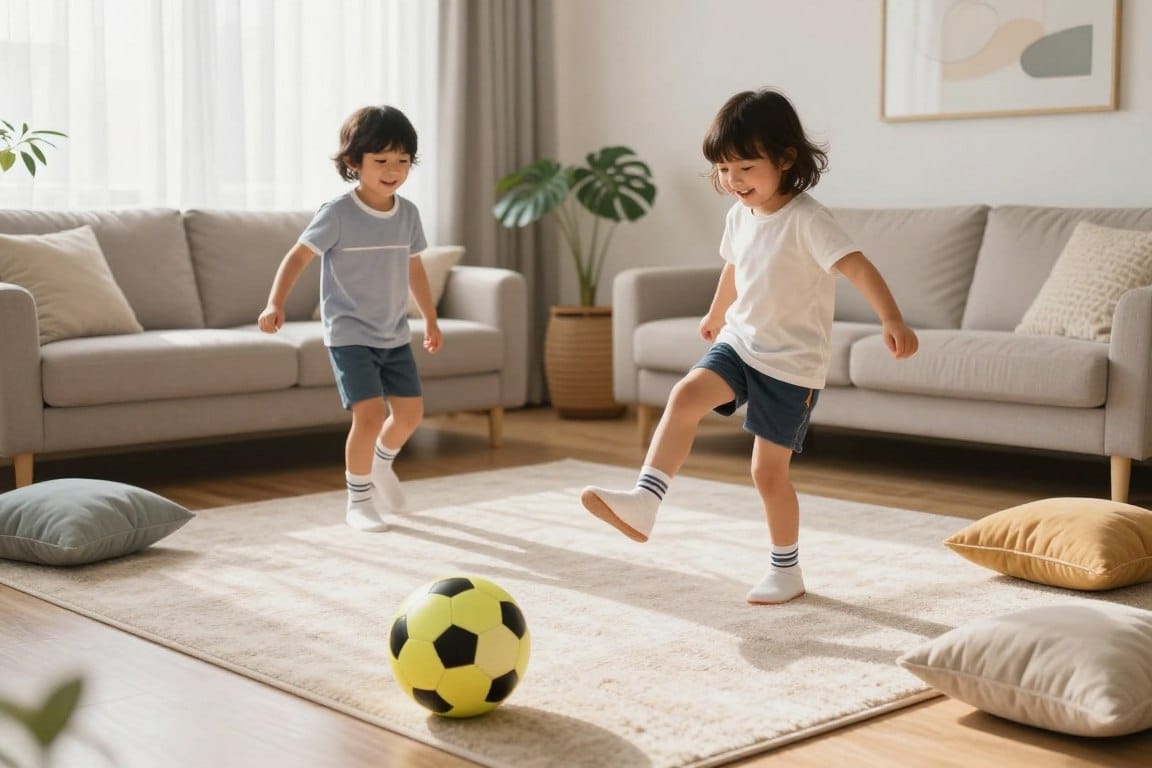
Choose a living area, basement, or hallway with plenty of floor space. Clear coffee tables, loose rugs, toys, and cords. Remove lamps and move fragile items away from the play zone.
Choose safe equipment for inside
Use a low-bounce futsal ball or a soft foam ball to reduce bounce and protect furniture. A lighter ball keeps the wall and screens safe. Keep the soccer ball count low and pick one that matches your child’s age and skill.
Set simple house rules that prevent slips and breaks
Make a clear boundary with tape and keep everyone outside that line. Say no full-power shots, no diving, and no running near furniture. Tell your child to stop if legs feel sore or if they feel unsteady.
Quick checklist
- Pick one room and mark the play zone.
- Clear trip hazards and check the floor for grip.
- Use a soft or low-bounce ball and a sturdy wall only.
- Set simple rules to protect body and gear.
| Space | Best ball | Why it works |
|---|---|---|
| Living area | Soft foam ball | Low bounce and gentle on furniture |
| Basement | Low-bounce futsal ball | Durable floor and controlled rebound |
| Hallway | Mini foam ball | Short sprints and passing practice |
Need gear ideas? See this equipment guide to pick the right options quickly.
Start with a short warm-up to protect muscles and joints
Warm-ups set the tone—let’s spend five quick minutes getting the body and brain ready. I use this short routine to warm muscles and cut injury risk. It also helps kids calm down and focus on training time.
Do a quick cardio circuit with no ball
Set a timer for 4 minutes. Do 30 seconds each of high knees, butt kicks, jumping jacks, and alternating foot hops. Then rest 30 seconds.
Keep the moves small so a child stays in control in a tight room. These brief bursts raise heart rate and loosen muscles without long drills.
Add a ball warm-up that wakes up feet and balance
Next, spend 2 minutes with the ball. Start with light taps on the top, then do gentle inside-foot touches side to side.
Cue balance: stand tall, tighten the core, keep eyes forward. Ask for soft toe-to-top contact and calm, short touches. This is the fastest way to switch energy into focused training.
| Step | Duration | Key focus |
|---|---|---|
| Cardio circuit | 4 minutes | Warm muscles, move safely |
| Rest | 30 seconds | Recover and breathe |
| Ball taps & touches | 2 minutes | Feet speed and balance |
safe home soccer workouts for kids rainy days drills that build touch, speed, and control
Short rounds of simple moves will improve control, speed, and confidence in tight spaces. I keep each drill to 20–60 seconds so a player stays focused and has fun.
Toe taps for foot speed and balance
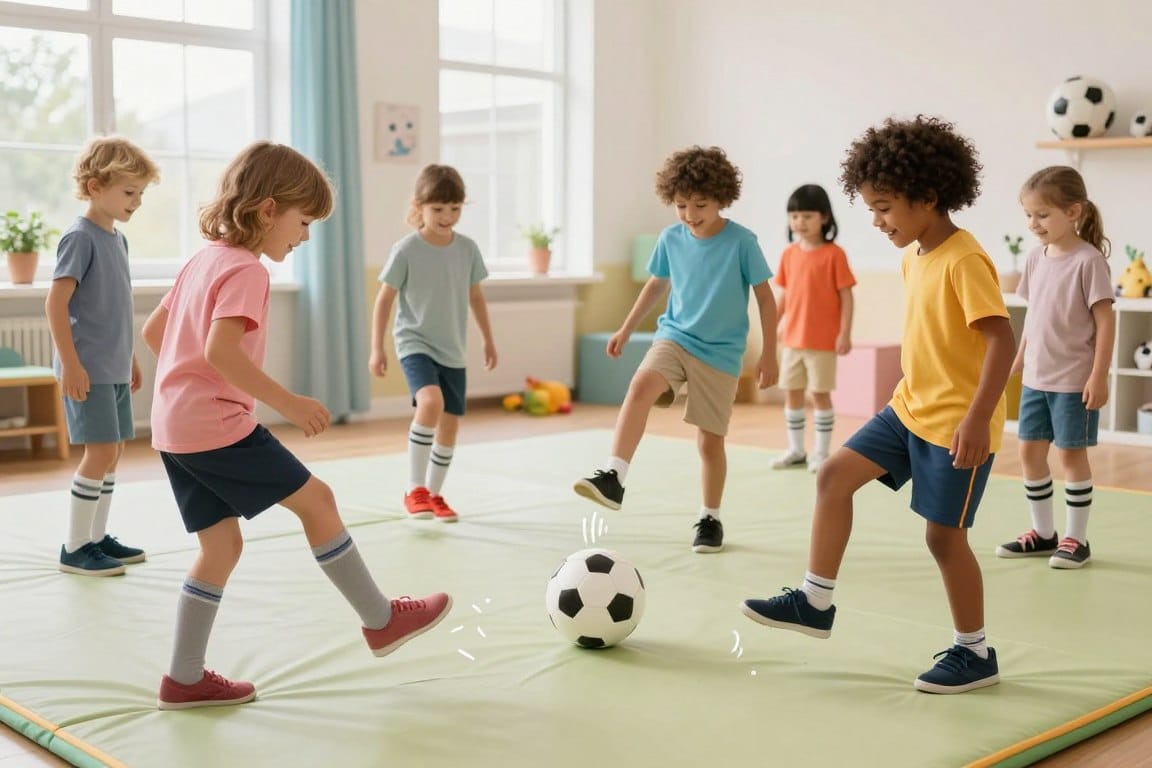
Tap the top of the ball with alternating toes for 30 seconds. Rest 30 seconds. Repeat 3 rounds. This builds quick feet and balance.
Foundation touches to improve quick control
Move the ball left and right with the inside of both feet for 30 seconds. Keep the touches small and steady. Do 3 sets with 20 seconds rest.
Wall pass practice for passing and first touch
Pass to a wall and control the rebound with one touch. Alternate feet each set. Try 20 passes per foot or 2 minutes total.
Dribble obstacle course and quick-feet ladder
- Set bottles/books in a line and dribble through. Time each run—chase a personal best.
- Make a tape ladder and step in-and-out fast for 20–30 seconds. Repeat 3–4 rounds for speed and agility.
Juggling, balance, target shooting, and push-pull work
- Juggle once and catch; build the best number. Keep it playful.
- Stand on one foot and tap the ball with the other for 30 seconds, then switch. Train the weaker foot.
- Aim at a laundry basket or taped square with a soft ball. Score for accuracy, not power.
- Push-pull reps: roll the ball toe-to-heel and back quickly for tight control and stronger foot muscles.
| Drill | Time | Focus |
|---|---|---|
| Toe taps | 30 seconds | Feet speed, balance |
| Wall pass | 2 minutes | First touch, passing |
| Tape ladder | 20–30 seconds x3 | Quick feet, agility |
Quick tip: Run these drills in short rounds. Track seconds and rest. Repetition builds comfort with the ball and steady skill gains for ages 3–12.
Keep rainy day practice fun with simple soccer games
Use short, silly challenges to keep a child engaged and working on touch, speed, and control. I keep rules simple so a player feels excited, not pressured.
Play “Simon Says” to mix drills and laughs
Call out quick drills: toe taps, foundation touches, fast dribble, or freeze. Add one silly command each round—hop, clap, or spin—so everyone laughs while learning.
Rule idea: If the player follows a proper drill, they keep playing. If they follow a fake command, they do a 5-second fun penalty.
Use point games to track seconds and personal bests
Make simple scores: 1 point for 20 clean toe taps, 2 points for 5 wall passes, or 3 points for a soft basket goal with the ball. Track time in seconds to show progress.
- Short rounds—1 to 3 minutes—keep energy high.
- Reward soft touch and control, not power.
- Invite siblings so players push each other in a friendly way.
| Game | Goal | Scoring |
|---|---|---|
| Simon Says | Focus & fun | Follow = stay in, mistake = small fun penalty |
| Point Chase | Speed & control | Points per drill; total after minutes |
| Target Toss | Accuracy with soft ball | Points for hits; track best seconds |
Conclusion
Conclusion
A simple plan—warm-up, a few drills, then a short game—keeps practice productive and fun. Small, steady sessions build confidence faster than long, irregular ones.
Stick to one clear space, pick a gentle ball, and set a couple of easy rules. Focus on repetition: every clean touch adds value to later outdoor play.
Keep sessions short, track small wins, and let fun lead the mood. If you want to add strength and balance work, try this guide to strength training for young players as a next step.