
Soccer Practice Warm-Up Routines – A Step-by-Step Guide
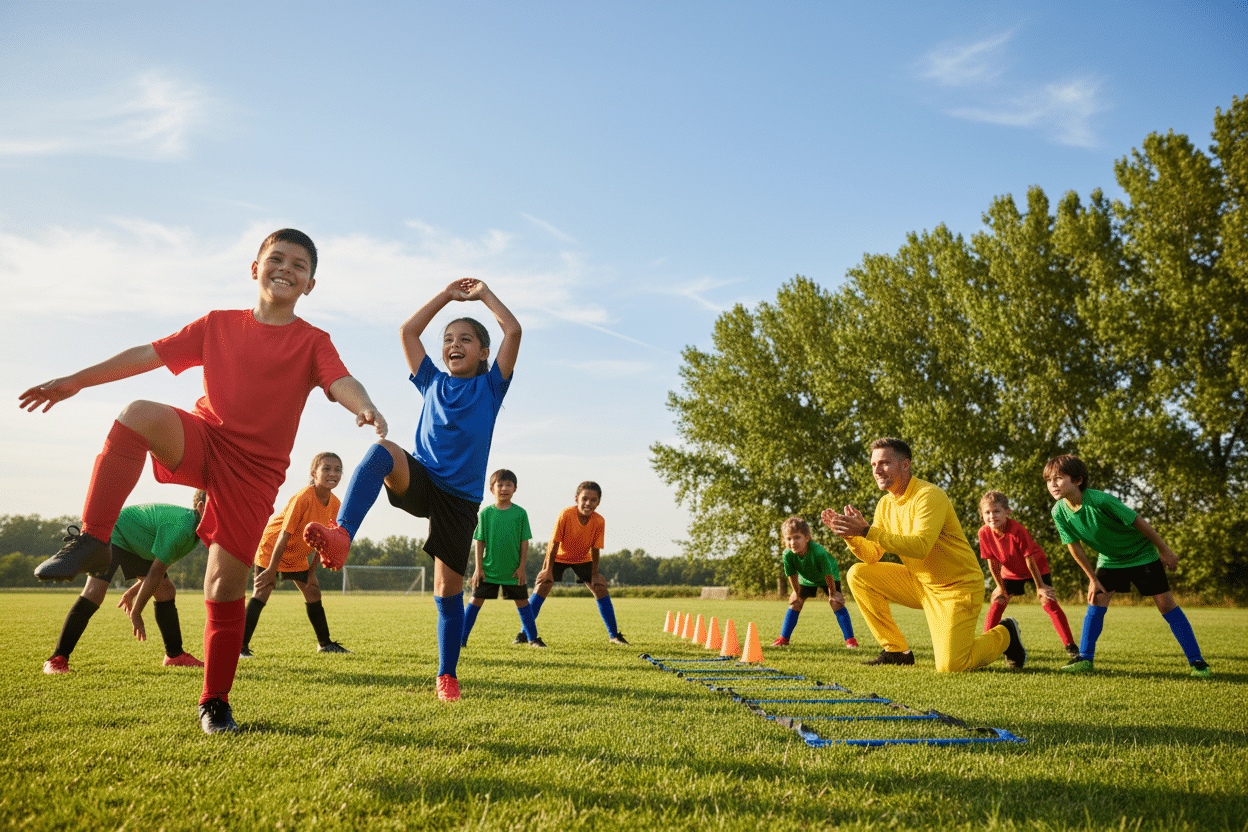
Ever watch your child sprint onto the field, full of energy but maybe a little stiff? I’ve been there too. Starting any session the right way makes all the difference for young athletes.
A good pre-practice sequence does two big things. It safely prepares their growing bodies for action and sharpens their focus for the fun ahead. This isn’t about complex drills only a pro coach would know.
My goal is to give you simple, effective steps. You’ll learn how these activities protect kids from common injuries. They also get hearts pumping and muscles ready to perform.
This guide focuses on the whole player—body and mind. You can use these ideas at every training session. Let’s build a foundation where safety and skill-building come first.
Key Takeaways
- Proper preparation before activity significantly lowers the risk of injury for young athletes.
- Effective routines increase body temperature and improve blood flow to muscles.
- Mental focus and readiness are just as important as physical readiness.
- The exercises in this guide are designed to be simple and adaptable for different age groups.
- You don’t need extensive coaching experience to implement these strategies successfully.
- Each step prioritizes the safety and natural development of the player.
- Following this guide provides a complete, repeatable system for every practice.
Introduction to Soccer Warm-Up Drills
Think of a warm-up as the ‘on-ramp’ to a great practice. It smoothly transitions your child from rest to activity. This part of your session is crucial for safety and performance.
I want to show you why these first minutes matter so much. Let’s look at the key benefits and the best way to start.
Benefits of a Good Warm-Up
Proper preparation delivers real results. It reduces injury risk by gradually increasing body temperature. This prepares your young athlete’s muscles for the work ahead.
Players also gain better mental focus. Their minds get ready for the session. Good drills increase the range of motion in their joints.
These exercises activate the heart and breathing systems. This improves overall readiness. It’s about preparing the whole player.
| Aspect | Static Stretching | Dynamic Warm-Up |
|---|---|---|
| Best Time to Use | After activity, when muscles are warm | At the start, to prepare for movement |
| Effect on Cold Muscles | Can be less effective, may cause strain | Gently increases blood flow safely |
| Impact on Heart Rate | Little to no increase | Raises heart rate appropriately |
| Prepares for Sport Skills | Focuses on flexibility alone | Mimics game-like movements |
How to Begin Your Session
Start with light activity that raises the heart rate. Get kids moving right away. Avoid having them stand still.
Choose fun, dynamic movements. These work much better than holding static stretches on cold muscles. Your players should feel energized and ready, not tired.
Building this habit now helps them at every level. It sets a foundation for learning new skills safely.
Dynamic Warm-Up Activities
Ready to see your child’s coordination and heart rate improve? Let’s dive into dynamic moves. These activities get the whole body ready for action.
They are much better than standing still and stretching. Your young athletes will move their muscles through a full range of motion. This prepares them safely.
Locomotion and Stretching Techniques
Start with simple locomotion. Have your players jog forward and backward. Add side shuffles and skipping.
These movements are dynamic stretches. The muscles are working, not held in place. This technique increases blood flow.
It gently prepares the legs and feet for more intense activity. I like to use lines. Each player takes a turn moving across the field.
Simple Exercises to Increase Heart Rate
Next, pick exercises that boost energy. High knees and butt kickers work well. They quickly raise the body’s temperature.
Lunges are also excellent. Try forward, backward, and sideways lunges. They activate the major leg muscles properly.
Even a one leg hop can be fun. Keep each activity short. The goal is alertness, not fatigue.
You will notice your players become more focused. Their hearts pump, and they are ready to play.
Effective Soccer Practice Warm-Up Routines
Let’s map out a clear, step-by-step plan for those crucial first minutes together. A reliable routine helps everyone feel prepared.
It builds good habits for the future. Your young athletes will know what to expect at every training session.
Steps for a Safe Practice Session
Start each gathering with light movement. Have your group jog or skip for three to five minutes. This raises their body temperature safely.
Next, introduce dynamic stretches. Leg swings and torso twists work well. These moves prepare muscles for sport-specific actions.
Then, bring in the ball. Let players get gentle touches while moving. This connects the warm-up directly to the game.
Keep the total time between ten and fifteen minutes. The intensity should build slowly. Never jump straight to full speed.
This structured way works for any skill level. Listen to your players and adjust the pace. Their readiness guides the safest path forward.
Consistency is key. A familiar start helps players focus and perform their best.
Ball Control and Dribbling Drills
Now it’s time to get the ball moving with some fun control exercises. These activities help young athletes feel comfortable with the ball before more intense play begins. Good touch sets a strong foundation for the entire session.
Dribbling Commands and Techniques
I love the Dribbling Commands drill. You mark a square grid about 20-25 yards wide. Each player starts inside with a ball.
They dribble freely until you call out a command. Your instructions guide their movement and skill use. This is a great way to incorporate fun warm-up exercises.
Try commands like:
- Freeze or Turn 180 degrees
- Outside of feet only or Inside of feet only
- Dribble faster or Dribble slower
Players get many touches. They learn to keep the ball close while listening and reacting. It develops both ball control and focus.
Zig Zag Dribbling for Speed
The Zig Zag drill builds quickness with the ball. Set up cones five yards apart in a zigzag line for about twenty yards.
The first player dribbles through the pattern. They use the inside, outside, and bottom of their foot to navigate.
This activity teaches how to handle the ball at pace. Players maintain control during quick direction changes. It’s excellent for building dribbling speed.
I recommend one minute per player in these drills. This gives everyone multiple touches without causing fatigue. Good ball control at the start leads to better performance later.
Passing and Receiving Warm-Up Routines
Now we’ll connect players with exercises that improve their passing and receiving skills. These activities build teamwork and get everyone involved right from the start.
Good passing habits form the foundation of great team play. I like to begin with simple, repeatable patterns.
Passing Drills Using Cones
Start with a basic two-player drill. Set up two cones to create a five-yard passing lane. Position your players about ten yards apart across from each other.
Each pair gets one ball. They use two-touch passes. This means they control the ball, then send it back.
Keep your athletes light on their feet between passes. This drill gives them many touches. It builds accuracy and timing for the main session.
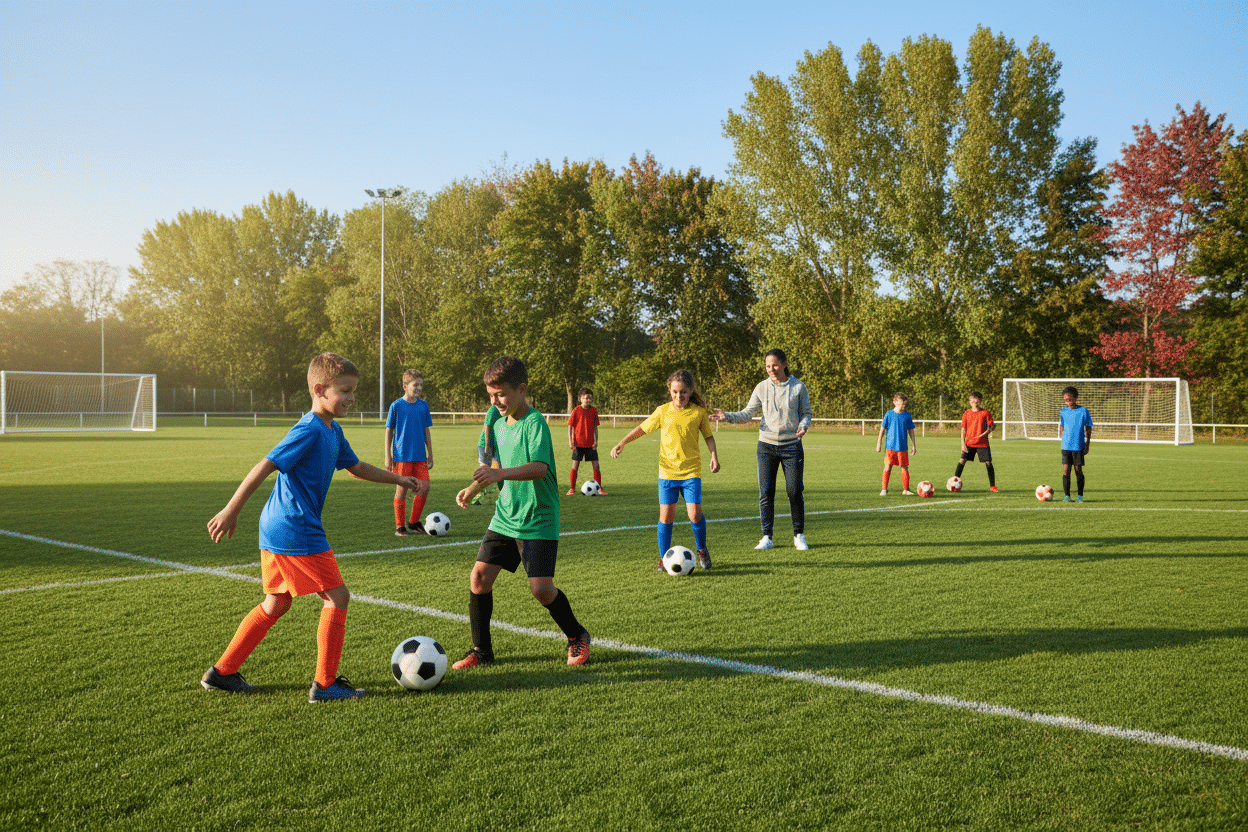
You can add a third cone to make a triangle. This variation teaches players to move after they pass. It’s excellent for all age groups.
Tic-Tac-Toe and Line Passing
Make your warm-up fun with Soccer Tic-Tac-Toe. Create a game board with cones about ten yards away. Split your group into two teams.
Players race to drop a colored pinnie on the board. This adds friendly competition. It also simulates the pressure of a real game.
For continuous movement, try a line passing combination. Place four cones along a line, each ten yards apart.
The first player in line starts with the ball. They pass to the next player and follow their pass. The pattern continues as the group moves up the field.
This teaches players how to advance the ball together. These routines keep players outside engaged. They develop fundamental skills in a dynamic way.
Fun Games to Increase Agility
I want to share two simple tag games that make improving agility exciting. These activities keep young athletes fully engaged from the very start. They turn essential skill-building into pure fun.
Tag Based Drills and “Catch Me If You Can”
First, try “Catch Me If You Can.” Set up three parallel lines on the field with fifteen yards between each. Divide your group into two evenly numbered teams.
Call out one team’s color. That side runs to their safety line. The other team turns and tries to tag them. This game trains explosive first steps and top speed.
If a player gets tagged, they complete five jumping-jacks before rejoining. Everyone stays active and gets multiple turns.
Next, “Sharks and Minnows” is perfect for younger players. Designate two sharks in the middle of a twenty-yard square. The minnows start on one side with a ball each.
Their goal is to dribble across to the other side without a shark kicking their ball away. This activity teaches proper footwork and control under friendly pressure.
Both games make the beginning of your session dynamic. They build natural agility and focus while everyone has a great time.
Relay Races for Team Building
Nothing brings a group together like a little friendly competition, and relay races deliver just that. This activity builds team spirit and makes an excellent capstone for your preparation. I find they work best at the end, when everyone is loose and ready.
Let’s look at how to set one up smoothly.
Setting Up Relay Races
First, divide your players into teams with equal numbers. This keeps things fair. Set up two parallel cone lines to create lanes. Each team lines up behind their starting cone.
One player from each team completes their part of the course. They tag the next person in line to go. The first team to have all members finish wins.
| Relay Type | Movement Pattern | Skill Developed | Best For |
|---|---|---|---|
| Sprint Relay | Straight-line running | Straight-line speed | All age groups |
| Skipping Relay | Dynamic skipping | Coordination & rhythm | Younger players |
| Slalom Dribble | Weaving with a ball | Close control at pace | Adding a skill drill |
| Passing Chain | Short passes down the line | Quick, accurate passing | Older, more skilled teams |
Coaching Tips for a Smooth Race
Ensure your players have done light movement first. This prevents strain. As the coach, you control the pace. Start simple, then add a ball or cones to increase the challenge.
Keep the energy positive. The goal is a fun, competitive activity that unites the team and prepares them for the main session.
Rondos and Possession Drills
One of my favorite ways to build skills is through a game called a rondo. This drill focuses on keeping the ball away from defenders. It’s a fantastic tool for any session.
Your players learn to think fast and work together. They practice communication and quick decision-making. This activity sets a focused tone right away.
Traditional Rondos Explained
Set up a circle about ten yards wide using cones. Place most players evenly around the outside. Put one or two defenders inside the circle.
The outside player starts by making a pass. They must keep possession from the defender. The defender tries to win the ball or intercept a pass.
If a defender wins it, they switch places with the player who lost it. This rotation keeps everyone engaged. It teaches how to create space and find open teammates.
Simple Possession Games
These games sharpen first touch and passing accuracy. Your group learns to move the ball under pressure. They must think ahead of each play.
You can adjust the circle size based on skill level. Add more defenders for a greater challenge. The goal is clean, quick passes.
This drill combines technical skills with mental focus. It’s perfect for the start of your practice. Your players will be dialed in and ready.
Warm-Up Routines for Injury Prevention
Let’s focus on the most important goal of any pre-activity sequence: protecting your child’s growing body. Smart preparation is the best way to stop common strains before they happen. I want to show you how dynamic stretching shields young athletes.
This part of your session is non-negotiable for safety. It prepares the whole body for action in a gentle, effective way.
Dynamic Stretching and Recovery
Dynamic stretches use movement, not holding still. This works better for warm muscles. Each exercise should be held for just 3-4 seconds.
Start with a quad stretch. Grab one ankle and pull it gently toward your body. Next, try a knee pull. Bend one leg up and pull the knee toward your stomach.
Hamstring sweeps are great too. Extend one leg forward and sweep down three times. Then, switch to the other leg.
Leg swings kick one leg straight up in front. Lunges with raised arms activate major leg muscles. Always repeat each move on the opposite side.
This balanced approach reduces the risk of pulled muscles. Recovery between exercises lets the body adjust. Taking this time is your best defense against injury.
Never skip this crucial part of your practice, no matter how short on time you are. Your players will stay safer and perform better.
Conclusion
You now have all the tools to start your next session with confidence and purpose. I hope this guide empowers you to lead effective preparation time.
Your primary goal as a coach is preparing players safely while keeping things fun. The drills shared here work for various age groups and skill levels.
Remember, consistency is key. Use these plans at every training gathering. Your team will develop better ball control, passing skills, and field awareness.
You have a complete system from dynamic movement to possession games. Begin each practice with 10-15 minutes of structured warm-up. Your players will stay healthier and perform better.
You are building a foundation for success at every level. Enjoy the journey and watch your team grow.