
Ultimate Guide to Soccer Practice for Advanced Players
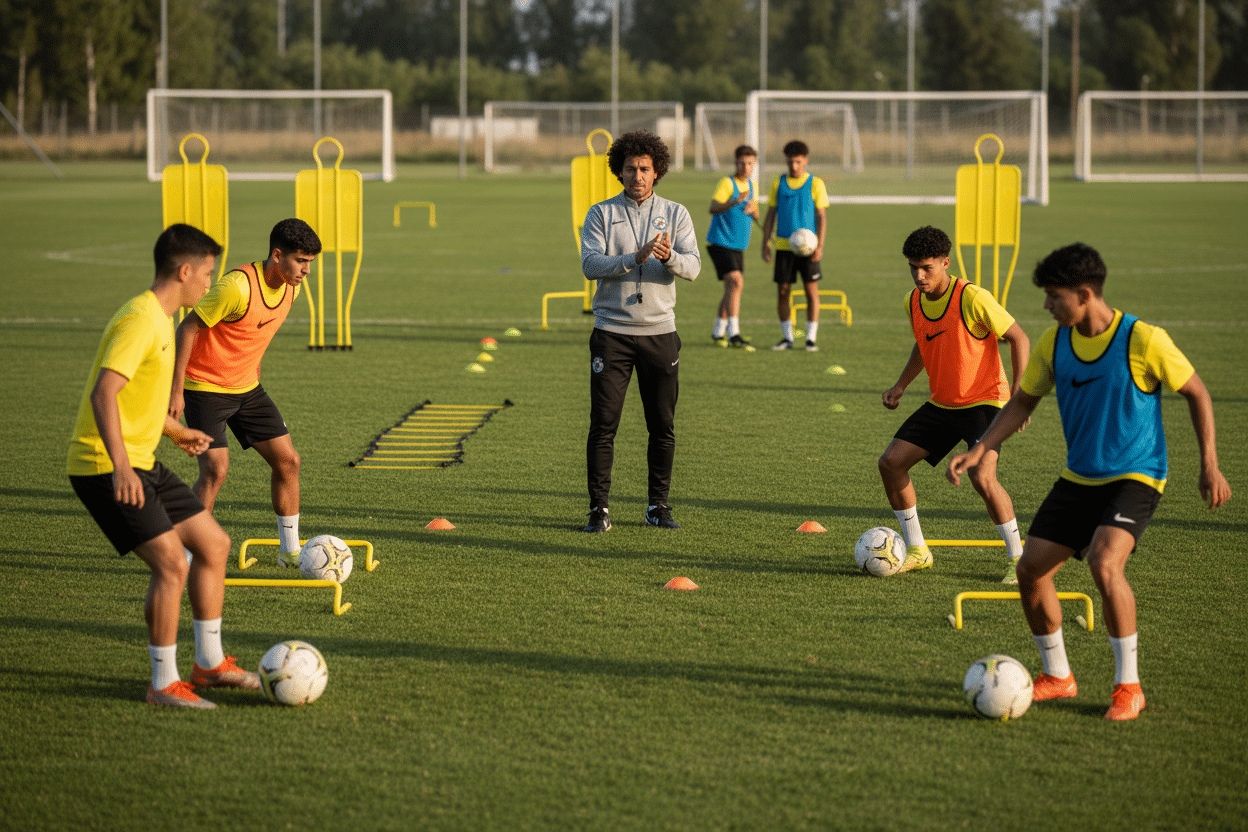
Watching your young athlete move beyond basic drills is incredibly rewarding. You see them mastering fundamentals and craving more complex challenges on the field.
This guide is here to help. I’ll show you how elite training shifts focus. It’s not just about repeating skills—it’s about applying them under pressure that mimics a real match.
We’ll explore how to build a complete athlete. That means blending physical conditioning with sharp tactical thinking. The goal is to help competitors move smarter and react faster.
Whether you’re a parent supporting this journey or new to coaching, you’ll find practical steps here. I’ve broken everything down from skill refinement to game scenarios and mental preparation.
Key Takeaways
- Advanced training builds on solid fundamentals with more complex, game-like challenges.
- The focus shifts to drills that mirror real match conditions and pressure.
- Working smarter with targeted exercises is more important than just working harder.
- Developing a complete athlete requires combining technical skills with physical conditioning.
- This guide provides a step-by-step path through tactical drills, game scenarios, and mental prep.
- You’ll gain practical knowledge to support your child’s or team’s development right away.
The Importance of Training Fundamentals
Before tackling advanced moves, a solid base in essential techniques is crucial. I see many young athletes eager to skip ahead. But the core skills are what make everything else possible.
Even the most experienced competitors benefit from revisiting the basics. It builds confidence and prevents bad habits.
Basic Skills and Techniques
Fundamental abilities include dribbling, passing, shooting, and defending. Mastering these creates a strong foundation.
Good dribbling isn’t just about speed. It’s about control and quick direction changes. Players must adjust their body while keeping the ball close.
This kind of control comes from focused repetition. That’s where structured drills come into play.
The Role of Drills in Enhancing Performance
Drills break complex movements into simple parts. Players repeat these parts until they feel automatic.
I always start a session with fundamental exercises. This warms up the muscles and sharpens the mind. It reinforces proper technique before adding pressure.
For example, cone patterns help with dribbling control. Weaving through them teaches ball mastery at different speeds. You can find great tips for improving footwork here.
The right drill makes practice efficient. It turns isolated skills into reliable game actions. That’s the real goal of all training.
Soccer practice for advanced players
The next step in development focuses on combining skills under realistic pressure. Your routine must change to match this new challenge.
It’s about adding layers of complexity. Athletes learn to think and react faster during every exercise.
Integrating Complex Drills into Your Routine
Advanced soccer training combines multiple techniques into one fluid drill. You move beyond isolating a single skill.
This approach mirrors real-game conditions. It forces quick decisions while the body is in motion.
The key is progression. Start with a simpler version of a drill and gradually increase difficulty.
Add pressure by reducing time or including opponents. Your weekly training sessions should build logically.
Begin with technical work early on. Progress to game-like scenarios as the week continues.
I recommend adding one new complex exercise per session. Balance it with familiar drills to avoid overwhelming players.
Create combinations that require communication. Try passing sequences with specific movement patterns. This coordination is vital for small-sided games and full-match success.
Building Advanced Drills and Training Plans
Combining physical conditioning with technical work is a game-changer. Your weekly plan should push multiple abilities at once. This saves time and builds a more complete athlete.
Combining Fitness and Skill Exercises
I want to show you a powerful method. You can blend fitness and skill work in the same drill. This efficient approach improves both areas.
Add plyometric exercises like box jumps. These boost power for stronger shots. Research shows this leads to better game performance.
Dribbling, Passing, and Reaction Drills
Now let’s look at specific soccer drills. The goal is to challenge technical skill and mental speed.
You can create fun reaction drills. Call out colors to signal a direction change. This sharpens awareness under pressure.
Here are some excellent patterns to try. They focus on dribbling control and crisp passing.
| Drill Name | Field Size | Players | Primary Focus | Time |
|---|---|---|---|---|
| Dribbling & Passing Warm-up | 20×30 yds | 2+ | Dribble/Pass | 10 min |
| One-Touch Passing Combo | 20×20 yds | 6+ | Passing | 20 min |
| Six-Cone Passing | 15×25 yds | 5+ | Passing & Awareness | 15 min |
| Four-Cone Passing | 12×12 yds | 3 | Passing Technique | 10 min |
Dedicate part of each session to these combinations. They make your training far more effective.
Game-like Scenarios and Tactical Training
Small-sided games create a perfect environment for learning tactical concepts through play. I always recommend ending your training session with these scenarios.
They help competitors apply skills in realistic match situations. This is where everything you’ve practiced comes together.
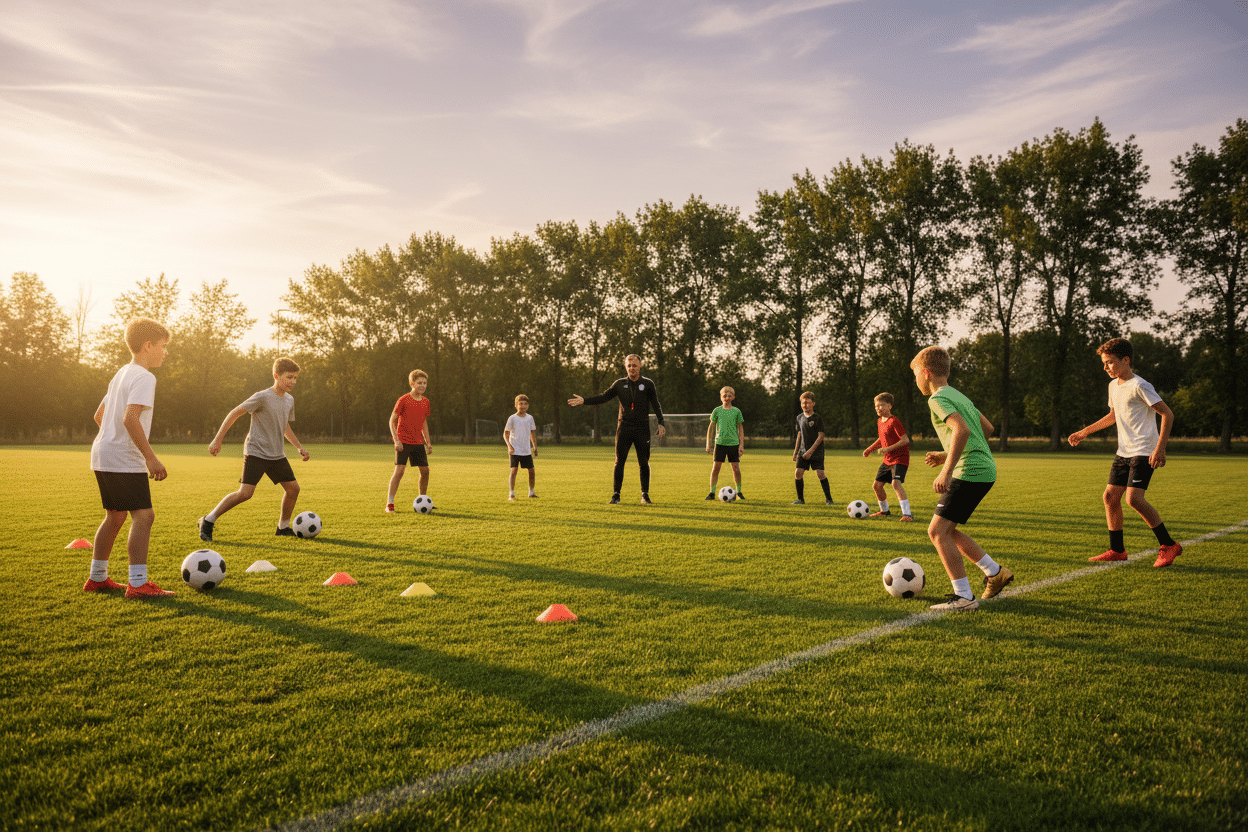
Small-Sided Games and Field Simulations
These condensed games force athletes to touch the ball more often. They also make faster decisions than full-sided matches.
The 4-Goal Game is a brilliant example. It teaches your team to switch the point of attack on a 25×35 yard field.
A 7v7 scrimmage is another great way to finish. It lets players work on tactics in a realistic 40×60 yard space.
1v1, 4v2 and Other Tactical Drills
Specific drills teach spacing and support through actual play. The 1v1 Reaction Gate Challenge enhances quick decision-making.
The 4v2 Game to Goal builds attacking play near the penalty area. Forwards learn to decide between shooting and passing.
These activities build smart, reactive competitors. They learn by doing, not just listening.
| Drill Name | Field Size | Players | Focus | Time |
|---|---|---|---|---|
| 1v1 Speed & Reaction Game | 15×25 yds | 4+ | Game-like | 15 min |
| 4-Goal Game | 25×35 yds | 4-16 | Possession | 20 min |
| 1v1 Reaction Gate Challenge | 10×10 yds | 6+ | Attacking | 20 min |
| 4v2 Game to Goal | Half Field | 10+ | Game-like | 20 min |
| 7v7 Scrimmage | 40×60 yds | 14 | Game-like | 20-30 min |
Integrating Mental and Physical Conditioning
Your mindset on the field can be just as powerful as your physical strength. I want you to understand that mental skills are just as important as physical abilities. A competitor’s focus directly affects their performance.
Boosting Focus and Field Awareness
You can teach visualization technique. Picture yourself controlling the ball or making a perfect pass. This way of preparing helps your brain get ready for the real game.
I recommend a simple pre-game routine. Take time for deep breathing. This reduces anxiety and sharpens your concentration when it matters most.
Positive self-talk helps players stay confident. Encourage them to use short affirmations. This builds mental toughness during tough moments.
Integrate these exercises into regular training. Practice staying present during drills. This builds the skill of maintaining focus under pressure.
Breathing breaks help players reset. They learn to read the game and anticipate the next move. This combination creates well-rounded athletes who perform consistently.
Effective Communication and Team Coordination
The most successful teams I’ve seen share one common trait: they communicate constantly. This simple habit transforms individual effort into unified action on the field.
Guidance for Coaches and Players
I believe clear talk between coaches and players makes the biggest difference. You need to teach athletes to call for a pass, signal runs, and give warnings.
The best coaches explain the “why” behind every drill. This helps players understand how it applies to real soccer games. They learn to make smarter decisions during matches.
Team coordination improves when everyone knows their role. Athletes see how their position connects to teammates. This creates a fluid unit on the field.
You should design practice sessions that require talking. Force the habit of verbal communication during play. It becomes second nature in games.
Give specific feedback, not just generic praise. Tell a player exactly what they did well or need to fix. This clarity accelerates development.
I recommend coaches and parents work together. Consistent messages from both sides build a positive environment. The whole team benefits.
Run drills where success depends on teamwork, not just individual skill. This builds essential coordination. A resource like Soccer Coach Weekly is great because it explains both the “how” and the “why” of these methods.
The key is balancing instruction with letting players solve problems. This builds their soccer intelligence. They learn to communicate and coordinate on their own.
Resources and Tips for Continuous Improvement
Great development is fueled by a constant search for new ideas and better methods. I want to share the best resources that help you continue learning over time.
Online Tools, Camps, and Feedback
You can find thousands of soccer drills on platforms like YouTube. Professional coaches share free tutorials from around the world.
The advantage is you can watch drill demonstrations many times. You can then adapt them for your specific training sessions.
I recommend attending focused camps if you’re serious. These camps provide intensive soccer training on specific skills.
You should also seek regular feedback from experienced coaches. Their outside perspective spots areas you might miss.
Constructive criticism is essential for growth. It shows players exactly what to work on next.
Create a personal library of favorite soccer drills. This saves planning time and ensures quality sessions.
The way you approach improvement matters. Small, consistent changes add up to big progress.
Resources like Soccer Coach Weekly offer organized drill libraries. They explain the setup and purpose of each exercise clearly.
Conclusion
Bringing all these elements together creates a powerful and complete training experience. This guide gives you the tools to combine technical skills with physical and mental work.
Start with just one or two new drills. Let your players master each step before adding more pressure. The core principles work for any group size or game situation.
Remember, smart soccer practice builds confident athletes. Your dedication to this process makes all the difference. Now, go help your team shine.