
Weekly Soccer Practice Plans: A Step-by-Step Guide
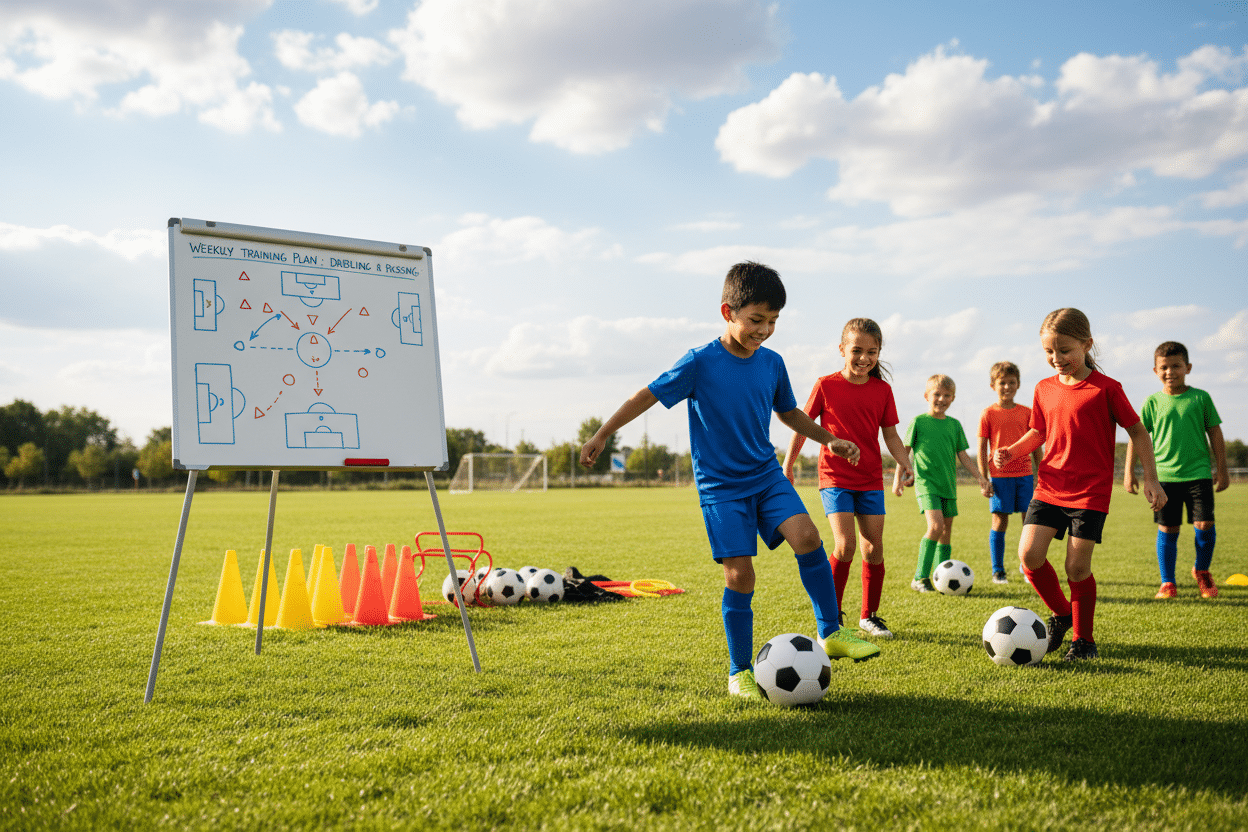
That first moment you agree to coach a youth team is a mix of excitement and pure panic. Your heart sinks a little when you realize you need to figure out what to do at every single session.
I’ve been there. You want the kids to improve and have fun, but organizing your time with them feels overwhelming. This guide is here to change that.
We’ll walk through creating a weekly structure that makes sense for your team and your life. You’ll learn how to build sessions that keep young players engaged and developing their skills.
The goal is to give you a clear roadmap. I’ll share simple steps so you can plan ahead without the stress. This lets you focus on coaching and connecting with your team.
Key Takeaways
- Starting as a new coach can feel overwhelming, but a good plan provides clarity and confidence.
- Effective session structure is key to keeping kids engaged and helping them learn.
- This guide offers a simple, step-by-step approach tailored to your team’s needs.
- Planning ahead saves you time and reduces last-minute stress.
- A consistent routine helps players develop their skills throughout the season.
- The focus is on making the experience enjoyable for both the coach and the kids.
- You’ll finish with a practical framework you can use immediately.
Overview of Weekly Soccer Practice Plans
A solid weekly plan turns coaching from a guessing game into a guided journey. It gives you a clear structure for what your team will work on. Everyone knows what to expect.
Think of it as a roadmap for your decisions. You’ll see which skills to focus on and how long to spend on each activity. Everything connects.
Good practice plans mix different types of exercises. Kids get variety while building their fundamental abilities. You don’t need fancy software. A simple note on paper works just fine.
The key is consistency. Following a weekly structure helps players build on previous lessons. They make faster progress.
This approach takes the guesswork out. You will feel more confident leading each session. Many coaches find it keeps them organized.
It also makes training time less stressful for everyone. To keep things engaging, consider adding fun problem-solving games. These activities build skills in a playful way.
Importance of a Weekly Training Routine for Youth Soccer Teams
For kids learning the game, a predictable routine is the foundation for real growth. It turns chaotic energy into focused learning. Your team knows what to expect and feels ready to play.
A set schedule helps young players build good habits. They show up prepared and mentally engaged. This structure supports their growth on and off the field.
Why Consistency Matters
Regular meeting time creates a safe space for kids. They feel comfortable and confident. This comfort lets them try new skills without fear.
Repetition is how skills stick. Doing drills each session builds muscle memory. Kids aren’t relearning basics every time they arrive.
Benefits for Player Development
You’ll see player development accelerate with a steady routine. Skills build on each other week after week. The whole team improves together.
Remember, every child grows at their own pace. A good routine includes activities for different skill levels. This recognizes each player’s potential.
The benefits go beyond the field. Kids learn discipline and commitment. Families can plan better, leading to fewer missed sessions.
| With a Consistent Routine | Without a Consistent Routine |
|---|---|
| Players build skills progressively | Skills plateau or develop slowly |
| Team chemistry strengthens | Teamwork feels disjointed |
| Kids feel secure and confident | Players may feel anxious or unsure |
| Families plan around fixed times | Attendance becomes unpredictable |
This approach makes your practice time more effective. It supports long-term development in youth soccer. You create an environment where every child can succeed.
Key Elements of a Successful Practice Plan
Every time I design a new training plan, I focus on a few core elements that never change. These pieces work together to create a complete and effective session. I think of them as the building blocks for player growth.
A strong session includes four main parts:
- A proper warm-up to get bodies ready.
- Skill-building activities that match your team’s level.
- Game-like situations to apply new skills.
- A cool-down to help muscles recover.
Drills and Technical Skills
Your drills should target specific technical skills like dribbling or passing. Start simple and increase the challenge as kids improve. This progression keeps them motivated.
Mix individual work with partner exercises. Small group activities keep everyone engaged. Always include moments for decision-making. Kids learn when to use a skill, not just how.
Conditioning and Recovery
Conditioning should feel like play, not a workout. Use activities that get kids moving and sweating while having fun. This builds fitness naturally.
Remember to schedule water breaks and short rests. Young bodies need recovery time to grow strong. Balance high-energy games with calm moments.
I always set a clear goal for our time together. This helps me see if we’re making progress. Balance is key—too much focus on one area leads to boredom or uneven development.
Creating a Step-by-Step Guide for Practice Sessions
I always begin my planning by asking one simple question: what’s the purpose of today’s meeting? Defining clear goals for each session gives your entire plan direction.
Next, divide your available time into blocks. A common practice schedule includes a short warm-up, a longer block for skill work, time for game activities, and a brief cool-down.
Write everything down. Note each activity, how long it will take, and what gear you need. This simple planning step prevents confusion when you’re with the team.
Your guide should have a logical flow. Each part of the session should connect to the next. This structure helps kids see how skills build on each other.
Include specific instructions for drills. Also, plan for flexibility. If an activity isn’t working, know your next move.
Having this written guide helps you stay on track. It makes your time efficient. Soon, you’ll have templates you can adapt for any future session.
Structuring Sessions to Enhance Player Development
Think of your session as having two connected goals: helping individuals shine and making the group stronger. True growth happens when you balance both. Your structure should give each child a chance to improve their own skills while learning to be a good teammate.
Individual Skill Improvement
Kids get better through repetition. Design activities where every player is active, not waiting in line. The goal is lots of touches on the ball.
Use progressions to build confidence. Start with an unopposed drill. Then add a passive defender. Finally, move to full competition. This step-by-step method enhances skill mastery.
Building Team Dynamics
Strong teams communicate and make decisions together. Choose games where players must talk and support each other’s play.
I mix partner work with small-group activities. This helps kids build relationships across the whole team.
- Rotate who demonstrates a drill. Give them opportunities to lead, which builds huge confidence.
- Always praise positive effort and teamwork. This reinforces the behavior you want to see.
The best practice balances these two areas. Your players develop personally and become better teammates.
Incorporating Technical Skills Drills
I break down complex moves into simple, repeatable steps. This is how kids build real technical skills. They learn to control the ball and pass it with confidence.
Focus on just a couple of key areas each time you meet. Going deep on a few skills works better than skimming many. Your players will master the fundamentals.
Design your drills so every child gets lots of touches. Use activities where each has their own ball or works in pairs. Keep everything in motion.
Soccer happens while running, so your exercises should too. Always include movement. Also, have them use both feet. A player limited to one foot struggles in games.
Start with the basic version of a drill. Add challenges as your players improve. You can increase speed or add a gentle defender.
Show them how it’s done first. Then let them try, offering helpful feedback. Remember, younger kids need simple, repeated actions. Older groups can handle more complexity.
| Focus Area | Effective Method | Common Mistake |
|---|---|---|
| Ball Control | Everyone has a ball; drills involve moving with it. | Long lines where kids wait for a turn. |
| Incorporating Movement | Drills happen while walking, jogging, or changing direction. | Players standing still to perform a skill. |
| Using Both Feet | Specific instructions to pass or dribble with the weak foot. | Only practicing with the dominant foot. |
This approach builds a strong foundation. Your team gains the tools they need to play well together.
Enhancing Physical Fitness Through Conditioning and Strength
Fitness for kids on the field comes from activities that feel like play, not work. You don’t need heavy weightlifting. Focus on age-appropriate exercises that build strength, speed, and endurance naturally.
Weave conditioning into your regular drills. Have players run and change direction while competing for the ball. This approach builds fitness through soccer-specific movement. Kids stay engaged because they’re having fun.
Simple bodyweight exercises are perfect. Squats, lunges, and push-ups help players develop the strength they need. No special equipment is required.
For quickness, use cone drills and short sprints. These activities improve acceleration and foot coordination. Always include mobility work too. Dynamic stretches prepare the body and help prevent injuries.
| Fitness Type | Primary Focus | Sample Activity |
|---|---|---|
| Strength | Builds core and leg power | Bodyweight squats and lunges |
| Speed | Improves quick acceleration | Short sprint bursts |
| Agility | Enhances footwork and direction change | Cone drills |
| Mobility | Prevents injuries and aids coordination | Dynamic hip openers |
This kind of integrated training makes your session effective. Your players gain confidence in their physical abilities on the field.
Effective Use of Small-Sided Games and Drills
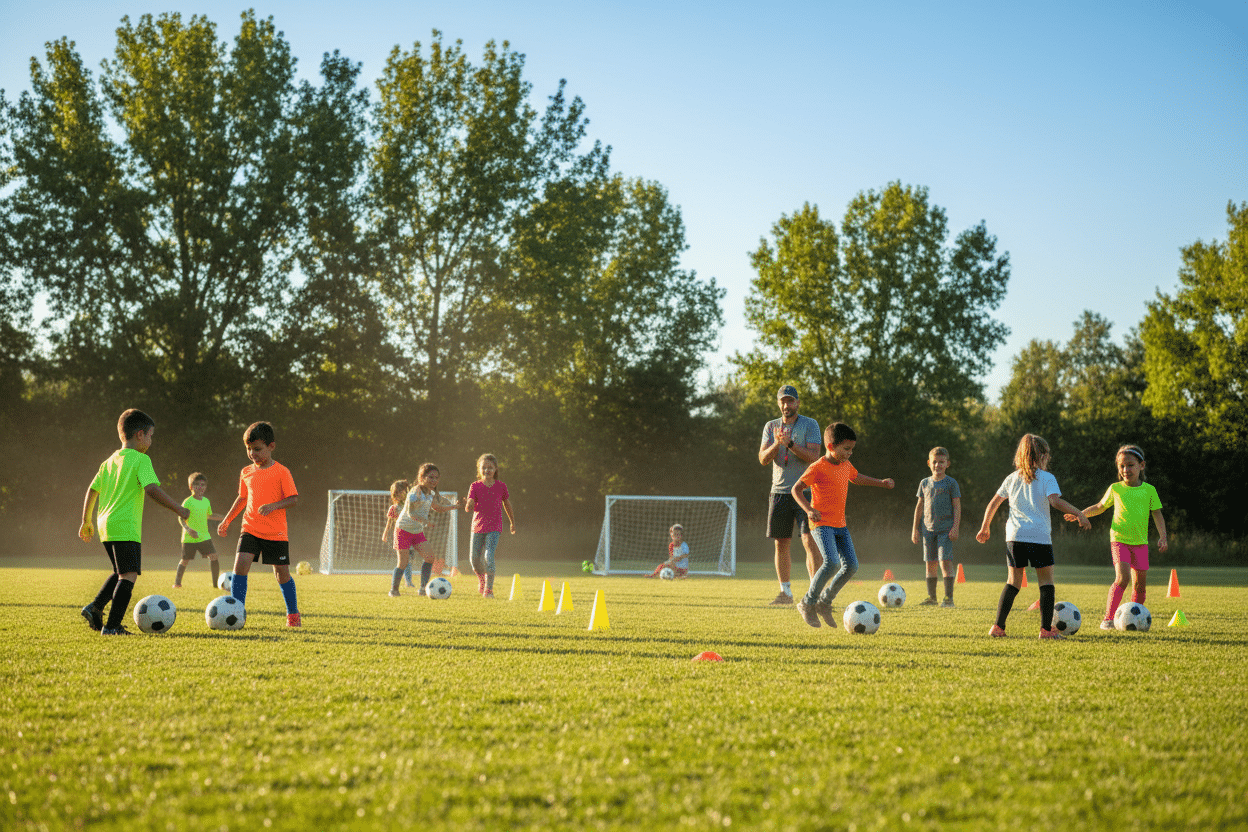
When I want to boost both skill and teamwork, I turn to small-sided games and focused drills. These activities keep kids fully involved and learning.
These setups create realistic match conditions. Players face constant decisions in tight spaces. This is where real growth happens.
Adding Tactical Challenges
You can shape these games with simple rules. For example, require two passes before a shot. This adds a layer of thinking.
Another rule restricts where players can go. This forces better spacing and awareness. Kids solve problems without realizing it.
Improving Technical Abilities
The pressure in these games improves control. Players must use both feet to succeed. Their first touch gets better fast.
I love using these because development happens fast. Everyone gets a chance to shine in every session.
| Focus Area | Small-Sided Games Approach | Isolated Drill Approach |
|---|---|---|
| Player Involvement | High; constant touches and decisions | Can be lower with waiting time |
| Decision-Making | Built into the speed of play | Often removed or simplified |
| Skill Application | Under pressure, in game-like situations | In controlled, repetitive patterns |
| Fun & Team Dynamics | Naturally high; builds chemistry | Varies; can feel like work |
Time Management: Balancing Practice and Rest
I learned early on that a watch is just as important as a whistle for a productive meeting. Good time management makes your training effective. It shows respect for everyone’s schedule.
Plan your sessions with a clock in mind. Write down how many minutes each activity should take. I suggest using a timer during practice.
This way, you keep track without interrupting the flow. Build in short water breaks. They give necessary rest and act as smooth transitions.
| Effective Time Management | Common Pitfalls |
|---|---|
| Use a timer to keep activities on schedule | Letting drills run too long, losing focus |
| Plan short water breaks as transitions | No planned rest, leading to burnout |
| Balance high-energy and low-energy activities | All intense work, no recovery time |
| Respect younger players’ shorter attention spans | Using the same plan for all age groups |
Balance intense activities with calmer ones. This prevents burnout. Your planning should also include full rest days.
Kids need recovery for their bodies to grow. Lighter sessions before game days help performance. Good time use teaches a valuable life skill.
Adapting Plans for Different Age Groups
One of the most important skills a coach can develop is knowing how to adjust for different ages. Children’s physical abilities and understanding of the game change as they grow. Your coaching approach must evolve with them.
Setting Objectives for Younger Players
For young kids, set simple goals. Focus on basic ball skills, having fun, and being part of a team. Your plan should include short exercises with lots of variety.
Give opportunities for every child to succeed, regardless of their current ability. This recognizes each player’s potential. It builds confidence and a love for the game.
Using Periodization for Older Players
Older players need more advanced training. This includes tactical understanding and position-specific work. Use drills that simulate real games, putting skills under pressure in game-like situations at high speed.
Periodization is a coaching concept where you plan the season in phases. You build fitness and complexity gradually. This approach works well for competitive teams and supports long-term player development.
Tips for Coaches: Staying Motivated and Organized
Staying organized behind the scenes makes your time on the field much smoother. Remember your core purpose. You are helping kids build skills, confidence, and a love for the game.
Keep a simple notebook or digital file. Store your session ideas, player notes, and progress there. This system saves you stress later.
Connect with other coaches to share experiences. It reminds you that you’re not alone. Resources like Soccer Coach Weekly offer excellent support by clearly explaining the “how” and “why” behind methods.
Set small goals for yourself each week. Maybe learn one new drill. Reflect on what worked after each meeting.
Find ways to make coaching fun for you too. Your enthusiasm is contagious. Don’t hesitate to ask for help or use quality resources. Good coaches always learn. This is true even for coaching kids soccer without a club.
| Effective Approach | Common Challenge |
|---|---|
| Keep a dedicated coaching notebook for plans and notes. | Relying on memory, leading to forgotten ideas. |
| Set one small, achievable personal goal per week. | Feeling overwhelmed by trying to learn everything at once. |
| Connect with a peer group for support and new ideas. | Working in isolation, which can drain motivation. |
| Schedule brief reflection time after each session. | Moving on too quickly without learning from experience. |
Your coaching experience grows over time. Be patient with yourself as you develop. This is the best way to stay motivated for the long run.
Using Equipment and Space Effectively in Soccer Practice
Great training doesn’t require a professional setup or expensive gear. You can create excellent sessions with simple items. I use basic tools like cones, a wall, and a jump rope.
Your space matters more than its size. Set up multiple small activity areas. This keeps everyone moving and engaged.
Each player should have their own ball during drills. This maximizes touches and skill development. Organize your equipment before the session starts. It saves valuable time.
Creativity turns limited resources into great exercises. Look at how to use common items.
| Equipment | Primary Use | Creative Alternative |
|---|---|---|
| Cones | Mark boundaries and set up drills | Use water bottles or painted lines |
| A Wall | Practice passing and ball control | Acts as a constant rebounder partner |
| Agility Ladder | Improve footwork and coordination | Use tape on the floor to create one |
| Resistance Bands | Build strength for movements | Add challenge to warm-up exercises |
The way you use your space and gear matters most. Simple, organized tools lead to effective player development. Your creativity beats fancy equipment every time.
Weekly soccer practice plans: A Practical Roadmap
Your weekly training routine should feel like a balanced menu, offering different developmental focuses each day. This approach gives your coaching a clear structure. It turns a list of drills into a purposeful plan for growth.
I like to assign a primary theme to each meeting. For example, Monday could focus on technical work with the ball and conditioning. Tuesday might build strength and mobility.
This kind of schedule ensures you cover all key areas:
- Technical Skills: Ball mastery and first-touch drills.
- Physical Fitness: Conditioning, speed, and strength work.
- Tactical Understanding: Game situations and decision-making.
- Recovery: Active rest and full days off.
Your roadmap doesn’t need to be complex. A simple schedule written down creates consistency. It makes planning each session easier because you know the daily focus.
Match this structure to your team’s actual schedule. The goal is balanced development over time. This systematic way is how club coaches build player skills and confidence.
Monitoring and Adjusting Your Training Sessions
Your team’s growth depends on your ability to observe and adapt your methods. The best plans are flexible. You must watch how your team responds in real time.
This approach turns every meeting into a learning opportunity for you. Pay close attention during your training sessions. Look for engagement and understanding.
Evaluating Progress
Take quick notes during or after your sessions. What drill sparked excitement? Which one caused confusion? These notes help you improve future sessions.
Watch for signs that players develop skills. Is each player more confident with the ball? Are they making smarter choices during play?
Your evaluation should check key areas like ball control and passing. Set aside time every few weeks to review your goals. Is your team moving in the right direction?
| Signs of Progress | Areas Needing Adjustment |
|---|---|
| Players execute skills with less hesitation | Drills are too complex, causing frustration |
| Team communication improves during activities | Kids seem bored or disengaged |
| Skills from practice appear in game situations | The same mistakes repeat each week |
| Players ask questions and show curiosity | Activities feel chaotic or lack clear purpose |
If something isn’t working, change your way. Ask your team for their feedback. Their input is invaluable for making smart adjustments.
Remember, development isn’t always a straight line. Some weeks show huge leaps. Other weeks feel slow. That’s completely normal.
Implementation Strategies from Professional Sources
A key step in improving as a coach is to study and adapt methods from proven professional resources. This approach moves your planning from guesswork to a clear system.
Professional coaching sources stress the need for clear objectives. You should have goals for each training session, your weekly schedule, and the entire season. These targets should match your team’s skill level.
Resources like Soccer Coach Weekly are invaluable. They explain not just what to do, but why certain methods work. This clarity helps you make informed choices.
Adopt a player-centered coaching philosophy. Focus on what’s best for each child’s growth, not just winning games. For older ages, learn about periodization. This means planning the season in phases to build skills and fitness safely.
You can use these strategies even as a volunteer. Learn from quality sources and adapt ideas to your group. The purpose is to give kids the best experience and development opportunities.
Many club programs offer education for coaches. Use these resources to implement proven tactics. Small improvements in how you run sessions make a big difference over time.
Remember, coaching requires continuous learning. Your approach should evolve with your experience. This mindset ensures you keep getting better.
Conclusion
Your journey as a youth coach is about creating a positive space where kids can grow. Good coaching is within your reach. It starts with a focus on what’s best for your players.
A structured approach to your plans pays off. It gives your team consistent opportunities to build skills and confidence. This fuels their love for the game.
Your role extends beyond teaching soccer. You help players learn teamwork and persistence. Focus on being consistent and enthusiastic in each session. Learn and improve right alongside your team.
The goal of youth soccer is creating positive experiences. Your effort keeps kids active, engaged, and excited to play. This is how you support real player development and a lifelong enjoyment of the game.