
Preschool Soccer Learning Milestones Explained
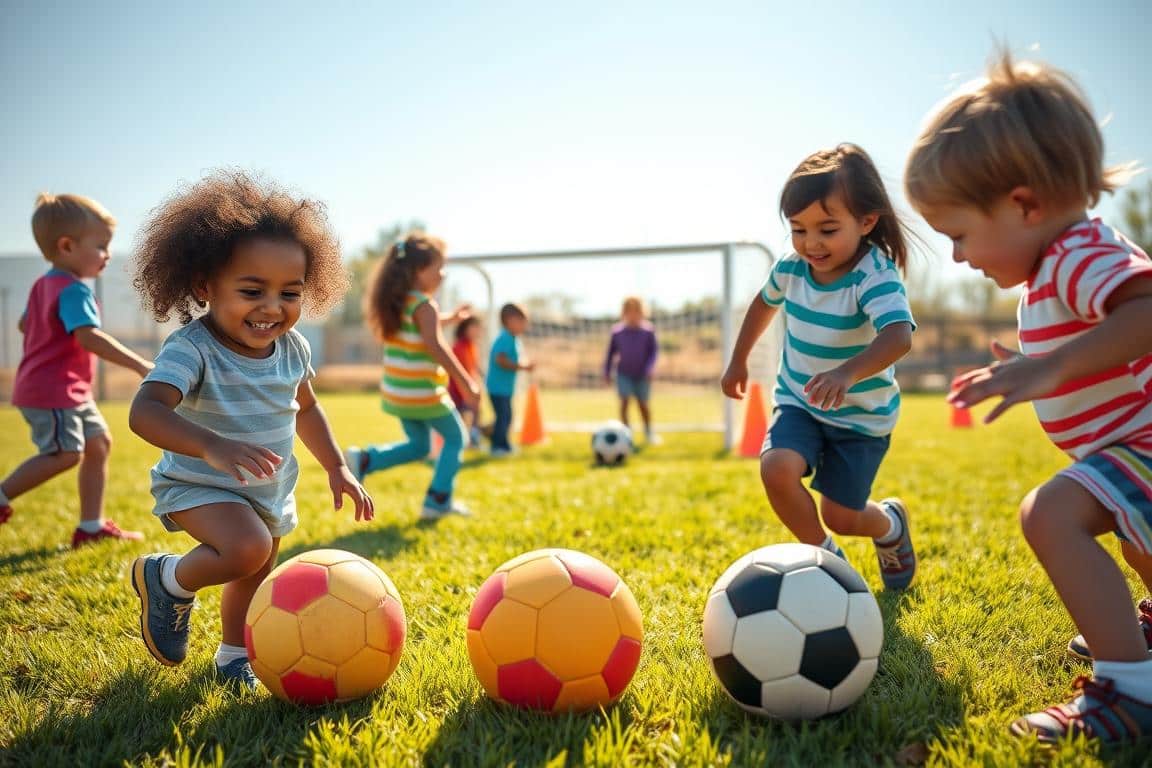
I call these preschool soccer learning milestones a gentle map for families who want fun, safe growth on the field.
Kids gain sport skills and life skills at once. They build confidence, teamwork, and simple communication through short, playful drills that feel like a game.
I describe four core groups of skills — technique, game intelligence, fitness, and mindset — and show easy ways parents can help at home. This keeps effort low and joy high, so a child touches the ball more and stays excited to play.
Small-sided, no-goalie play and quick bursts fit short attention spans. You get clear steps by age, tips for safe practice, and ways to spot steady development without pressure.
Key Takeaways
- Focus on short, playful drills that boost ball touches.
- Use small-sided games to match attention spans and safety.
- Work on technique, game sense, fitness, and a positive mindset.
- Parents can add brief, fun sessions at home to support progress.
- Choose programs with caring coaches and clear plans for young players.
What preschool soccer learning milestones mean right now
You can spot progress in tiny, clear moments on the field. I mean the small, visible steps that show a child is growing as a player today.
How players develop across early years
Early development puts comfort with the ball first. Kids need lots of touches, simple direction cues, and room to move.
Coaches use short activities to build balance and quick feet. Low strain and many attempts beat strict rules at this age.
Why fun and simple games drive real progress
- A milestone is a small, visible step — like stopping the ball on a cue.
- Players develop by touching the ball often and smiling while they move.
- Short, simple games link movement to success. Think Red Light, Green Light or Freeze Tag.
- You’ll notice balance, quick feet, and listening skills before long runs or complex plays.
- Progress varies by age and child; every player needs many chances to try.
Focus on clear starts and stops so kids learn pace and control without stress. Reward effort and small wins, not just goals.
For quick tips on introducing the sport at home, see this step-by-step guide.
Core skill groups for young players
Think of core skills as four friendly areas that work together to help a child play better. I explain each in plain words and give one clear sign a parent can look for.
Technique: first touches, dribbling, and safe kicks
Technique builds automatic, efficient movement and lowers injury risk. I look for soft first touches, gentle taps for ball control, and safe kicks using the inside or laces, not the toe.
Parent cue: ask for “little steps, light feet” to keep the ball close.
Game intelligence: simple space and direction cues
Game intelligence is basic tactical awareness, like where to move next. I use cues such as “find space,” “turn to the open side,” and “look up.”
Parent cue: praise moves into clear lanes before the child gets the ball.
Physical fitness: balance, agility, and quick feet
Physical fitness supports play and safety and should match the child’s level. Balance, agility, and quick feet come first; heavy conditioning waits.
Parent cue: try simple ladders, side steps, or hop turns to see safer changes of direction.
Mindset: confidence, effort, and calm under pressure
Mindset shapes calm, confident effort and quick resets after mistakes. A confident player will ask for the ball and try again after a miss.
Parent cue: praise bravery and quick restarts more than perfect plays.
- Quick note: each group helps the others — better balance improves touches, and calm choices improve control.
- Keep work short, fun, and repeatable to match attention and encourage steady development.
Milestones by age group: U4–U6 (3–5 years old)
For ages 3 to 5, early wins are about control and confidence more than fancy plays. I focus on simple cues you can use right away. Expect steady progress in short bursts of play.
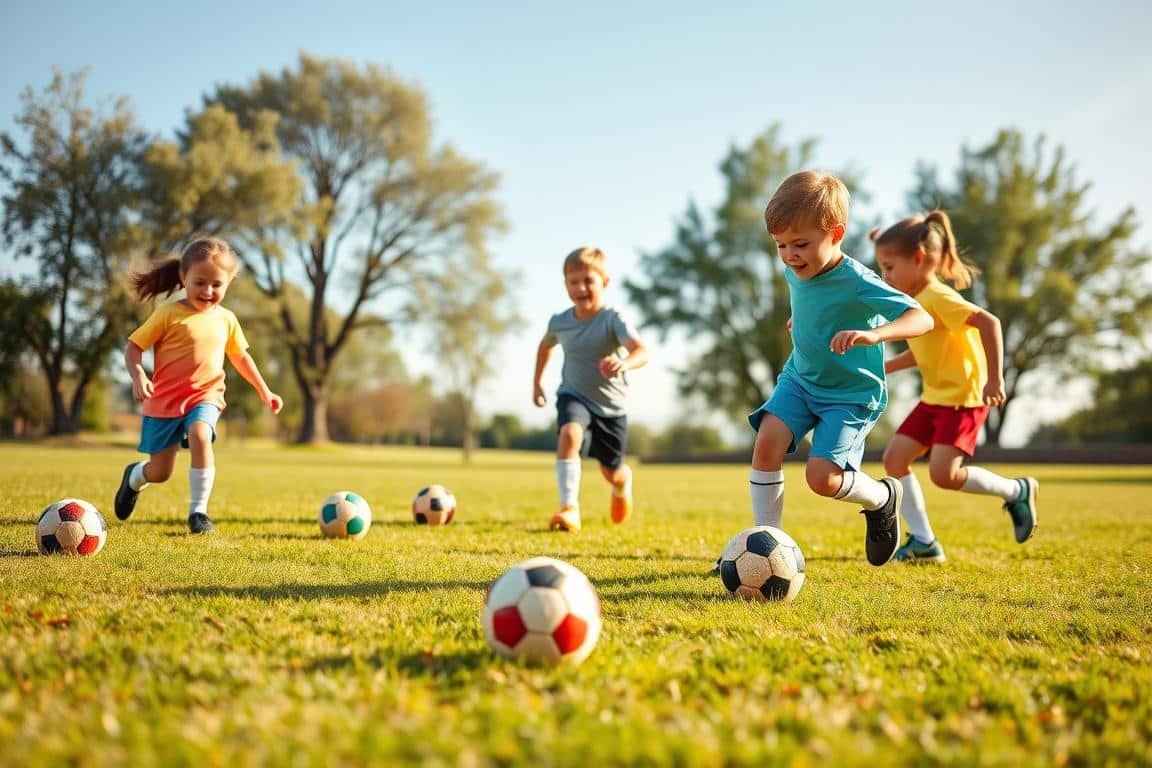
Ball control comes before passing and shooting
Soft stops, slow dribbling, and gentle turns are normal. Clean passes and strong shots come later. Give each child a ball so touches increase and confidence grows.
Short play bursts, many ball touches, no goalies
Keep games brief. Let kids score often with easy goals. No goalies at this age keeps the fun and safety first.
Social skills: sharing space, simple teamwork, encouragement
Watch for kids who wait their turn and rejoin the team without stress. Praise sharing space and quick restarts. A kind word from a teammate matters.
- Coach ratio: aim for about 1 coach per 8 players for four-year-olds.
- Use quick restarts and light rules to match short attention spans.
- Start 1v1 only when players can stay calm after losing the ball.
- A big sign: the child can start, stop, and turn on cue and smile after a miss.
Milestones by age group: U7-U9 basics that build on preschool
At ages seven to nine, play shifts from solo tries to simple team shapes while keeping fun first. I focus on clear, small steps that help each child feel successful on the field. Coaches begin to group players by ability so everyone gets the right challenge.
Format and pace: teams often move to 4v4 up to 7v7. Many programs start without a goalkeeper, then add one later. Games use short quarters or two 12–15 minute halves to match energy and focus.
From 1v1 to small-sided play
Players learn one simple role at a time. Teach spacing with easy cues: “left, right, back.” Emphasize quick restarts so the game keeps flowing. Rotate roles so every child gets touches and a chance to play forward.
- Teach throw-ins and restarts with simple cues; save strict form for later.
- Introduce offside gently—start with “do not wait by the goal.”
- Encourage two short passes into space as a good step-up.
| Format | Typical Age | Focus |
|---|---|---|
| 4v4 | U7 | Touches, space |
| 7v7 | U9 | Simple roles, short passing |
| No GK → GK | U7–U9 | Slow introduction of goalkeeping |
For a practical parent guide to support this level, see the ultimate parents guide. Keep it fun, clear, and focused on steady development so kids keep loving the game.
Preschool drills and games that work on the field
Short, joyful drills help young players practice real skills while having fun. I kept these activities simple so you can run them in a small space and see clear gains fast.
Red Light, Green Light — dribbling and balance
How to: players dribble on “green” and stop on “red.” Add “yellow” for slow dribble and a quick “turn” cue.
Benefit: builds close ball control, speed change, and balance.
Freeze Tag — evasion and ball protection
How to: most players dribble in a 20×20 yard box. Taggers without a ball try to tag dribblers.
Benefit: boosts evasion, calm kicks, and protecting the ball under pressure.
The Ouchie Game — directional kicks and aim
How to: coach runs, kids dribble and try to tap the coach with a gentle pass.
Benefit: teaches soft directional kicks, inside-foot passes, and looking up before you play.
Clean the Room (ages 6–8 bridge) — passing and quick turns
How to: split the field. Teams pass balls into the other half. Win a point when a side clears.
Benefit: practices trapping, short passes, quick turns, and light conditioning.
- Keep sets 60–90 seconds with short rests to keep energy high.
- End each set with one quick shooting round so shooting stays fun and touches stay high.
| Drill | Age | Focus |
|---|---|---|
| Red Light, Green Light | 3–6 | Close control, balance |
| Freeze Tag | 4–7 | Evasion, ball protection |
| Clean the Room | 6–8 | Passing, turning, points |
How coaches and parents support development at home
A few short sessions at home make a big difference. I suggest a safe corner, one ball per child, and simple cues to keep practice light and fun.
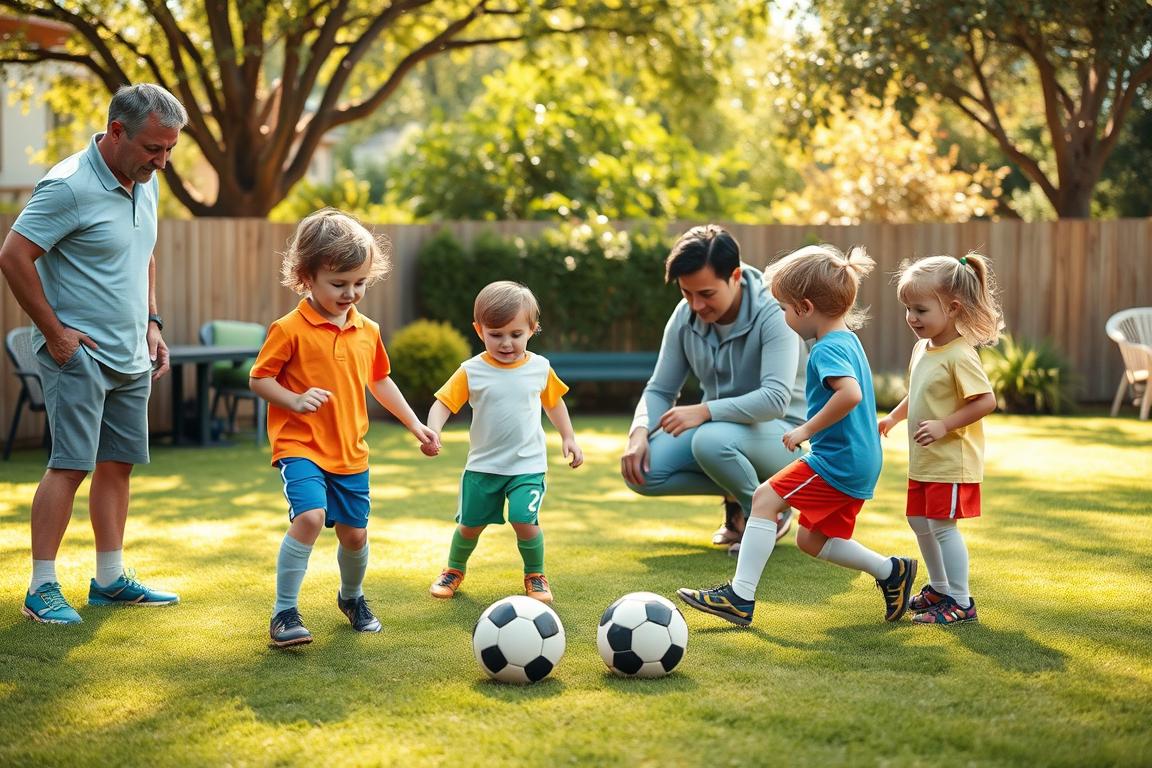
Keep active time to 10–15 minutes. That small time window fits a child’s attention and avoids strain.
- Create a safe zone — cones in a driveway or yard. Short sessions, lots of repeats.
- Frequent touches — aim for many light taps, not long runs; 200–400 small touches beats one long workout.
- Use correct words — say inside foot, outside foot, laces, drag back, throw-in.
- Simple cues — little steps, eyes up, open to space, shield with your body.
- Show one skill — repeat it in two quick activities so the child can lock it in.
- Free play — let kids play with friends once a week without adults; this builds choices and joy.
- Keep a spare ball ready and rotate tiny goals or gates so players look up and pass into space.
- If you want a group option, search to find soccer classes nearby that welcome beginners.
Cheer effort, film one short clip, and replay a favorite moment. That simple feedback boosts confidence and keeps players loving the game.
Safety, pacing, and attention span for young players
Keep safety and short bursts at the center of every session to protect young bodies and attention. I prefer lively micro-sets that fit a child’s focus and energy.
Keep sessions short and avoid hard contact
Limit active time so children stay bright and responsive. Many quick sets beat one long grind for kids under school age.
Avoid hard contact: no heading and no goalies for early years. Safety matters more than a score.
Warmups, water breaks, and body care basics
Start with gentle dynamic warmups and finish with an easy cooldown. Simple stretches and short runs help reduce soreness.
Offer water breaks every few minutes in hot weather. Watch for red faces, slower steps, or heavy breathing.
- Use clear cones and field lines so players know where to stop.
- Raise space and effort slowly as age and confidence grow; don’t jump levels in one week.
- Coaches should keep rules simple and model calm behavior when kids are tired.
- If a child looks stressed, switch to a favorite game and end on a happy note.
| Focus | Why it matters | Quick tip |
|---|---|---|
| Warmup | Prepares muscles for play and supports physical fitness | 2–3 minutes of dynamic moves |
| Breaks | Stops overheating and keeps attention high | Water every 5–7 minutes in heat |
| Safety rules | Prevents injury and supports steady development | Clear cones, no hard contact, slow progression |
Small, steady progress today keeps players excited to return. I want you to focus on safe play, short time blocks, and calm coaching so long-term development stays joyful.
How to choose teams, clinics, and soccer camps in the United States
Finding a team, clinic, or week-long camp can be simple when you know what to look for. I favor options that keep joy first and pressure low. Below are practical signs of quality you can check in person or online.
Low coach-to-child ratio and clear curriculum
Look for a clear plan that links drills to real game cues. Ask a coach to show how a drill helps in a match. That connection boosts on-field development.
Check the number of kids per coach. For four-year-olds, a 1:8 ratio is a strong point for safety and attention. Good coaches rotate roles so each player gets touches and confidence.
Age-appropriate teams, small-sided play, and no early pressure
Prefer small-sided formats so every child plays more. Avoid large groups on a full field; kids need space and short games.
Pick age group rules that don’t push trophies or early specialization. No goalies until about 8–9 keeps early play about skill and smiles.
Community programs, school options, clubs, and soccer camps
Compare options: AYSO for rec play, US Youth Soccer for broad participation, and U.S. Soccer Federation pathways for competitive tracks.
| Program | Best for | What to ask |
|---|---|---|
| AYSO | Recreational play | Coach ratio, small-sided play |
| US Youth Soccer | Large participation | Club curriculum, player pathways |
| U.S. Soccer Federation | Competitive options | Coach credentials, development plan |
Use video highlights for confidence and simple feedback
Record short clips of one play. Share a single cue in each clip — praise effort, then show one thing to try next time.
Video helps families celebrate progress and gives coaches a clear point for growth.
- Ask coaches to show how drills map to the game.
- Check coach-to-child number at a session; aim for about 1:8 for youngest groups.
- Pick small-sided teams that keep touches high.
- Visit a practice: do you see smiles, short lines, and a ball at most players’ feet?
- When you search to find soccer options near you, ask about ratios, curriculum, and week-long camp formats.
Conclusion
Conclusion
Close with a few clear steps so players develop steadily and enjoy each session. Keep time short and fun. Let the ball stay close. Praise effort and curiosity.
Match drills to age and ability. Use small-sided games, simple activities, and gentle rules. Ask coaches to show one drill that helps control under pressure, then repeat it.
At home, plan two short sessions, one free play meet-up, and a backyard goal game. Use video sparingly: praise effort, name one cue, and move on. That steady approach builds real skill and joy on the field.