
One-on-one coaching tips for kids beginners that help children love the game
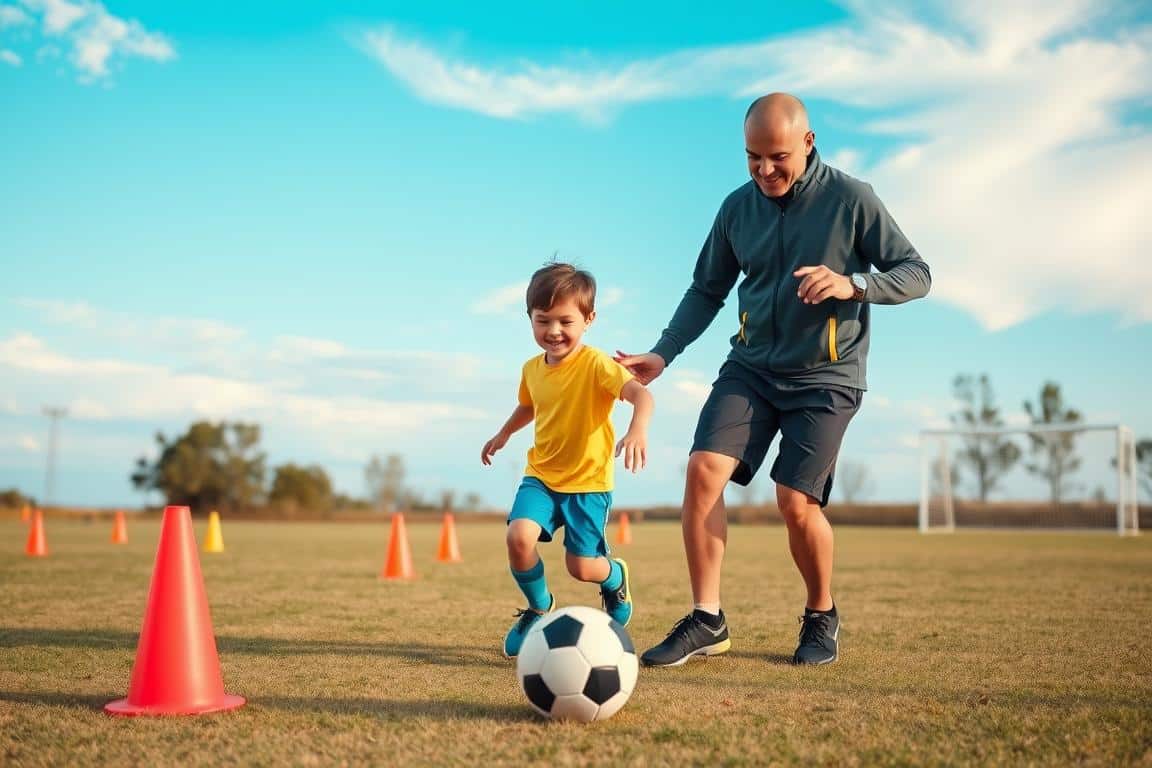
I want your child to enjoy soccer while they build confidence and steady skill. I use simple plans that feel like play and teach real habits. Each short session should leave children smiling and eager to try again.
I share clear ways you can run a session this week with upbeat language and small wins. Parents get easy cues to keep play calm and focused. I also show how team values start in solo time: respect, effort, and cheering on teammates.
Sessions stay short, playful, and purposeful. That helps young players learn decisions, feel proud, and enjoy practice over pressure.
Key Takeaways
- Keep sessions short to hold attention and build momentum.
- Use playful drills that teach simple habits and smart choices.
- Celebrate small wins to grow confidence and desire to return.
- Keep language upbeat; avoid yelling and shame.
- End each session on a high note to make the experience positive.
- Include parents in supportive roles to reinforce practice at home.
Start here: goals, age, and a fun-first approach
Start by picking two clear goals that match your child’s current energy and age. Keep aims tiny and measurable. That helps practice feel like play.
I set simple outcomes for week one. Try “five clean toe taps” or “three soft first touches.” Use short blocks of 3–6 minutes. Switch activities if attention fades.
Set simple goals for your child’s first weeks
Write one or two goals on a card. Praise effort with a single short line your child can repeat. Track progress with stickers or a high-five count at the field.
Match activities to age and attention span
- Pick drills that fit young players: dribble in a lane, pass to a wall, shoot from a spot.
- Make the first weeks about fun: bright cones and quick success games.
- Plan one silly game per session like “cone knockdown” so players ask to play again.
Ask yourself as a parent: did my child move, laugh, and learn one new thing today? If they look lost, switch to show-and-copy fast. These small ways create steady life-long skills.
encourage your child in soccer
Build a positive coaching mindset for young athletes
Build a mindset that turns practice into a safe place to try, fail, and try again. I keep sessions calm and clear so children learn to manage feelings and focus on effort.
Lead with encouragement and model good behavior
Lead with calm energy so children copy your behavior under stress. Say what you want to see: “eyes up, light touches.”
Set simple expectations before play: try hard, be kind, listen on whistle. Share a short example of your own learning to show growth is normal.
Use emotion coaching to support confidence and self-regulation
Use the two parts of emotion coaching: name the feeling, then guide a choice. Try: “You seem upset; let’s breathe, then try again.”
Gottman-style empathy helps children self-regulate and build confidence. Let young athletes speak; ask short questions and listen.
Show effort matters more than results in any game
- Turn mistakes into opportunity: “That miss shows where to plant your foot next time.”
- Praise process: “Great hustle and first touch,” not just results.
- Keep team values in mind: respect space, share gear, help clean up.
Plan short, structured sessions that feel like play
Plan short sessions that move fast and feel more like play than practice. I use a simple four-part flow. This keeps children engaged and learning.
Practice with a purpose: warm-up, skill, game, cool-down
Start with a quick warm-up. Spend the main block on one skill. Add a short game that uses that skill. Finish with a calm cool-down and a brief cheer.
Keep time blocks tight to fit children’s focus
Set blocks of 3–6 minutes. Short bursts keep attention high. Rotate activities fast when focus dips.
Have backup drills to adjust on the field
- Keep one backup drill and a backup game ready.
- Target one skill each session so children feel clear and confident.
- If space is tight, shrink the grid or use a lane drill.
- High-energy athletes can try a relay; calmer moments call for balance tasks.
- Make sure play is built into learning, not tacked on at the end.
I borrow a lesson from John Wooden and a basketball mindset: practice is where teaching happens. That view helps new coaches plan outcomes, adjust timing, and keep sessions joyful.
Keep it simple. Short, repeatable sessions teach skills and life habits. Start on time, end on time, and leave children ready to come back. This approach supports youth athletes and parents who want clear, gentle guidance in coaching.
One-on-one coaching tips for kids beginners
Give one simple prompt, then show it so the movement clicks quickly. Say a short cue, demonstrate the move, and let your child copy twice. This keeps practice clear and calm.
Stand where your kid can mirror you. Use a single cue at a time: “soft touch,” then “eyes up,” then “plant foot.” If a cue doesn’t land, change the wording or do a quick demo.
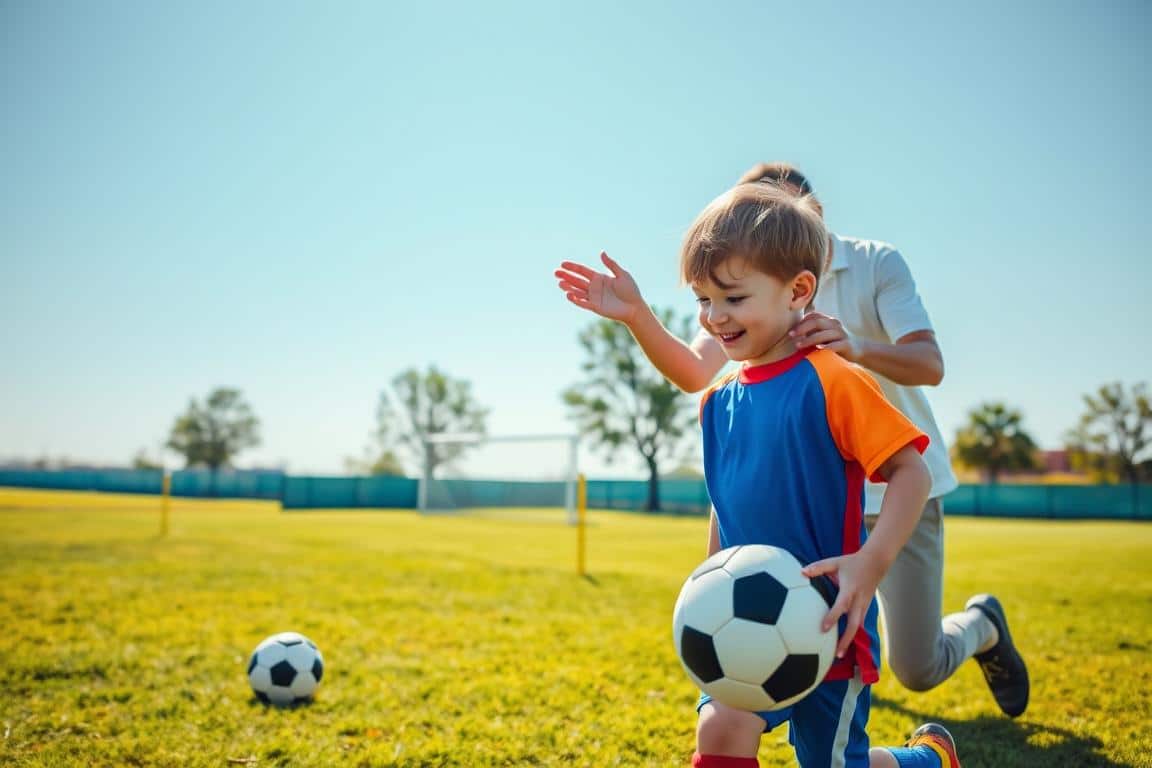
Celebrate tiny wins. Say exactly what you saw: “Nice—three close touches in a row!” Then set a clear short goal like “ten light touches,” stop, and cheer.
- Make drills fit the day—shrink the space if attention fades.
- Add one friendly challenge when a player masters a step.
- Log one skill, one praise, and one next step to guide practice.
Tie effort to life: “You tried again when it was hard—that’s strong.” End on a high note with a happy lap or small dance so the experience feels fun and memorable.
Core soccer skills to teach in one-on-one training
Focus each session on one clear skill so children make steady, visible progress. Keep the field small and the work playful. Short drills with clear counts build touch and confidence quickly.
Dribbling
Start with 20 toe taps. Then do inside-out touches down a lane. Finish with a cone zig-zag back.
Use a single drill so players focus on quality, not volume. Give a clear count and then switch to a quick game.
Passing and receiving
Aim at a wall two yards away. Pass with the inside of the foot.
Practice a soft first touch out of the feet. Repeat 10–20 reps, then play a short passing race to spark healthy competition without pressure.
Shooting
Plant the non-kicking foot and point it at the target. Use laces for power and the inside for control.
Show one example at normal speed, then slow it down so children copy easily.
Defense basics
Keep knees bent and a side-on stance. Take small steps and poke for the ball only when close and safe.
Think basketball balance: low and steady helps athletes stay controlled and ready.
- Drill rule: one drill per skill to keep practice focused.
- Use clear counts (10–20 reps) and then add a short game.
- Keep feedback specific: name the action and praise effort.
| Skill | Drill | Reps / Count | Safety cue |
|---|---|---|---|
| Dribbling | Toe taps → inside-out lane → cone zig-zag | 20 / 10–15 / back-and-forth | Head up short bursts, light touches |
| Passing | Wall pass & soft first touch | 10–20 each | Pass with inside, step to receive |
| Shooting | Plant foot aim, laces vs. inside | 8–12 shots | Control steps, follow-through safe |
| Defense | Side-on shuffle, poke practice | 30 seconds effort / repeat | Knees bent, small steps, hands ready |
Communication, feedback, and expectations that stick
Simple phrases and steady examples make feedback stick with young players. Use short words and clear action. Set expectations before play so children know what matters.
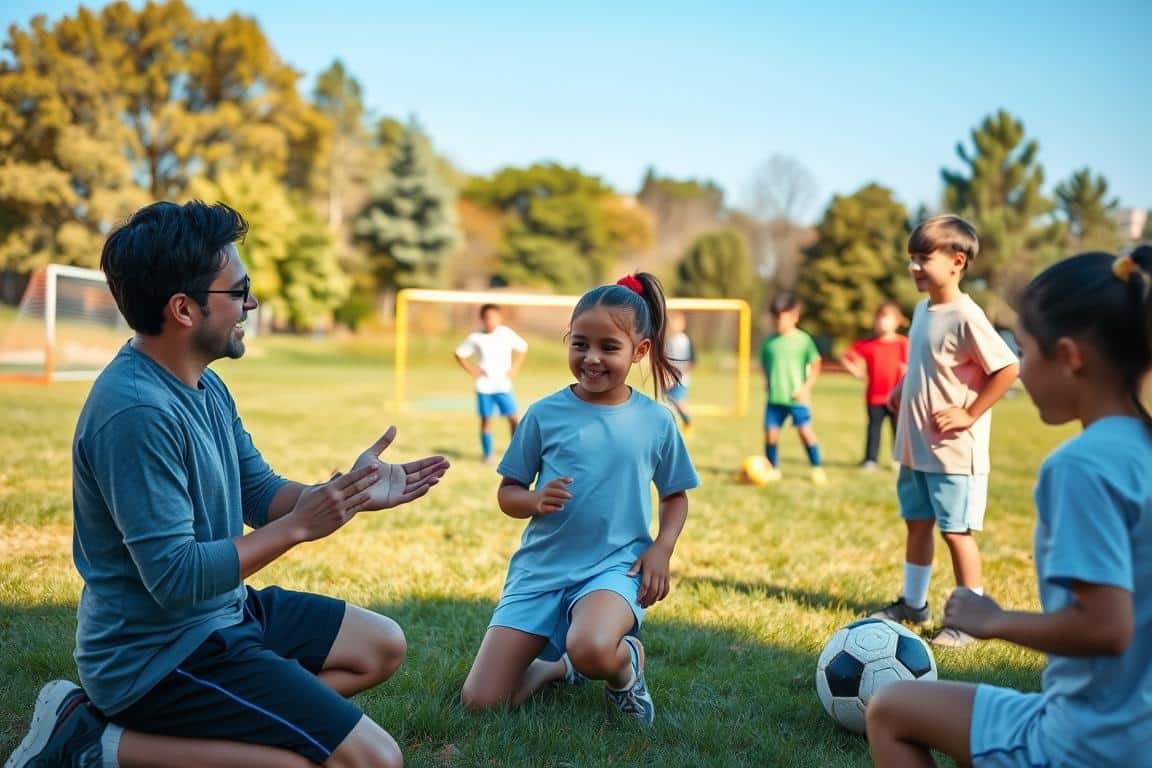
Use simple language and show by example
Show first, then speak. A quick demo helps children copy faster than long talk.
Use one clear verb at a time: “plant,” “soft,” “look.” Keep your face calm. Kids read tone more than words.
Give positive, specific feedback without yelling
Say a short praise and a next step. Try: “Nice plant foot; now aim your toe.”
If a player freezes, lower pressure. Count together and take two slow breaths. Don’t yell—say “Reset” and try again.
- Show first, then speak: demos stick better than lectures.
- Short phrases: clear verbs and one idea at a time.
- Set expectations: try hard, listen on whistle, respect space.
- Build relationship: quick check-ins with parents and players keep trust strong.
| Action | What to Say | Why it Works | Best Use |
|---|---|---|---|
| Demo move | “Watch my feet, copy once.” | Shows step-by-step and keeps attention. | Teaching new skill |
| Short praise + next step | “Nice touch; try softer next time.” | Links effort to development and confidence. | During reps |
| Calm reset | “Reset. Breathe. Ready?” | Stops panic and lowers pressure fast. | After a mistake or freeze |
As a coach, your job is to build belief. Keep feedback kind, clear, and quick. That way players learn, parents trust the process, and youth sport stays joyful.
Parents, coaches, and kids: teamwork beyond the drill
Trust between parents and coaches turns small sessions into real growth. That trust starts with clear rules, kind behavior, and steady contact. I ask families to join a simple plan so children feel supported at practice and at home.
Set a short code and model sportsmanship
Write a brief code of conduct with parents and children. Post it and review it each month.
- Model sportsmanship: greet opponents, thank refs, and pick up cones together.
- Use youth sports values as life lessons: effort, kindness, fairness.
- Offer one family game day each month as an open opportunity to connect.
Keep communication open and simple
Send a quick parent note after sessions. Tell parents the week’s goal so home support matches practice.
| Action | Who | Frequency |
|---|---|---|
| Weekly update | coach | After each session |
| Code review | parents & children | Monthly |
| Problem check-in | parent & coach | As needed |
If challenges arise, meet early and stay calm. Agree on a single next step and keep the relationship focused on the child’s development. That simple rhythm keeps team habits alive in one-on-one time and makes sure joy and respect win every day.
Conclusion
End on a clear, happy note so children remember practice as play. Great youth coaching mixes purpose, play, and gentle praise. Keep language simple and the mood light.
Set age-fit goals, run short practice blocks, and teach one drill per session. Use emotion coaching: name the feeling, then guide a choice. Loop parents in and keep a short code of conduct to support children and young athletes.
Try this example this week: five toe taps, five inside-out touches, cone zig-zag, then a mini shootout. Stay calm, be prepared, and let effort lead. Close with a high-five and a clear praise line so players want to come back.