
Balance Board Exercises for Kids Soccer
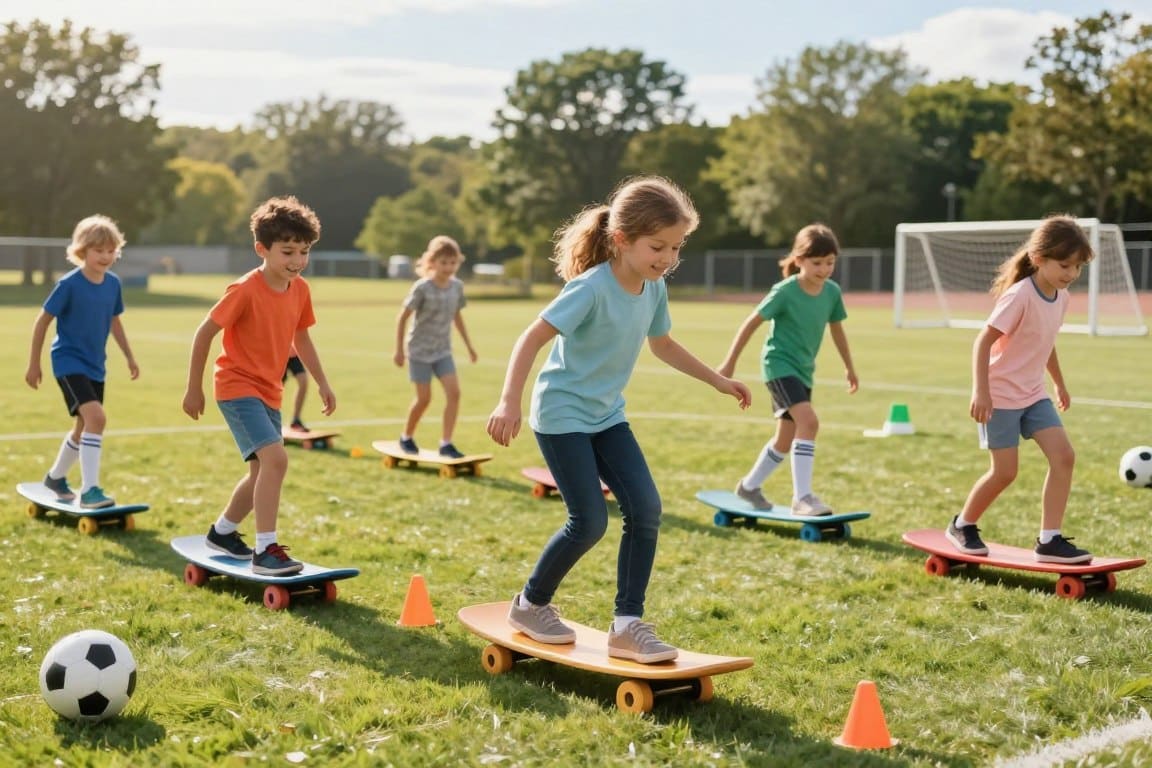
I use simple tools to help young players build steady control and better coordination on the field. This guide shows how short, pressure-free sessions can boost skills, spatial awareness, and confidence.
What I cover: quick setup, age-appropriate drills for players ages 3–12, and time-friendly routines you can do before or after team training. I explain what a balance board is and why training on an unstable surface helps technique without harsh workouts.
I group drills into four easy sets: balance-only work, add-the-ball progressions, agility and reflex work, and support strength moves. Pick 2–4 activities each week and rotate them like a menu. I keep safety reminders and simple progressions so you coach calmly and kids stay engaged.
Key Takeaways
- Short, frequent sessions help develop coordination and control.
- Use simple progressions that match each player’s age and ability.
- Focus on technique and confidence, not long, hard workouts.
- Rotate 2–4 drills each week to keep training fresh and fun.
- Keep setup easy and repeat safety rules with calm consistency.
Why balance matters for soccer players
Small shifts under a player’s feet change shots, passes, and confidence in a heartbeat. I like to point out how tiny changes in plant-foot position can be the difference between a goal and a miss.
Better technique starts with foot control and a steady plant foot. A steady plant foot makes shots cleaner and first touch feel natural. When a player plants wrong, the ball can drift wide or hit the post.
Stability after jumps, turns, and contact
Landing after a jump or stopping after a turn are common game situations. Good stability helps a player stay upright after light contact from opponents. That means fewer tumbles and more chances to keep play moving.
Spatial awareness and quicker reactions
Training on unstable surfaces sharpens where feet and body are in space. Players learn to sense position and react faster. That extra speed helps avoid collisions and win tight duels.
- I focus on simple cause and effect: more control leads to better skills and better moments in the game.
- When balance slips, technique often slips too — so this work supports everything you teach.
Safety, setup, and the right balance board for kids
Safety comes first: simple checks cut the chance of a tumble before training begins. I want you to run a quick routine and pick gear that fits each child. Keep things simple and calm.
Choose a stable surface and keep equipment dry and not slippery
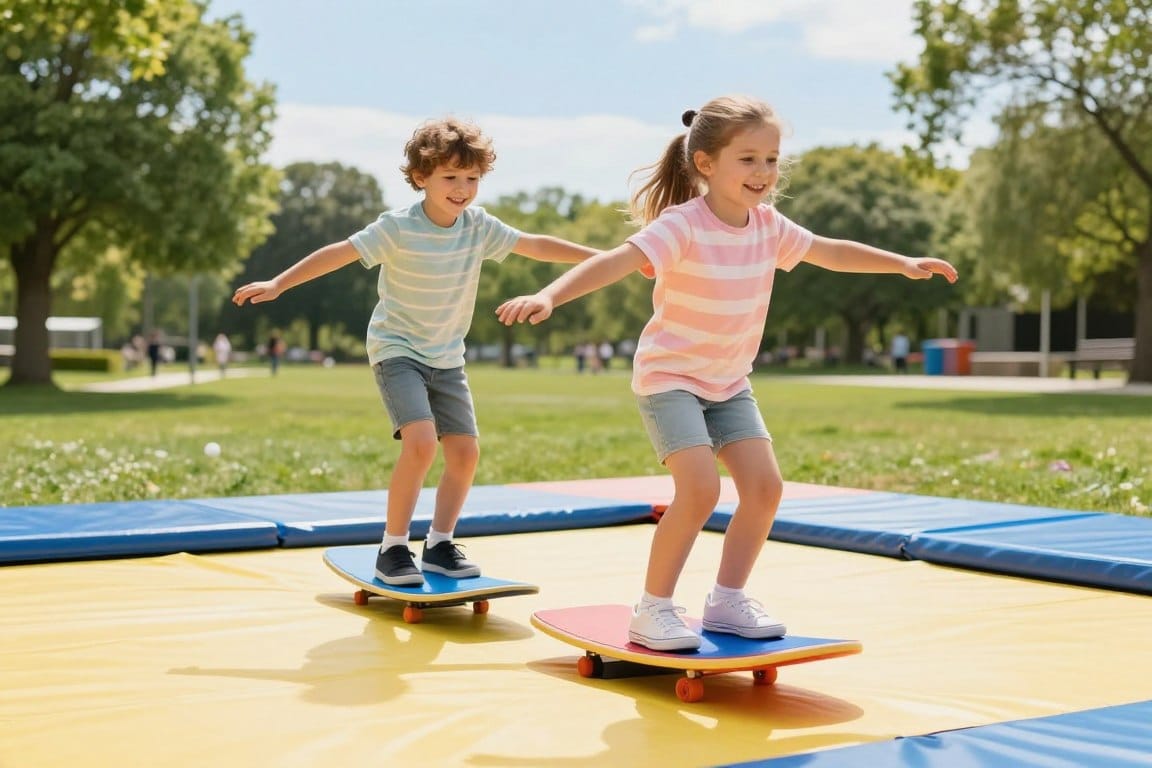
- Place the balance board on a flat, stable surface. No uneven grass or tilted ground near the field.
- Clear the area of balls, cones, and bags.
- Keep the board dry and clean—wet gear increases falls.
- If indoors, use a non-slip mat. If outdoors, avoid soft or sloped turf.
Match board difficulty to age, strength, and confidence
Start low and progress slowly. For beginners I use two-foot holds before single-leg work. This builds stability, strength, and good habits.
- 30-second safety checklist before every session.
- Begin with both feet on the board and steady posture.
- Only raise challenge when form is safe and fatigue is low.
Stop a drill immediately if a player cannot hold position with safe form or shows pain. I tell coaches and parents: short, regular sessions beat long, risky ones.
Want more simple progressions and short routines? Try these balance exercises with a friendly plan: balance exercises.
Coaching tips that make balance training work
Use tiny corrections that players can copy on the spot. Keep cues short and action-based so kids hear them and do them. I prefer three-word prompts you can repeat fast.
Use simple posture cues from head to toe
Say this: “tall head,” “soft knees,” “hips level.”
These quick lines fix common errors. If arms flap, cue “quiet arms.” If an ankle collapses, cue “strong foot.”
Increase difficulty in small steps and repeat often
Raise the challenge slowly. Move from two feet to one foot, then add a gentle reach or a light pass. Repeat short drills often to build coordination and stability.
Skip hard drills when players are fatigued
Watch form. When posture falls, stop the drill. Fatigue harms technique and raises risk. Save tough work for fresh practice times.
Use barefoot or socks work only when it is safe and allowed
Barefoot steps help feet feel the surface and boost coordination balance. Use socks or no shoes on clean, soft mats or indoors when rules permit. Wear shoes on rough or wet turf.
- Quick motivator: count “quiet feet” seconds for focus.
- Partner challenge: hold a pose 5 seconds longer each try.
- Goal: clean movement first; speed and harder drills come later.
| Level | Goal | Coach cue |
|---|---|---|
| Beginner | Stand steady, learn posture | “Tall head, soft knees” |
| Intermediate | Add small movement, keep form | “Quiet arms, hips level” |
| Advanced | Speed and control under pressure | “Strong foot, steady body” |
Balance board exercises for kids soccer
Quick, step-by-step movements help players keep control during simple drills. I give short setups, clear steps, time or reps, and one easy progress option. Keep it fun and safe.
Single-leg stand with controlled arm movements
Setup: Both feet on the board, hands at sides.
How: Shift weight to one foot. Lift the free leg a few inches. Move arms slowly side-to-side to stay steady.
Time: 20–30 seconds each leg. Repeat 2 times.
Make it harder: Close eyes or hold a light pass with a partner.
Head position changes to train body awareness
Setup: Stand tall on the board with a soft bend in the knees.
How: Look left, then right, then up. Keep hips quiet and feet steady.
Time: 30 seconds of slow head turns. Repeat 3 sets.
Coaching cue: “Tall head, steady hips.”
Running-in-place movements for quick feet
Setup: Light bounce with both feet or one foot if ready.
How: Run on the spot with soft steps. Keep posture tall and arms active.
Time: 20 seconds on, 10 seconds rest. Do 4 rounds.
Progress: Add a quick reach to mimic a pass.
Two-foot jumps and safe landings
Setup: Start with feet hip-width apart.
How: Jump up and land gently in the center. Hold the landing—freeze—before the next jump.
Reps: 8–10 soft jumps. 2 sets.
Safety tip: Land with bent knees and quiet feet.
One-leg hops and leg-swing drill
One-leg hops (advanced): Only use when leg muscles are strong. Do 5 hops per leg. Rest well between tries.
Leg-swing drill: Plant one foot and swing the other like a pass or shot. Keep the plant leg firm and hips level. 10 swings each side.
- Short circuit idea: pick 4 drills. Do each 20–30 seconds. Rest 30 seconds between.
- Coaching cues: “soft land,” “tall head,” “quiet hips.”
- Common fix: if a player wobbles, go back to two feet and breathe.
| Drill | Time/Reps | Progression |
|---|---|---|
| Single-leg stand | 20–30s ×2 | Close eyes |
| Running-in-place | 20s on ×4 | Add reach |
| Two-foot jumps | 8–10 reps ×2 | Hold landing |
Add the ball: balance drills for first touch, control, and passes
Add a ball once a player can hold a calm stance—then watch touches and control improve fast. Start simple and keep each step short.
When to add the ball: Only after a child can stand steady for 20–30 seconds with calm feet. That keeps success high and confidence up.
Stationary taps with hips level
You do this: place a small ball at your foot and tap it gently while keeping hips quiet. Aim for 15 clean taps each foot.
Keep the ball close and use slow touches. This trains body control and cleaner first touches in the game.
Inside–outside touches to build coordination
You do this: move the ball side-to-side using the inside then outside of the foot. Count each successful change—try 20 in a row.
Go slow first. Speed up only when the feet and body stay steady in position and direction.
Receive and pass under light pressure
You do this: stand with a partner 6–8 feet away. Receive a soft pass, settle the ball with one touch, then return a gentle pass. Do 8–10 reps each player.
Scale by distance, pass speed, or direction. Use slow passes until form is clean. Safety note: keep the ball close so the board does not slide away.
- Game link: cleaner first touch helps escape pressure and make quicker passes on the field.
- Make it fun: count quiet touches, or see who keeps ten clean taps without wobbling.
| Drill | Reps/Time | Progression |
|---|---|---|
| Stationary taps | 15 per foot | Faster touches |
| Inside–outside | 20 changes | Add direction |
| Receive & pass | 8–10 each | Increase distance |
Agility and reflex work for game situations
Make agility simple: controlled exits, a sharp cut, and a clean hold. I focus on safe, game-like movements that translate to the field. Start small and keep cues fun.
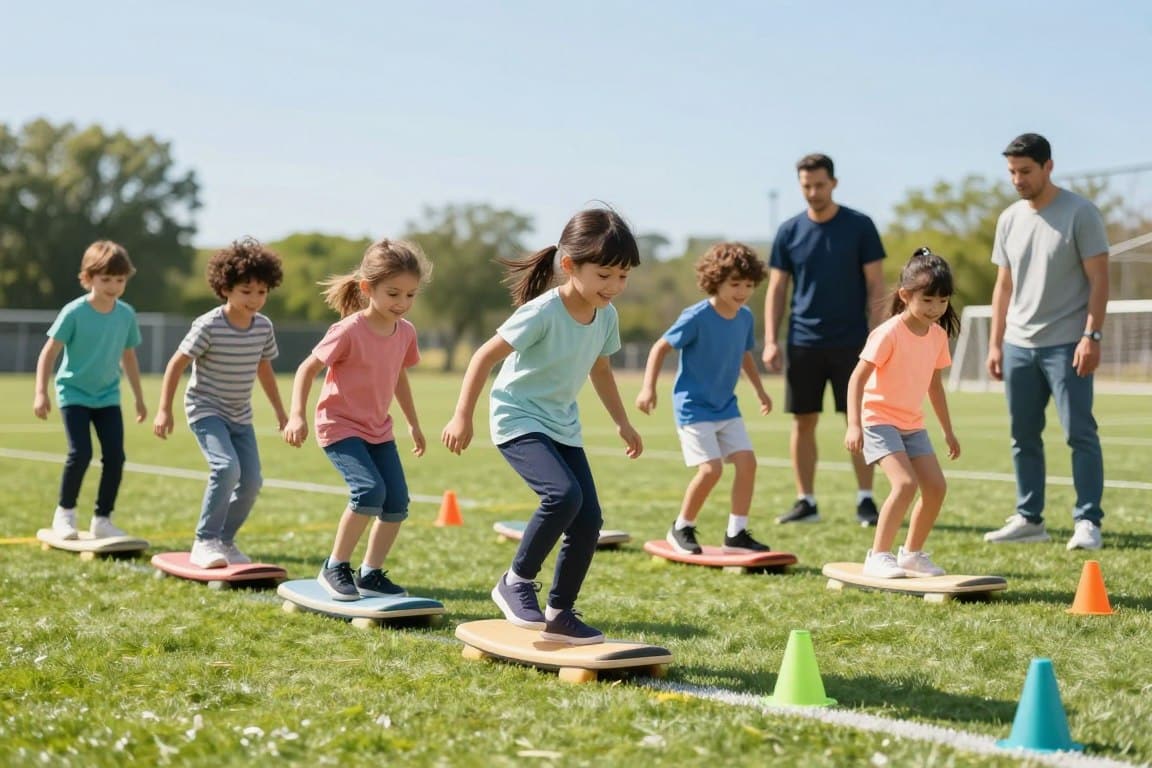
Quick direction changes off the board to the field
How: Step off with control — no wild jump. Plant, cut 45 degrees, then freeze with good posture.
Timing: 10–15 seconds on, 20 seconds rest. Do 4–6 reps per set.
Partner cues to train reaction speed and body control
One partner points left or right. The player reacts and sprints one step into the field. Keep hips steady and eyes up.
- Call the cue — point or shout.
- Player leaves the platform, cuts, and holds the finish.
- Swap roles after each run.
Coaching cues: “quiet landing,” “eyes up,” “finish tall.” Use short words kids copy quickly.
- Progression: Add a light ball carry once form is clean.
- Game link: These movements help change direction to keep play or dodge an opponent.
- Stop: If speed turns sloppy or a player looks tired, pause and rest.
| Drill | Work | Progression |
|---|---|---|
| Controlled step-cut | 10–15s ×4 | Add short sprint to a cone |
| Partner point reaction | 6 reps each | Use a pass instead of a point |
| Finish-and-hold | 3 holds ×10s | Carry a small ball while moving |
Strength and injury risk reduction with balance training
I focus on simple strength moves that protect young joints and boost play. Short, controlled work builds the core and leg power players need. I keep ranges small and form first.
Core stability to support turns and strong kicks
Tall holds and slow arm reaches teach the core to brace during turns and shielding. I cue “tight belly, tall chest” and use 10–20 second holds. Do 2–3 sets.
Knee and ankle stability to cut down sprains
Coordination drills improve joint awareness and reduce strain. Simple single-leg holds and small hops train proprioception. Stop if control drops—clean movement matters more than reps.
Mini-squats and safe leg patterns
Use small squat bends on the board with cues: “sit back a little,” “knees track over toes.” For younger kids, try mini-squats or hold a wall for support.
| Focus | Sets | Progression |
|---|---|---|
| Core tall holds | 2–3 ×10–20s | Add slow reaches |
| Single-leg stability | 2 ×20–30s | Mini hops |
| Squat patterns | 3 ×8–10 reps | Decrease support, add light load |
Conclusion
Small, regular sessions build real confidence and cleaner technique on the field.
Good balance helps players keep control, improve coordination, and stay safer in game situations. It shows up in simple ways: steady feet, clearer passes, and quicker reactions.
Start easy — two-foot holds, then small movements, then add a ball, then faster direction work. Repeat this way and progress slowly. Short practice done often wins every time.
Try a simple weekly plan: 2–3 days, 10 minutes each. Pick three drills from Section 5 and one ball drill from Section 6 and begin this week.
Safety note: match drill difficulty to age and strength, watch fatigue, and keep the surface dry and steady when using a balance board.