
Build Stamina with Soccer for Kids – Easy Plan
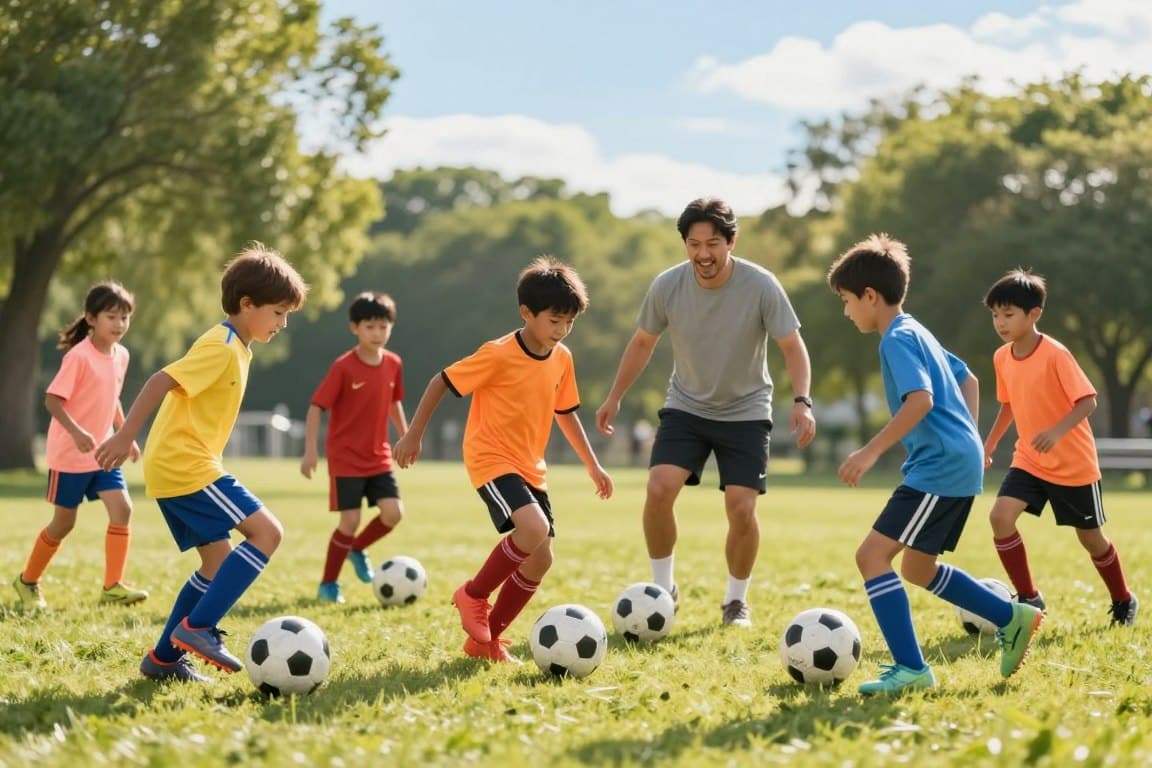
how to build stamina with soccer for kids is a simple idea that can change playtime fast. I’ll show you a friendly plan that keeps things fun and pressure-free.
Kids need short, active bursts outdoors more than long runs. I focus on stop-and-go drills that mix skill and endurance.
We use quick games, small-sided play, and brief rests. Sessions last just a few minutes so children stay excited and safe.
What you get: simple training steps, ball drills that build conditioning and fitness, and clear signs coaches and parents can watch during play.
I keep the plan easy to start this week. No heavy running. Just fun, clear effort and steady progress over time.
Key Takeaways
- Short, playful drills boost endurance and skill.
- Focus on stop-and-go movement rather than steady jogging.
- Keep sessions brief—measured in minutes, not hours.
- Use ball work so kids train fitness and technique together.
- Parents and coaches can run this plan with low pressure.
What stamina means for young soccer players
Stamina is about still playing sharp when the game is winding down. I call it a simple test: can your child keep moving hard near the end?
In plain words, stamina mixes body and brain. It is physical endurance and steady focus. A player may sprint, then slow, then turn, then sprint again. That pattern repeats across a half and the whole game.
Endurance and second-half effort
Many young players look great in the first half. Then they slow in the second half. That drop shows in runs that are shorter, tackles that come late, and choices that slow down.
Why bursts beat steady jogging
Soccer needs short speed bursts, quick slow-downs, and sharp turns. Continuous jogging tests steady endurance. But true game stamina trains acceleration, deceleration, and agility.
- Typical movement: sprint, slow to a jog, turn, then sprint again.
- Signs of low stamina: slower runs, late tackles, faded focus.
- Goal: keep the same energy and quick thinking late in the match.
| Aspect | What you see | What to train |
|---|---|---|
| Start of half | Fast, sharp moves | Short sprints and skills |
| End of half | Slower runs, late reaction | Repeat bursts with short rest |
| Overall | Decision speed and performance | Mix sprint, jog, turn drills |
Set a safe starting point before training
Start simple: set a clear, safe first step before any training session. I recommend a quick check of age, recent activity, and any prior injury. This helps you pick session length and load that match ability and energy.
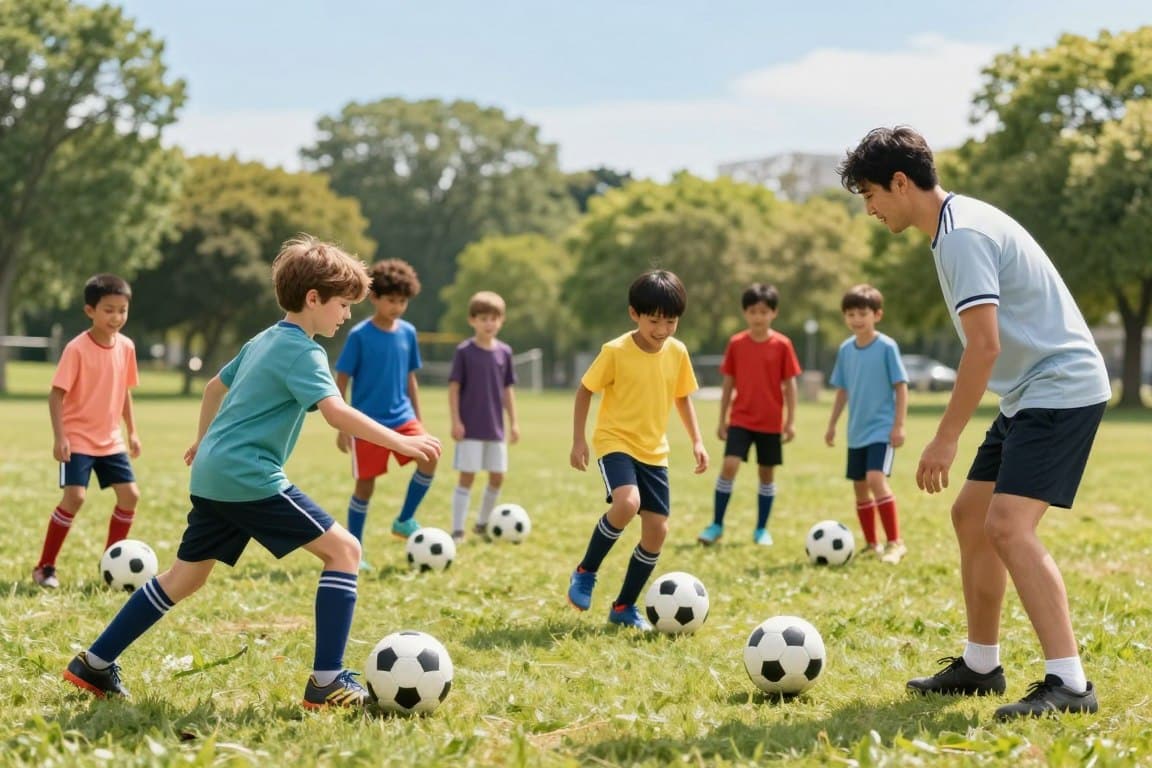
Pick the right session length and weekly frequency
Keep sessions short. Aim for 15–30 minutes of focused work, not long runs. Limit hard days to two or three per week and add light play on other days.
Use simple effort cues
Teach three clear cues kids can feel: easy jog (talk easily), steady run (short sentences), fast sprint (breath hard). These cues help them manage effort without complex timers.
Watch for fatigue signs and stop before form breaks
Look for sloppy turns, bent posture, dragging feet, or a child who “can’t listen.” If technique drops, stop the drill. Preventing injury matters more than finishing a set.
- I’ll help you choose a start point by age and activity level.
- Plan a weekly setup with brief conditioning add-ons—not daily hard work.
- Keep rest short and clear so kids can repeat quality effort.
- Quick recovery basics: water breaks, shade, and a calm cool-down pace.
| Item | Recommended | Why it helps |
|---|---|---|
| Session length | 15–30 minutes | Maintains focus and reduces injury risk |
| Weekly hard days | 2–3 days | Allows recovery and steady progress |
| Effort cues | Easy jog / steady run / fast sprint | Simple signals kids understand |
| Fatigue signs | Sloppy turns, bent posture | Stop early to protect the body |
Warm-up that raises heart rate and helps prevent injury
A brief active routine sets players up for safe, sharper play. I like short, simple moves that raise the heart rate and wake the muscles without tiring anyone.
Do this flow for 5–7 minutes. Keep it playful—use quick cues like “race to the cone!”
- Light jogging — 30 seconds easy, then 30 seconds rest. Quiet feet, tall posture.
- High knees — 10 yards, lift knees to waist height. Soft knees on landing.
- Butt kicks — 10 yards, pull heels up gently to warm hamstrings.
- Quick shuffles — 10 yards each way. Stay low and face forward for better agility.
- Skips for height — 20 steps to wake hips and calves without heavy fatigue.
These exercises prep muscles and joints, lower injury risk, and tune speed and agility for practice. I keep cues plain: tall, soft knees, quiet feet. That helps players copy moves fast and feel ready.
| Move | Distance / Time | Why it helps |
|---|---|---|
| Jogging | 30 sec | Raises heart rate, gently warms muscles |
| High knees / Butt kicks | 10 yards | Preps hips and hamstrings for speed |
| Shuffles / Skips | 20 steps / 10 yards | Boosts agility and quick feet, lowers injury risk |
how to build stamina with soccer for kids using soccer-style intervals
Small, fast intervals around the field copy true match movement and feel like play. I keep drills short, clear, and repeatable so players stay engaged and safe.
Stop-and-go running around the field
Core idea: alternate a short sprint with an easy jog to mirror game bursts. Sprint hard for 10–15 seconds, jog 30–45 seconds, repeat 6–8 times. This pattern trains speed, recovery, and decision energy.
Shuttle runs with cones
Set three cones in a line, 20–30 yards apart. Sprint out-and-back to cone 2, then out-and-back to cone 3 — that is one rep.
- Do 5 reps (roughly 500 yards total).
- Rest up to 5 minutes between sets.
- Teach quick turns: low hips, plant, push away fast.
Dribble-and-run drill
Dribble fast to a marker, leave the ball, sprint to the touchline cone, return and dribble back. Rest ~60 seconds. Aim for 6 reps. This mixes ball control with endurance and speed.
Work-to-rest timing
Use seconds as targets — kids love clear, short goals. Try 15s effort / 30–45s easy, or scale down for beginners. Time one rep and try to match it next week as a simple goal.
| Drill | Effort | Rest |
|---|---|---|
| Stop-and-go field laps | 10–15 seconds sprint | 30–45 seconds jog |
| 3-cone shuttle | Full sprint rep (5 reps) | Up to 5 minutes between sets |
| Dribble-and-run | Fast dribble + sprint (6 reps) | About 60 seconds |
Fun conditioning games that feel like play
Quick play drills get hearts racing while kids only think they are playing. I use simple playground moves—chase, climb, crawl, and jump—that spark energy and high effort without a single long run.
Play is a great way to grow fitness for young players who hate formal exercises. Small-sided matches (2v2, 3v3) boost touches, speed, and decision work. More turns mean more sprints and more real effort.
- Playground ideas: tag with safe boundaries, chase races, crawl relays, jump challenges.
- Small-sided game rules: score and switch, 3-minute rounds, winner stays — short and clear.
- Safety tips: set lines, quick rests, demo once, then watch—talk less and let play teach.
Coach tip: use play as a simple, pressure-free conditioning plan. Let athletes learn by doing. For more game ideas, see this fun game list.
Strength and core work that supports stamina
Simple strength moves help young players run smarter and last longer on the field. I keep this work short, safe, and fun so athletes finish feeling proud, not drained.
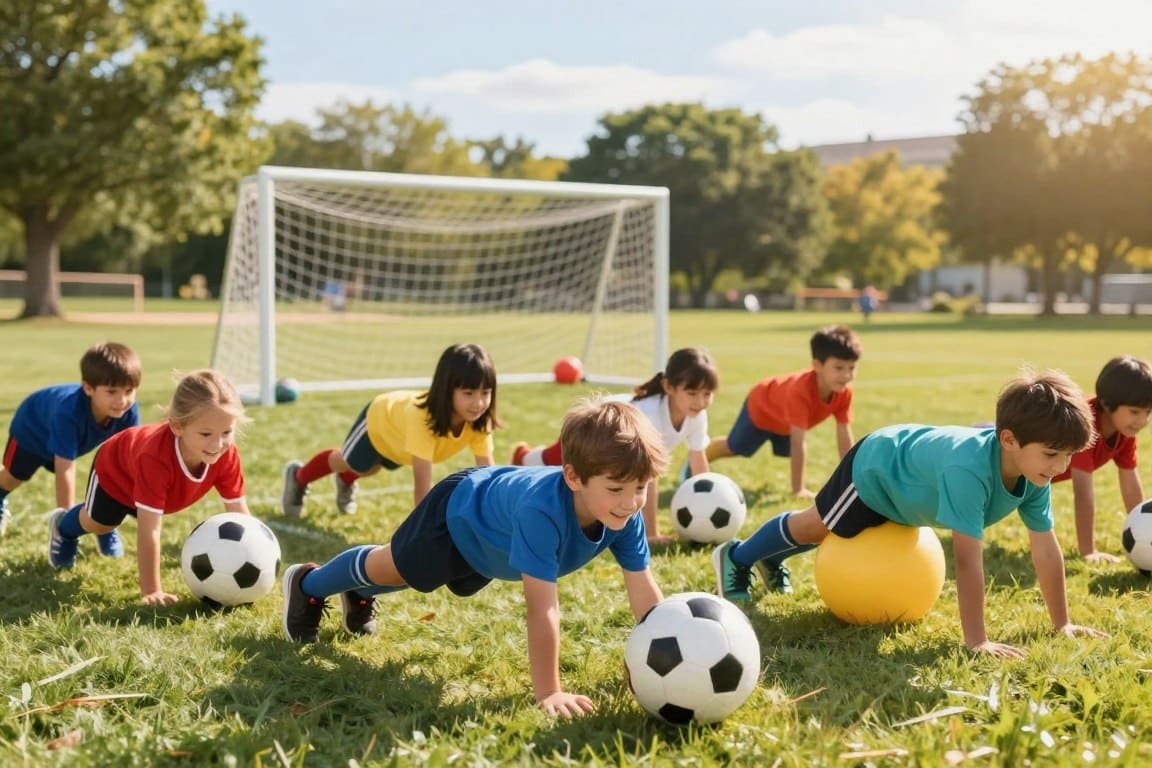
Bodyweight strength for young athletes
Use squats, lunges, and push-ups. These exercises build usable strength in the legs, hips, and chest without weights.
- Squats: 8–12 reps — knees track over toes, chest up.
- Reverse lunges: 6–8 reps each leg — slow down, push through the heel.
- Knee or full push-ups: 6–10 reps — keep a straight body line.
Core basics that improve performance
Planks give stability that saves energy during a match. Start with many short holds.
Try 5 rounds of 20 seconds hold with 20 seconds rest. That adds up to about five minutes total. Add side planks for balance and better control.
Stairs and short hills for power
Stairs: run hard up ~30 seconds, walk down to recover. Do 5 reps per set, rest ~2 minutes between sets.
Hill sprints are optional—only for players who keep good form. Short, strong efforts build speed and endurance without long runs.
Quick reminders:
- Strength helps movement efficiency — stronger muscles waste less energy.
- Focus on form: stop if something hurts.
- Finish feeling proud, not wrecked.
| Exercise | Reps / Time | Key cue |
|---|---|---|
| Squats | 8–12 reps | Knees over toes, chest up |
| Lunges | 6–8 each leg | Step back steady, push through heel |
| Push-ups | 6–10 reps | Straight line, slow down |
| Plank plan | 5 × 20s holds (20s rest) | Short holds, breathe steady |
Conclusion
Small steps and fun play add up to big gains in fitness and game feel. Mix short intervals, playful drills, and simple strength work across the week. That combo trains sprint-jog-turn movement and improves endurance the right way.
A simple sample week: 2 short training sessions, one strength slot, and one fun play day. Keep sessions brief and clear. Let recovery time protect growth and reduce injury risk.
Pick one drill and one ball game at first. Watch for progress: faster recovery, cleaner form, and longer focus in the game. Development beats grinding every time.
Coach & parent checklist: warm up, short intervals, water, rest days, and a playful finish. You can raise fitness and keep smiles — start now, keep it simple, and enjoy the process.