
How Parents Can Support Shy Kids in Soccer

I use a simple plan when I help families welcome nervous little players to the field: how parents can support shy kids in soccer starts with calm, steady steps that ease fear of judgment.
Shyness is a kind of anxiety tied to feeling watched. Gentle, consistent encouragement beats pressure every time.
Arriving early, meeting the coach, and practicing tiny wins at home make first sessions feel normal. The “Five Times Rule” helps the child learn that nerves fade after a few tries.
Short, friendly drills and side-by-side starts let a quiet child join at their own pace. I stress praise for small actions — a pass, a try, or a moment of bravery — to build confidence quickly.
Key Takeaways
- Begin with calm routines and quiet encouragement to reduce spotlight anxiety.
- Try arriving early and meeting the coach to create a safe first impression.
- Use the Five Times Rule to normalize nervousness during early sessions.
- Celebrate tiny wins to boost your child’s confidence step by step.
- Short, friendly sessions and small groups help shy kids warm up faster.
Why this guide matters today for shy kids starting soccer
A clear, gentle approach makes the first training session feel safe and simple. I wrote this guide because today many children begin a new sports activity while carrying shyness and anxiety.
Shyness shows as fear when meeting others or entering new groups. Spotlight moments like late arrivals raise stress. A calm environment and steady routine reduce that worry.
Short sessions, clear roles, and kind coaches help children warm up without pressure. Small groups let each child try at their own pace. Early wins build trust and make practice feel enjoyable.
- Keep first meetings short and on time to avoid spotlight moments.
- Choose small-sided activities with clear, simple tasks.
- Celebrate tiny actions: a pass, a try, or a smile.
| Setting | What reduces anxiety | Quick benefit | Best for |
|---|---|---|---|
| Small group | Less attention, clearer roles | Faster comfort | New players |
| Short session | Lower fatigue, fewer spotlight moments | Better focus | First visits |
| Kind coach | Gentle cues, steady praise | Builds trust | All children |
This matter is practical. You can start with a few steps this week and add more as your kids grow more sure of themselves.
Shyness vs. introversion: clear differences that shape support
Some children hold back because of worry, while others simply need quiet time to recharge.
Shyness is a form of anxiety tied to a fear of judgment. A shy child often wants to join others but holds back. Small roles, calm routines, and quiet praise help reduce fear and build confidence.
Introversion is about energy, not fear. An introverted kid may enjoy team life but need quiet time after practice. That rest is normal and does not mean the child is uninterested.
- For shyness: offer short, predictable tasks and low-risk chances to take part.
- For introversion: plan small breaks and a calm spot after sessions.
- In both cases, respect each child’s pace and focus on one small win at a time.
- Clear roles help every kid feel part of the group while easing pressure from others.
Set up success before the first session
Simple, playful prep sets your child up for a relaxed first practice. Visit the field a day before to make the space familiar. A short walk around the area helps lower worry.

Visit early and meet the coach
Say hello to the coach with a brief note: “New and a bit shy, one small step at a time.” This introduces your child and gives the coach a friendly cue.
Arrive ahead of time
Get there 10–15 minutes early. You will have time to breathe and find the right spot. A calm arrival avoids a loud, spotlight entrance.
Show short, fun videos at home
Watch two or three upbeat clips that show simple games and smiles. Keep this short and playful. Let the child ask questions if they want.
Let your child touch the ball and gear
At home, let them try shoes, feel the ball, and zip the bag. Small things like this make new gear feel normal.
- Plan one tiny goal: one dribble or a wave to the coach.
- Keep prep light and fun—play works better than long talks.
- End with a short routine: bathroom, snack, water, quiet walk to the field.
| Action | Why it helps | Quick tip |
|---|---|---|
| Visit the field | Makes the space familiar for children | Point out where to sit |
| Meet the coach | Gives the child a friendly face | Share a short note |
| Try gear at home | Makes new things feel normal | Keep it playful |
One small step at a time is the best way to start. These steps save time and calm nerves so your child meets the day with more ease.
Help your child feel comfortable on the field
Small, repeatable routines help a young player feel safe and ready.
Use the “Five Times Rule”: tell your child the first five visits may feel nervous. That normalizes feelings and sets an easy expectation.
Start side by side, then step back at their pace
Stand beside them for the first drills. Mirror a move, then step back a few feet when they seem ready. This single step lowers pressure and builds confidence.
Choose small group or age-based sessions
Pick sessions with fewer players and clear roles. Small groups reduce social load and let each child try a simple task without crowd stress.
- One small action per drill, then a quick reset and smile.
- Short water breaks and calm breaths to reset pace.
- End with one “we did it” moment and leave before they tire.
| Routine | Why it helps | Quick step | Best for |
|---|---|---|---|
| Five Times Rule | Normalizes nerves | Say it before the visit | New child |
| Side-by-side start | Reduces spotlight | Mirror then step back | Very nervous players |
| Small group | Lower social load | Choose age-based class | Early sessions |
For more tips on gentle encouragement, read this short guide: encouragement tips for young players.
Encourage, not force: reduce pressure and build trust
Small gestures and steady routines help a child trade fear for quiet confidence. I focus on low-key moves that lower pressure and keep practice welcoming.
Keep praise specific and quiet
Use short, named praise: “Nice turn,” “Strong stop,” or “Steady dribble.” These notes point to one action and build real confidence.
Speak softly and stay close. Quiet praise feels private, not like a spotlight.
Avoid late arrivals and spotlight moments
Protect time by arriving early. Late walk-ins bring sudden attention and raise anxiety.
Ask the coach for a simple start role so your child begins with fewer eyes on them. Stand nearby for the first drill, then give a little space as they settle.
- Use encouragement that names one action to build steady wins.
- Skip pushy language; small choices beat “you must.”
- Let a kid leave a drill early, then try one tiny action before ending on a win.
| Action | Why it helps | Quick tip |
|---|---|---|
| Quiet, specific praise | Feels safe and clear | Name one move |
| Arrive early | Reduces spotlight stress | Walk the sideline first |
| Simple start role | Low attention, clear task | Talk with coaches ahead |
Build simple soccer skills at home to boost confidence
Short, playful drills at home give a quiet child steady wins and more ease on the field. Keep each turn brief. Make the tasks clear and friendly.
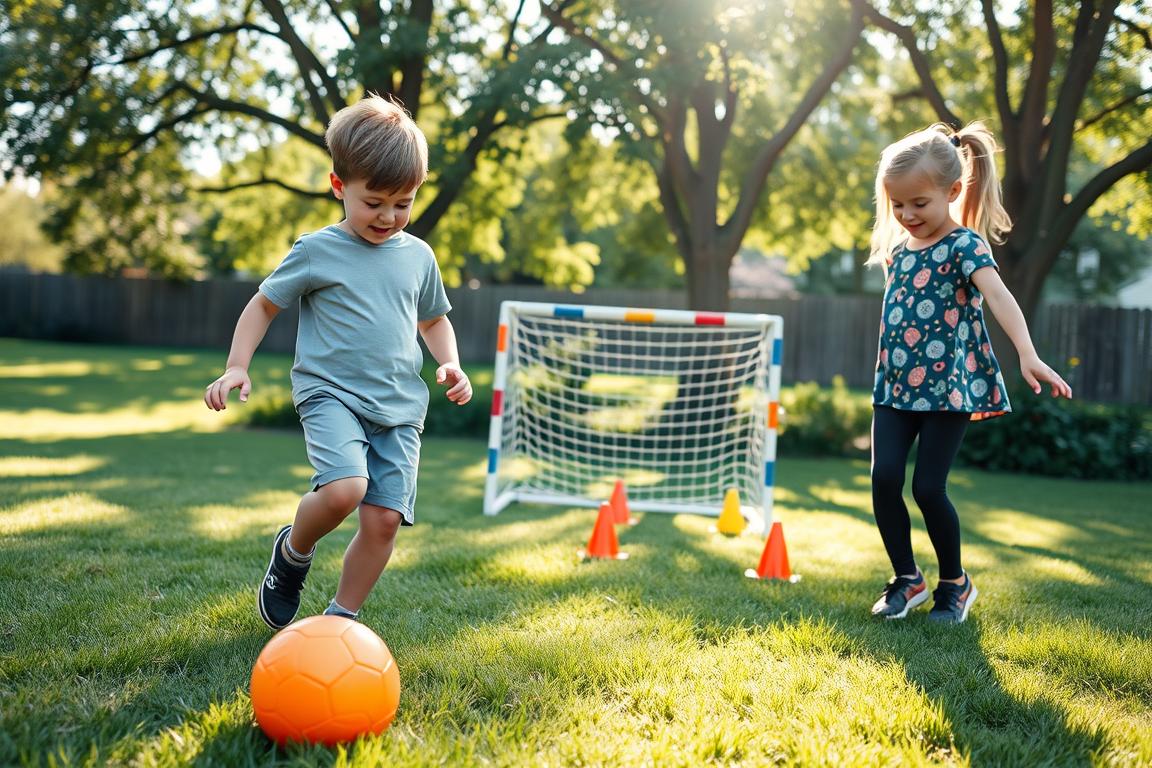
Short dribbling paths and gentle cone weaves
Set a 10-foot dribbling path with cups or rolled socks. Let your child move the ball slowly and breathe between runs.
Try three gentle weaves, stop the ball, then rest. Repeat once to keep the activity fresh and fun.
Wall passes and soft first touch drills
Use a soft ball for wall passes. Count three clean returns, then clap once. Switch feet for balance.
Practice a light first touch: roll, tap, stop. Keep it slow so confidence grows.
Celebrate tiny wins: a pass, a try, a smile
- Set tiny goals like “two clean taps” or “one gentle pass.”
- Keep sessions to five minutes so children leave happy.
- Add one new skill per week to show steady progress.
- Praise the try, the smile, and the calm breath as much as the goal.
| Drill | Setup | Time | Quick win |
|---|---|---|---|
| Dribbling path | Cups or socks spaced 10 ft | 3–5 minutes | One clean run |
| Cone weaves | Three markers or toys | 2–4 minutes | Stop and control |
| Wall passes | Soft ball against a wall | 3–5 minutes | Three clean returns |
Partner with coaches and teams for a safe environment
Talk with the coach early so your child meets a calm, familiar face before practice. A short, kind chat sets a helpful tone and shows you are part of a friendly crew.
Ask for calm, consistent, and friendly sessions
Request a brief demo and the same routine each week. Calm, steady sessions protect confidence and help children feel comfortable fast.
Request small-sided games and clear roles
Ask the team to use small-sided games so players get more touches and less crowd noise. Agree on one clear role to start so your child takes part without guessing.
Align on praise for effort, not speed
Tell coaches to name effort: “Nice try,” or “Great focus.” Brief, specific praise builds lasting confidence more than praise for speed.
- Invite teammates to pair up for simple passes or shadow runs.
- Keep instructions short and visual so children follow without stress.
- If the squad is large, request a quiet corner start or two-player station.
- Share one success after each session so staff can build on wins next time.
| Request | Why it helps | Quick phrase to say | Best for |
|---|---|---|---|
| Calm weekly routine | Creates predictability | “Short demo and same start each week” | New players |
| Small-sided games | More touches, less chaos | “Smaller groups, please” | Children who need space |
| Effort-based praise | Builds steady confidence | “Name the try, not the speed” | All players |
Game day: simple steps that lower anxiety
On match day, one small goal and a steady rhythm cut through anxiety fast. A short plan gives everyone a clear role and helps a child feel steady on the field.
Create a calm pre-game routine
Use the same steps each time: arrive early, quick snack, bathroom, shoes, and two deep breaths.
Set one tiny game goal, like “one clean pass” or “one quick stop.” This gives focus and builds confidence.
Model steady reactions to mistakes
When errors happen, keep your voice soft and your face relaxed. Say, “Shake it off; next play.”
Coaches who show calm after a mistake teach players that mistakes are part of learning.
- Sit where your child can see you and give a thumbs-up after effort, not only goals.
- Keep half-time simple: one sip of water, one cue like “side-foot pass,” one smile.
- After the game, ask “What felt good?” before any tips to let confidence lead the talk.
| Step | Why it helps | Quick cue |
|---|---|---|
| Early arrival | Less rush, fewer spotlight moments | “Ten minutes early” |
| One tiny goal | Focuses attention and builds wins | “One clean pass” |
| Calm reset | Teaches quick recovery after mistakes | “Shake it off; next play” |
Leave on time and protect rest so the next game day starts fresh. Small, repeatable steps make time on the field more fun for players and parents alike.
how parents can support shy kids in soccer with steady steps
Simple, non-verbal moves help a child belong before words are needed. I often use silent teamwork to ease a young player into the group.
Use non-verbal cues and teamwork to connect
Run beside a teammate, offer a quiet tap on the ball, or share a thumbs-up. These actions let a child take part without forced talk.
Try shadowing: a quiet player follows a peer for one drill, then hands over the ball. This brings them into the flow gently.
Look for signs of readiness before competitive play
Watch for small changes: more eye contact, a smile during drills, or asking for a turn. Those signs show rising comfort and trust.
- Use a nod or a silent high-five to reward effort.
- Offer one small game role and keep a quiet exit ready.
- Tie goals to effort: “Try three short passes,” not “be the fastest.”
- Add one new role per week as confidence grows.
When your child shows steady ease, nudge toward short scrimmages. For extra tips and a simple plan, see being a great soccer parent.
Track progress and plan the next step
A simple log of visible signs helps you plan the next step with confidence.
Note small social cues: eye contact, a tidy pass, or a brief chat with teammates. These things show real growth even when it feels slow.
Notice social signs
Write down three things each week: a look up, a pass, or a short chat. Keep notes short and specific.
Compare notes across school terms and years. That view shows steady confidence, not day-to-day swings.
Increase challenge slowly
Add one step at a time: a longer drill, a new small role, or a quiet scrimmage. Move up only when the child shows comfort.
Use one game clip or photo to celebrate progress. Then set one clear next skill goal to try at home or practice.
- Keep roles clear so your child knows where to stand and who to watch.
- Ask the team staff for a short note after practice to plan the next session.
- If a week feels hard, repeat last week’s plan and end with one small success.
| What to track | Why it matters | Next step |
|---|---|---|
| Eye contact | Shows growing comfort | Small partner drill |
| Pass completed | Builds team trust | Longer passing lane |
| Brief chat with teammates | Social integration | Short, supervised scrimmage |
Keep the long view. Progress varies by weeks and school seasons, but steady, small steps build lasting skills and confidence.
Conclusion
Close with a plan of tiny wins that add up over weeks and seasons.
Keep things small at the field. Arrive early, pick one clear role, and aim for one simple goal each session.
Use quiet praise for each pass and try. Non-verbal teamwork and small-sided games give children a safe chance to take part without pressure.
Treat shyness as normal anxiety. Expect mistakes, celebrate one small goal, and track steady progress across school terms and years.
Lead with patience. Over time, calm routines, short drills, and kind coaches build real skills and lasting confidence for your child and other kids on the team.