
Simple Soccer Cardio Drills for Kids at Home
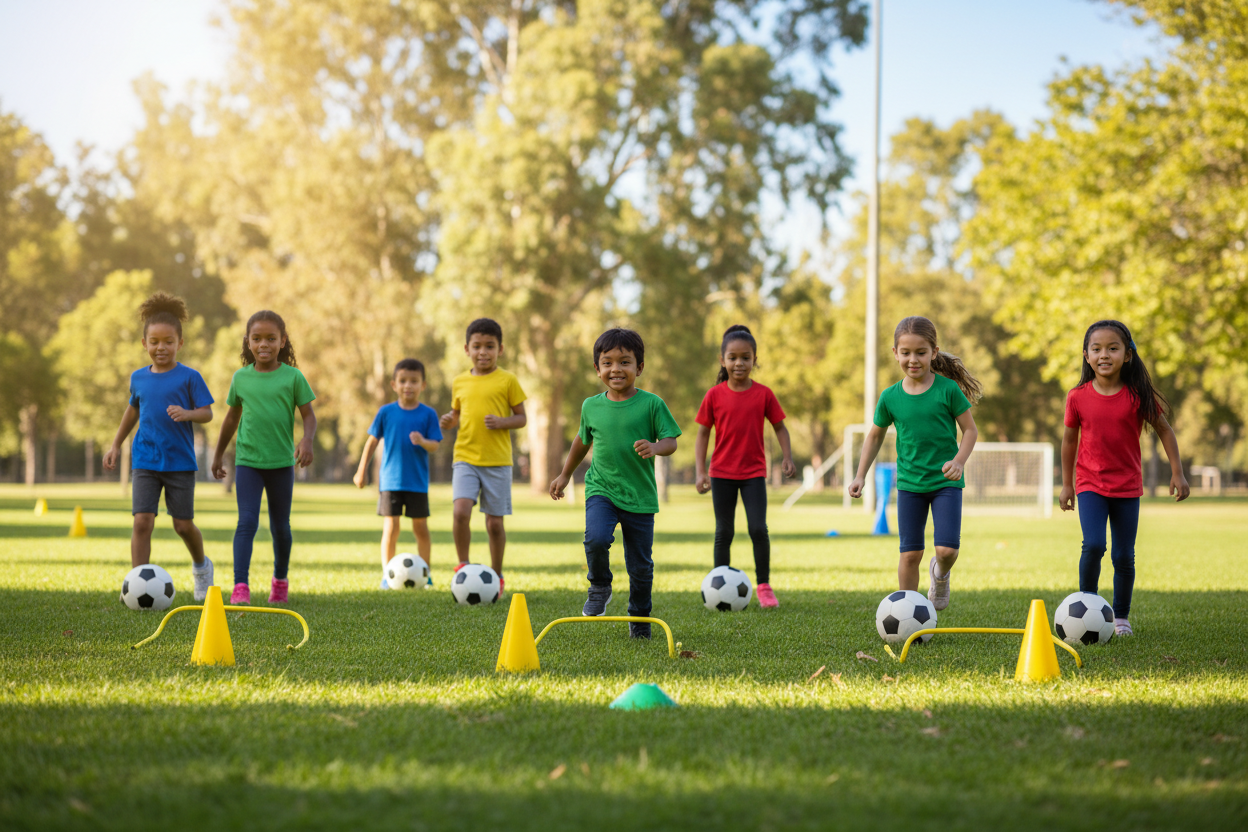
Imagine your living room turning into a mini-stadium where your little athlete builds speed and stamina with a smile. Starting these simple soccer cardio drills for kids is the perfect way to boost their energy right from the comfort of your home.
I want to show you how easy it is to help your kids stay active without needing a massive field or expensive gear. A small hallway and a ball are all you need to start improving their footwork and endurance today.
These active exercises mirror real game situations like quick bursts of speed and sharp turns. I love watching how much confidence players gain when they master these movements in a stress-free environment.
Training at home saves you time and keeps the game fun for everyone involved. I promise these drills are easy to teach, even if you have never played a single match of this soccer sport yourself! I am excited to help your child grow.
Key Takeaways
- No special equipment is required beyond a ball and a small indoor space.
- Building soccer fitness at home saves families time and reduces travel stress.
- The drills focus on movement quality and quick recovery patterns.
- Training in a familiar environment helps kids gain confidence quickly.
- Exercises are designed to be fun rather than feeling like boring work.
- Parents can easily guide these sessions without any previous coaching experience.
Why Soccer Cardio Training Matters for Kids
I believe soccer cardio training is vital for every young player. It is not about running endless laps around a field. Instead, it prepares the heart for the real speed of a match. This type of preparation helps your child stay active and happy during every game.
I know that kids are not miniature professional athletes. Their bodies are still developing and growing every day. Because of this, long-distance running is rarely the best choice for youth soccer. We want to focus on movements that actually happen during a real match.
Soccer is about short bursts of acceleration and quick recovery. Players must change direction and make fast decisions while moving constantly. When training mirrors these demands, players build endurance naturally while having fun with the ball.
I have seen many players fade during the second half of their matches. They lose focus because they are simply struggling to catch their breath. Good fitness means soccer players can focus on their skills and teamwork instead of their tired legs.
I believe that conditioning helps your child feel capable and ready to compete. Stronger lungs and a healthy heart lead to a much better experience on the soccer pitch. Building endurance keeps youth soccer athletes strong until the final whistle blows.
When players have high fitness levels, they can try new moves with confidence. They do not have to worry about being too tired to chase the ball. I love seeing the smile on a child’s face when they still have energy in the final minutes!
Here are a few ways these soccer drills help:
- Short bursts of energy help children sprint to the ball first.
- Stamina allows for constant movement for up to 60 minutes.
- Quick recovery helps the body handle physical demands easily.
- Confidence grows when a child feels strong and capable.
| Game Demand | Physical Need | Training Benefit |
|---|---|---|
| Sprinting for the ball | Quick acceleration | Higher explosive power |
| Playing the second half | Lasting stamina | Reduced physical fatigue |
| Changing direction | Better balance | Improved body control |
| Focusing on skills | Lower heart rate | Better mental clarity |
Benefits of Home Soccer Cardio Drills
I love how home-based conditioning makes soccer practice practical and easy for every family. You can turn your driveway or backyard into a high-energy zone without any stress. This simple approach keeps things fun while helping young players grow their skills and confidence.
Practicing at home allows for consistent growth without the need for a commute. You will find that these short sessions keep players engaged and excited about their progress. It is a wonderful way to bond while working on athletic goals together.
Builds Stamina for Full Games
Your child needs lasting energy to finish a game strong from start to finish. Using these specific drills helps them develop the endurance required for every minute on the field. They will feel much more capable when they do not feel tired by the second half.
Improves Speed and Quick Movements
Quick feet and sharp turns are essential skills in youth soccer today. Regular training at home sharpens their speed so they can reach the ball before their opponents. These movements help players react faster and move more naturally during intense match moments.
Keeps Kids Active and Healthy
Staying active is about more than just soccer skills; it is about total fitness. Regular movement supports the long-term health and well-being of all kids. When players engage in fun movement, they stay motivated to play and stay healthy every single day.
I find that youth soccer activities at home break down barriers for children of all abilities. It creates a safe space where they can experiment and move without any outside pressure. This positive environment keeps their motivation high throughout the year.
Saves Time and Money
I find that practicing at home is completely free and very flexible for busy parents. You avoid the long commute to expensive training facilities or local fields. Short 15-20 minute sessions lead to big improvements in endurance for players without any high costs.
You can fit these sessions into your schedule whenever it works best for your family. This flexibility makes it much easier to stay consistent with your routine. Plus, your child will love the dedicated one-on-one time they get to spend with you.
| Feature | Home Practice | Facility Training |
|---|---|---|
| Total Cost | Free | Often Expensive |
| Travel Time | Zero Minutes | 30+ Minutes |
| Schedule | Fully Flexible | Fixed Times |
| Focus Area | Endurance and Speed | Team Tactics |
| Environment | Familiar Soccer Space | Crowded Fields |
What You Need to Get Started
You don’t need a professional stadium to help your child improve their soccer skills at home. I promise you don’t need a full soccer field to run these drills. Setting up a fun training area is simple and takes almost no time.
You only need a few items and a small space to get moving. Let’s talk about what you should have ready before the fun begins!
Space Requirements
A backyard, driveway, or a local park space works perfectly for soccer training. You need an area that is about 10 to 20 yards long. This is roughly the same length as two parked cars.
The ground should be flat and free of rocks or holes. Running safely is the most important part of any workout! Make sure the ground is dry so your little athlete doesn’t slip while they are practicing their turns.
Basic Equipment List
The basic list is very short: one soccer ball and a few cones. If you don’t have a professional cone, just use household items like water bottles or shoes! These items work great as markers for various movements.
Your child should wear comfortable sneakers or cleats to move freely. I also recommend having a water bottle nearby so they can stay hydrated while using the soccer ball. Proper hydration keeps the energy high throughout the session!
Using cones helps kids visualize their path as they run. You can even use another cone to mark a goal if you want to practice scoring with the soccer ball at the end of a drill.
How to Warm Up Before Drills
I always start with a warm-up because it prepares your child’s body for exercise and prevents injuries! Spending just a few minutes on these exercises helps young players feel ready for a great training session. It also protects the heart and muscles from sudden stress.
Warming up helps youth athletes transition from sitting in a classroom to moving on the field. Active movements gradually lengthen the muscles and improve focus. It only takes a little bit of time to get the body moving correctly.
Light Jogging and Movement
Start with light jogging around your practice space for about two minutes. Your child can add fun movements like skipping or side shuffles to keep it interesting. This variety helps wake up different muscle groups used in soccer.
I suggest adding high knee pulls and heel kicks to get the legs ready for soccer drills. Have your child lift one knee at a time toward their chest while standing or moving slowly. This simple routine gets the blood flowing and the heart rate up gradually.
Simple Stretches for Kids
Simple stretches are perfect for loosening up after a long day at school. Have your child reach for their toes or do gentle quad stretches to help kids stay flexible. Holding each stretch for about ten seconds is plenty for youth players.
Don’t forget to include a simple soccer practice cool down at the end of your day too. For now, focus on arm circles and gentle torso twists to prepare the upper body. These small steps ensure your child stays safe and has a blast while playing.
| Warm-Up Activity | Time Duration | Focus Area |
|---|---|---|
| Light Jogging | 2 Minutes | Heart Rate |
| High Knee Pulls | 1 Minute | Leg Flexibility |
| Toe Touches | 1 Minute | Hamstrings |
| Torso Twists | 1 Minute | Upper Body |
| Total for players | 5 Minutes | Full Body Prep |
Simple Soccer Cardio Drills for Kids
Transforming your backyard into a mini-stadium is the perfect way to help your child develop the conditioning needed for youth soccer. I am so excited to share five simple drills that build cardio fitness while improving fundamental skills. These activities turn hard work into a fun experience for young players.
Each drill takes just a few minutes to complete but delivers powerful benefits. When your child practices these regularly, they will feel much more confident on the field. We will focus on movements that mimic a real game, ensuring every second spent training counts toward their growth.
Drill 1: Cone Sprint and Stop
How to Set Up
For this first drill, you only need two cones and a small amount of space. Place one cone on the ground and walk ten yards away to place the second one. This creates a clear line for your child to follow during the training session. Make sure the area is flat and safe for running at high speed.
How to Do the Drill
Have your player stand at the first cone. When you blow the whistle, they must sprint as fast as they can toward the second marker. Once they reach it, they must come to a full stop instantly. I recommend they stay low and use small steps to keep their balance. After a short pause, they should run back to the start and repeat the process for 60 seconds.
What It Improves
This exercise is fantastic for building explosive speed and the ability to decelerate. In soccer, players often have to stop suddenly to change direction or mark an opponent. It also strengthens their core and leg muscles. Learning to control their body during fast movements is a key skill for all young players.
Drill 2: Dribble and Shoot Repeat
How to Set Up
To set this up, place four cones in a straight line with about two yards between each one. At the end of the line, set up a small goal or use two items to mark a scoring area. Your child will need their ball and plenty of energy for this one! I love this drill because it combines conditioning with the thrill of scoring.
How to Do the Drill
The player starts at the beginning of the cones. They must dribble the ball through the obstacles as quickly as possible while keeping it close to their feet. Once they pass the last cone, they take a shot at the goal. After they score, they should sprint to retrieve the ball and jog back to the start to go again.
What It Improves
This activity develops ball control at high speeds and increases cardiovascular endurance. Because the player has to retrieve the ball, they stay in constant motion. It teaches them how to keep their breath while focusing on skills. It is one of the best drills to prepare athletes for the physical demands of a full play period.
| Drill Name | Main Benefit | Time Needed | Equipment |
|---|---|---|---|
| Cone Sprint | Explosive Speed | 5 Minutes | 2 Cones |
| Dribble & Shoot | Ball Control | 8 Minutes | Ball & Goal |
| Square Pattern | Agility | 6 Minutes | 4 Cones |
Drill 3: Square Movement Pattern
How to Set Up
Create a square by placing four cones about five yards apart from each other. This creates a specific area for your child to practice different movements. I find that using different colored markers can make it even more engaging for youth. Ensure there is enough space for them to move freely without hitting any obstacles.
How to Do the Drill
Your child starts at one corner and sprints forward to the next cone. Then, they shuffle sideways to the third cone. Next, they run backward to the fourth corner and finally shuffle back to the start. You can blow a whistle to signal when to change their direction or increase their intensity. Try doing this for two minutes at a time.
What It Improves
This drill is excellent for agility and coordination. In a real soccer match, players move in every direction, not just forward. Shuffling sideways and running backward are essential skills for defenders and midfielders. It helps athletes stay light on their feet and improves their overall conditioning and balance.
Drill 4: Shuttle Dribble Back and Forth
How to Set Up
Set three cones in a straight line. Place the first at five yards, the second at ten yards, and the third at fifteen yards from the starting point. Your player will need a ball for this training exercise. This setup is perfect for youth soccer because it fits in most small yards or driveways.
How to Do the Drill
The player will dribble the ball to the first cone and back to the start. Immediately, players dribble to the second cone and return. Finally, they go to the furthest cone and back. I encourage young players to use both feet to keep the ball under control during these turns. Repeat this three times with a short rest in between.
What It Improves
This activity builds endurance and sharpens close ball control under fatigue. It mimics the “stop and go” nature of a game where the team moves up and down the field. By practicing this, your child learns to maintain their skills even when they are tired. It is a fantastic way to boost their stamina and confidence.
Drill 5: Pass Move and Sprint
How to Set Up
You can help your child with this drill or use a wall if they are practicing alone. Place one cone five yards away from a “passing target” (like you or a wall). This setup helps the player understand the importance of movement after a play. It is a simple way to bring team dynamics into a home training session.
How to Do the Drill
The player passes the ball to the target. As soon as the ball leaves their foot, they must sprint around the cone and back. They then receive the ball again and repeat the motion. I love seeing players challenge themselves to get around the side of the cone faster each time. Do this for 45 seconds per set.
What It Improves
This drill teaches young players to move immediately after making a pass. In soccer, standing still after passing is a common mistake. This exercise ensures they stay active and look for new space on the field. It combines technical skills with high-intensity conditioning, making it a complete workout for youth.
How to Make the Drills More Challenging
As your little athlete gets stronger and fitter, you will want to know how to progress these activities. I want you to see how simple it is to boost the difficulty as your child’s abilities grow. Progression keeps youth players excited and helps them see real results from their cardio training.
I suggest making small changes every week to keep the workouts fresh. You can easily improve youth soccer skills by slowly raising the bar. Watch for your child to master a movement before you add more intensity to the drills.
Add More Repetitions
Adding more repetitions is the simplest way to increase the challenge for young players. I recommend adding just one or two extra rounds to each set every week. This steady growth builds endurance without making the workout feel like a chore for your child.
Reduce Rest Time
You can also increase intensity by reducing rest time between each set. Try dropping the break from 60 seconds down to 30 seconds as their fitness improves. This keeps the heart rate up and prepares every player for the fast pace of a real game.
Increase Distance or Speed
Moving the cones farther apart is another great way to push a young player. It forces them to run longer distances while maintaining speed and ball control. I also love adding a competitive element by timing their rounds to beat a personal best.
- Combine two drills back-to-back without rest for a tougher workout.
- Encourage your child to focus on form even when they are moving faster.
- Celebrate every small win to keep the energy high and the mood positive!
| Level | Reps | Rest | Focus |
|---|---|---|---|
| Beginner | 3-4 | 60s | Good Form |
| Intermediate | 5-6 | 45s | Control |
| Advanced | 8+ | 30s | Quickness |
I always remind parents that increased difficulty should still feel achievable and fun. Progression happens over weeks, not all at once, so your child stays happy. You are doing a great job guiding your young players toward success!
Common Mistakes Parents Make
I want to share some common mistakes so you can avoid them and keep training safe and enjoyable! Helping your child improve is a wonderful goal for any parent or home coach. However, I often see simple errors that can hurt a child’s progress or motivation.
Pushing Kids Too Hard
Pushing your child too hard is the biggest mistake you can make. It often leads to burnout and makes kids hate their practice time. You should watch for signs your child is too tired, like sloppy movements or complaints of exhaustion.
Making practice feel like punishment instead of fun will quickly kill your child’s motivation. I encourage you to focus on progress over perfection at all times. Celebrate small improvements instead of demanding flawless execution from your players.
Skipping the Warm-Up
Skipping the warm-up might seem like a time-saver for busy families. This mistake actually increases the risk of muscle pulls and other injuries for young players. Every youth athlete needs to prepare their body before starting intense conditioning work.
A good warm-up gets the blood flowing and prepares the joints for movement. It only takes a few minutes but saves your child from weeks of recovery. Consistent conditioning requires a healthy body that is ready to move.
Not Allowing Enough Rest
I see parents not allowing enough rest between drills quite often. This mistake prevents proper recovery and reduces the overall fitness benefit for kids. Your child needs periods to catch their breath and let their heart rate come down.
Overloading youth players with excessive volume can decrease their enthusiasm for soccer. Young athletes need this recovery time to build their conditioning safely. As a coach, you must balance hard work with the right amount of downtime.
| Common Mistake | Potential Result | Mentors Solution |
|---|---|---|
| Pushing too hard | Burnout and fatigue | Focus on fun and praise |
| Skipping warm-ups | Increased injury risk | Start with light movement |
| Lack of recovery | Reduced training benefit | Schedule breathing breaks |
| Strict perfection | High stress and anxiety | Celebrate small progress |
How Often to Practice These Drills
Finding the right frequency for these movements is key to keeping things fun and effective. I suggest practicing these drills two to three times per week for the best results. This schedule helps young players improve their skills without feeling worn out or bored.
Home training should always support what happens with their team. Most youth soccer groups already practice a few times each week. Adding a quick training session at home keeps the momentum going during their off days.
Keep each session around 15 to 20 minutes in time. Short bursts of soccer activity are much better than long, tiring workouts. This approach helps kids stay excited to play and look forward to their next practice.
- Space out your practice days to allow for full recovery.
- Focus on youth soccer fundamentals like balance and agility.
- Include small-sided games to make the conditioning feel like fun.
- Use drills that mimic real games to build game-day stamina.
- Always check in with your team coach for extra advice.
It is important to start slowly after any long break. Gradually increasing the workload ensures your child stays healthy and strong. Consistency matters far more than intensity when helping young players grow in their soccer training.
| Practice Type | Weekly Frequency | Session Length |
|---|---|---|
| During the Season | 2 Times | 15-20 Minutes |
| Off-Season Work | 3 Times | 15-20 Minutes |
| Post-Break Startup | 1-2 Times | 10-15 Minutes |
Tips to Keep Your Child Motivated
I know keeping your child motivated is key to making home training successful and sustainable long-term! Your energy is very contagious, so if you are excited about the activity, your kids will be too.
Try to focus on praise for effort rather than just looking at the results. This builds their confidence and makes them want to keep trying even when things get tough.
Make It Fun and Game-Like
Making drills feel like a game instead of work keeps practice fun and your child engaged. You can add challenges like “beat your time” or “how many can you do” to create friendly competition.
These types of games naturally motivate players to give their best effort. You can also play upbeat music during the session to add a boost of energy to the yard!

Set Small Goals
Setting a small, achievable goal gives your child something to work toward and celebrate once they finish. This builds massive confidence in young players as they see themselves improving one step at a time.
It is a great way to show them that hard work leads to more time to play. Use a simple reward system, like earning stickers for completed sessions, to lead toward a small prize.
Practice Together
I love when parents practice alongside their child because it makes soccer feel like quality bonding time! Your child will try harder and have more fun when you are running and laughing with them on the team.
You do not have to be a professional coach to help players reach their next goal or win the next game. Giving more time to play soccer is a great reward to reach the final goal of the day.
| Motivation Strategy | Engagement Level | Main Benefit |
|---|---|---|
| Game-Like Drills | High | Prevents boredom during practice |
| Achievable Goals | Medium | Builds long-term confidence |
| Parent Participation | Very High | Creates positive family memories |
| Music and Rewards | High | Maintains high energy levels |
Conclusion
I hope you feel confident now about doing simple soccer cardio drills at home with your child! You are giving your child an amazing gift by supporting their fitness and growth in youth soccer.
You do not need a massive field or professional gear to see real results. A small area, a ball, and a few cones work perfectly for these daily exercises. Consistent conditioning helps soccer players build endurance and agility over time.
When young players practice 2-3 times weekly, they gain control and better skills for real games. Focus on how players run and change direction during these active minutes. This simple way of training builds soccer intelligence alongside physical conditioning for kids of any age.
Remember to keep conditioning fun and game-like to keep your athletes motivated. Try setting up a line for sprints or working in small groups if friends join. Good youth training combines movement with play to boost their ability.
I believe in you as a coach and mentor to help your team reach every goal! Just listen for the whistle and start moving today.
| Training Priority | Main Benefit |
|---|---|
| Regular Practice | Builds lasting endurance and fitness. |
| Fun Atmosphere | Keeps players excited to play. |
| Basic Gear | Improves soccer skills anywhere. |