
Start Right: Soccer Practice for Beginners Explained
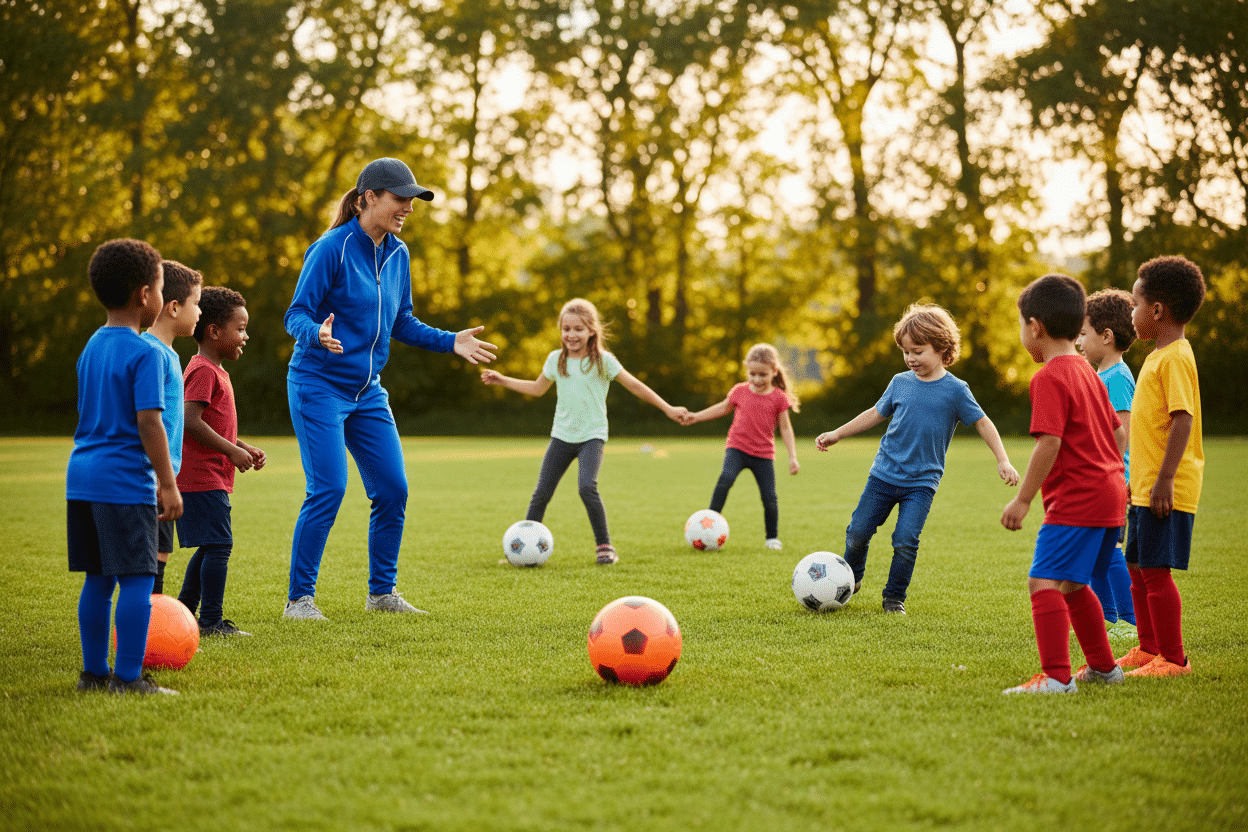
Starting your child’s soccer practice for beginners journey can feel like a big step—but it’s also filled with joy and discovery.
I remember watching my own kids take their first touches. That moment is magical. Getting the foundation right from the start makes all the difference. It builds confidence and turns nervous energy into excitement.
This guide is for families new to the sport. Maybe you’re a parent in the backyard or a volunteer coach. My goal is to make everything feel simple and fun. The game doesn’t have to be complicated.
Everything in this sport revolves around the ball. Building comfort with it is the first, most important skill. Good training balances skill-building with pure enjoyment. That’s how kids stay excited and want to keep playing.
We’ll walk through the basics together. You’ll get clear, practical help for creating sessions that work. Let’s make this a positive experience for everyone involved.
Key Takeaways
- Starting with the right foundation builds a child’s confidence and enjoyment.
- Soccer practice should feel simple, fun, and not overwhelming for new players.
- This guide is designed for families and coaches who are new to the sport.
- The ball is the central focus; comfort with it is the essential first step.
- Effective training balances learning new skills with keeping the activity enjoyable.
- The article provides clear, section-by-section guidance on all the basics.
- Tips are practical for both backyard practice with parents and organized team sessions.
Introduction to Soccer Practice for Beginners
The early stages of learning a new sport are all about creating positive associations and fundamental habits. A strong start makes everything that follows easier and more fun. I’ve seen how the right approach builds a love for the game.
Purpose of a Solid Foundation
Drills play a key role. They help young players work on key movements. Over time, these actions become muscle memory.
This means their bodies learn to react automatically. The goal is to balance skill development with pure enjoyment. Mastering basic skills first beats trying fancy tricks.
Benefits for Young Players
Regular, guided training offers huge rewards. Kids gain confidence in their abilities. They also build general fitness and learn to work as a team.
Starting with simple activities prevents frustration. It helps new players fall in love with the sport naturally. They build a base for everything else.
This table shows the clear difference a good foundation makes:
| Area of Development | With a Solid Foundation | Without a Strong Base |
|---|---|---|
| Confidence | Grows steadily with each mastered skill | Often shaky and dependent on early results |
| Skill Progression | Faster and more sustainable long-term | Can hit early plateaus and cause confusion |
| Enjoyment of the Game | Rooted in understanding and capability | Can fade if activities feel too difficult |
| Teamwork Ability | Develops from shared fundamental language | May be hindered by uneven skill levels |
Focus on core skills like ball handling and passing. Players who build strong basics early progress faster. They also enjoy the sport more as they grow.
Soccer practice for beginners
What sets early training apart is its focus on simplicity and building confidence. I’ve seen that keeping things basic helps new players feel successful from the start.
Remember, athletes use their feet almost exclusively. Good drills for beginners build comfort with this unique rule. They should be easy to set up at home or in a park.
Consistency matters more than intense sessions. Regular, short practices lead to steady improvement. Many young athletes see better ball handling in just three to four weeks.
Each drill teaches a specific skill. Repeating these movements helps them become automatic. This is how muscle memory develops.
Focus on one or two skills at a time. Mastering control of the ball creates a strong foundation for everything else. I tell parents that patience with these soccer drills pays off quickly.
You’ll notice the ball becomes easier to manage with regular repetition. This progress builds the base for all future skills in the game.
Understanding Key Drills and Techniques
Think of drills as the repeated steps that teach your body how to move with the ball automatically. They are the core building blocks of training. I’ve seen how this approach makes learning feel manageable.
Drill Fundamentals and Muscle Memory
Good drills teach specific movements. Players repeat these actions many times. Over time, their bodies remember how to perform them.
This is called muscle memory. It means you don’t have to think about each step. Your feet just know what to do.
Fundamentals include proper technique for handling the ball. Body positioning and moving with control are also key. These simple movements build footwork, balance, and coordination.
Basic Skill Development
All development starts with ball control. This is the essential foundation. It makes every other technique possible.
Drills build on each other in a logical way. Dribbling skills help with passing. Passing practice helps with shooting. Good control improves everything.
Learning correct techniques through these activities prevents bad habits. Players who practice the same drill regularly execute it faster. They also become more accurate.
I always break complex skills into simple steps. This makes the sport easier for new athletes to master. Consistent repetition is the real secret to progress.
Essential Drills for Ball Control and Passing
Ball control and passing form the essential partnership that makes teamwork possible on the field. I’ve seen how practicing both together builds a young athlete’s confidence quickly. These activities make players more comfortable with the ball at their feet.
Let’s look at two simple drills. They focus on fundamental movements. You can set them up anywhere with a few cones.
Dribble, Turn, and Pass Drill Overview
This activity teaches control while moving. Place two cones 15 to 20 feet apart in a straight line. One player dribbles as fast as they can to the second cone.
They turn around it and deliver a pass to a teammate. The drill helps with dribbling, changing direction, and accurate passing. It builds comfort with the ball during motion.
Passing Pairs Technique
This is a great drill for first touch and short passing. You need two cones and one ball per pair. Set the cones about 10 feet apart.
Player one passes the ball to player two. Then they shuffle to the opposite side of their cone. Player two uses one or two touches to shift the ball before returning the pass.
Remember these key tips for good passes. Place your non-kicking foot next to the ball. Use the inside of your foot to make contact. Hit the middle of the ball and follow through toward your target.
Focus on crisp, accurate passes rather than power. Control matters most when learning. This shuffle movement also practices important footwork for games.
Drills to Improve Shooting and Finishing Skills
Scoring a goal is often the most thrilling moment for any young athlete on the field. I’ve seen how practicing these finishing moves builds huge confidence. Good drills make this exciting part of the game feel achievable.
These activities teach players how to end plays successfully. They replicate real game situations. Let’s look at two effective exercises.
One-Two Pass and Shoot Drill
This drill uses teamwork to create a scoring chance. You need two cones, one ball, and a goal. Place one cone about 30 feet from the center of the goal. Put the second cone 10 feet away, parallel to the first.
Player one starts with the ball at the first cone. They play a quick pass to player two at the second cone. Player two returns the ball immediately.
Then, player two makes a run toward the goal. Player one passes the ball ahead to meet that run. Player two takes one touch to control it, then shoots on goal.
Pass, Turn, and Shoot Drill Details
This exercise helps a player receive a pass with their back to the goal. Set one cone 30 feet from the goal center. Place a second cone 40 feet out, in line with the first.
Player one makes a firm, low pass to player two. Player two has their back to the goal at the 40-foot cone. They take a touch to control the ball.
Then, they spin quickly toward the goal. They carry the ball into the penalty area and attempt to score.
Remember key shooting tips. Place your non-kicking foot next to the ball. Strike slightly below the ball’s middle with your shoelaces. Follow through with power toward the target.
Repetition in these drills builds automatic reactions. Soon, taking a shot feels natural when the chance arrives.
Fun Warm-Up Drills for Engaging Practice
A great warm-up does more than just stretch muscles—it sparks enthusiasm and sharpens focus. I like to start every session with lively activities. These drills get the ball moving and help young athletes practice skills in a fun way.
Cone Weaves and Dribble Drills
Cone weaves are a classic drill used at every level. They build dribbling skills and agility at the same time. You only need five cones and one ball.
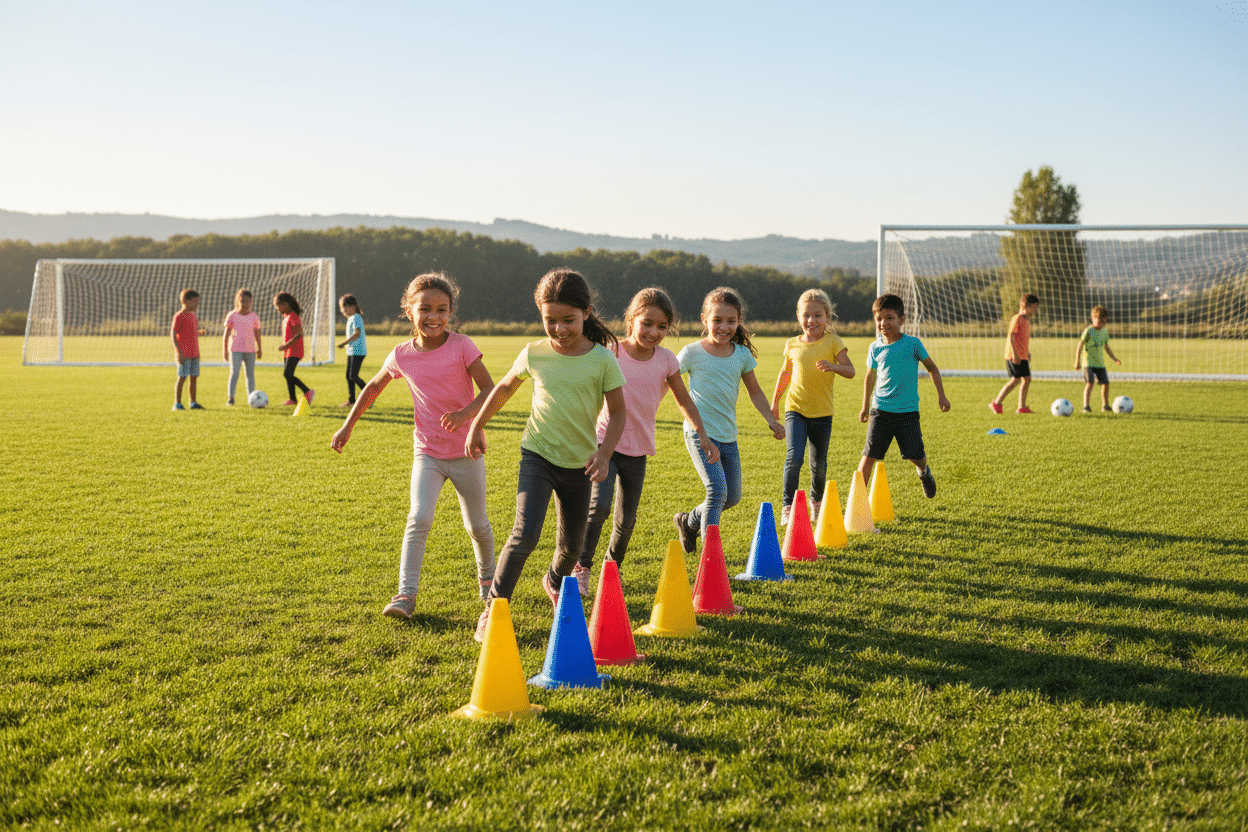
Set up the cones in a straight line. Space them about one to two feet apart. Players dribble in and out of each cone as fast as they can.
This activity teaches control with the ball at their feet. They learn to move through tight spaces. It improves close dribbling ability.
I tell players to keep their eyes up. They should not look down at the ball. This builds awareness of their surroundings.
You can also try a slalom pattern. Set the cones in a wide zigzag. Dribble diagonally from one cone to the next.
Turn these drills into a race. See who can finish fastest without knocking over a cone. It adds excitement and friendly competition.
To increase the challenge, space the cones farther apart. Ask athletes to use only one foot. This builds even better ball control and agility.
Incorporating Game-Like Scenarios in Drills
Incorporating game-like scenarios bridges the gap between isolated skill work and competitive play. I’ve seen how this approach makes training feel more relevant. Players understand why they practice certain movements.
These activities prepare athletes for real situations on the field. They learn to apply skills under pressure. This builds confidence for actual games.
Possession Squares for On-Field Application
Possession squares is a fantastic drill for building team chemistry. You create a square grid using four cones. Space each cone about 15 feet apart.
Divide your team into pairs. Two pairs compete at a time. The team with the ball must keep possession.
The other team tries to win it back. The goal is to complete five consecutive passes. This teaches players to pass under pressure and find open space.
I’ve found this drill eliminates fear. Beginners get comfortable receiving the ball in tight areas. They learn to work their way out of trouble together.
Dribble-Pass-Move for Real Game Situations
The dribble-pass-move drill replicates a common game action. Place three cones in a straight line. Space them five yards apart.
Player one dribbles to the middle cone. They then pass the ball to player two. After the pass, they immediately move to a new position.
This builds a critical habit. Players learn not to stand still after passing. Moving creates options for your team during play.
Practicing this scenario helps everyone understand their role. It connects individual skill to team success on the field.
Setting Up Your Practice Field and Equipment
You don’t need a fancy field to run effective sessions. Good training relies on simple tools. I’ve seen families create perfect spaces in their backyards.
Your essential equipment list is short. Focus on getting a few key items first. This makes starting easy and affordable.
Choosing the Right Cones, Balls, and Goals
Cones are your most versatile piece of gear. They mark boundaries and create obstacles. You should have at least 10 to 15 cones available.
This quantity lets you set up multiple drill stations. A single cone can mark a turning point. A line of cones creates a dribbling path.
Selecting the right ball matters for skill development. Young athletes use a size 3 ball (ages 8 and under). Older kids use a size 4 ball (ages 8-12).
Make sure the ball is properly inflated. A good ball feels responsive at your feet. This improves control during every drill.
You can create a goal with two cones if needed. Place them about six feet apart. This makeshift goal works perfectly for shooting drills.
Having a real net is nice but not required. The focus is on accuracy, not equipment. A simple goal marker does the job.
This table shows what you really need:
| Item | Purpose | Notes |
|---|---|---|
| Cones (10-15) | Mark spaces, create drill patterns | Choose sturdy ones that won’t blow over |
| Soccer Balls | Core tool for all skill work | Use size 3 or 4 based on player age |
| Goal Markers | Define a target for shooting | Two cones work as a temporary goal |
Poly spots and agility ladders are helpful extras. They are not essential for your first practice. Cones, a ball, and a goal are the true basics.
Organize your equipment before starting. This keeps the session flowing smoothly. Your field can be a driveway or a park.
Invest in quality items that last. A reliable ball and sturdy cones make soccer more enjoyable. Now you’re ready to set up and play.
Coach and Parent Tips for Effective Training
Effective training for new players hinges on a simple principle: keep it fun. Your role as a guide is crucial. I want to share tips that make leading sessions rewarding for everyone.
Maintaining Fun While Learning
Balance is the most important thing. Spending too much time on repetitive technique drills can make kids lose interest. Mix up your exercises to keep things fresh.
Your attitude sets the tone. Stay encouraging and patient when players make mistakes. This positive approach helps them associate the sport with good experiences.
I’ve found a sweet spot for sessions. Aim for two to three times per week. Keep each practice to 30 or 45 minutes. This consistency matters more than long, intense training.
| Approach | Fun-Focused Method | Overly Technical Method |
|---|---|---|
| Player Engagement | High; activities feel like play | Low; can feel like work |
| Skill Retention | Strong through enjoyable repetition | Variable; may not stick if boring |
| Session Pace | Lively, with varied exercises | Slow, with long explanations |
| Coach Demeanor | Supportive, celebrates small wins | Focused heavily on correction |
Explain why each exercise matters. Connect it to the actual game. You can also turn drills into games with races or challenges for your team. This is a great way to maintain energy. Remember, every child learns at their own pace. Give individual attention when you can.
Building Consistency Through Regular Practice
The secret to getting better isn’t found in a single amazing session, but in the routine you build over time. I’ve seen players make real progress when they commit to regular training. This consistency turns learned movements into automatic reactions.
Creating a Practice Schedule
Set a simple weekly plan that works for your family. Aim for two to three sessions each week. Keep each one between 30 and 45 minutes long.
This schedule is long enough for learning but short enough to hold focus. Stick to your chosen days and times as much as possible. Missing sessions breaks the valuable rhythm of skill development.
Players who follow this routine for three to four weeks will notice clear changes. Their ball control becomes more confident. Their speed and accuracy during drills improve noticeably.
Remember, consistency matters more than perfection. Even a short 20-minute session helps when it happens regularly. This regular training builds not just skill, but also discipline and commitment.
Advanced Drill Modifications for Growing Skills
Advanced skill development relies on thoughtfully tweaking practice routines. I’ve found that when athletes master a basic exercise, it’s time to change it. This keeps their minds engaged and their skills growing.
Scaling Drills to Increase Challenge
Scaling a drill means making small adjustments. These changes increase the difficulty level. Your players will face new challenges that push their abilities.
One simple method is to limit ball touches. Tell a player they can only use two touches before passing. This forces quicker thinking and better control.
Another great tweak is using the weaker foot. Have players complete the entire drill with their non-dominant foot. This builds balanced skills and makes them more versatile.
You can also increase the distance between cones. This demands more powerful, accurate passes. It improves a player’s ability to strike the ball over longer ranges.
Adding defenders creates game-like pressure. It teaches players to use their skills in tight spaces. Their speed and agility get tested in realistic conditions.
If a drill becomes too easy, ask players to do it faster. Timing them adds a fun, competitive element. This modification directly improves their speed of play.
| Basic Drill | Advanced Modification | Skill Developed |
|---|---|---|
| Unlimited touches in passing pairs | Maximum of two touches per player | Quick decision-making, first touch control |
| Dribbling with strong foot only | Dribbling using only the weaker foot | Balanced foot skills, versatility |
| Passing over 10 feet | Passing over 20 feet | Power, long-pass accuracy |
| Possession drill without pressure | Add one or two passive defenders | Passing under pressure, spatial awareness |
Watch your players closely. When they perform a drill consistently well, introduce one modification. This careful scaling ensures continuous progress for everyone.
Conclusion
You now have a clear path to help young athletes build a love for the game through simple, effective activities. Remember, early soccer training does not need complex plans. Basic drills create the strongest foundation.
These activities focus on core skills like control, passing, and shooting. Every player needs them. Coaches and parents can use these ideas with a team or in the backyard.
Regular practice helps players improve their game over time. Keep sessions fun to maintain excitement. Young athletes will stay eager to learn.
You can set up effective training that builds confidence with the ball. Each child develops at a unique pace. Celebrate all progress, big or small.
Use these drills all season. Modify them as abilities grow. This keeps beginners challenged. For more guidance, explore tips to improve their footwork.
I hope this guide gives you the tools to start right. Help new players fall in love with the game. A positive beginning makes all the difference for beginners in soccer.