
Soccer Parenting for Young Defenders: How to Support Your Child
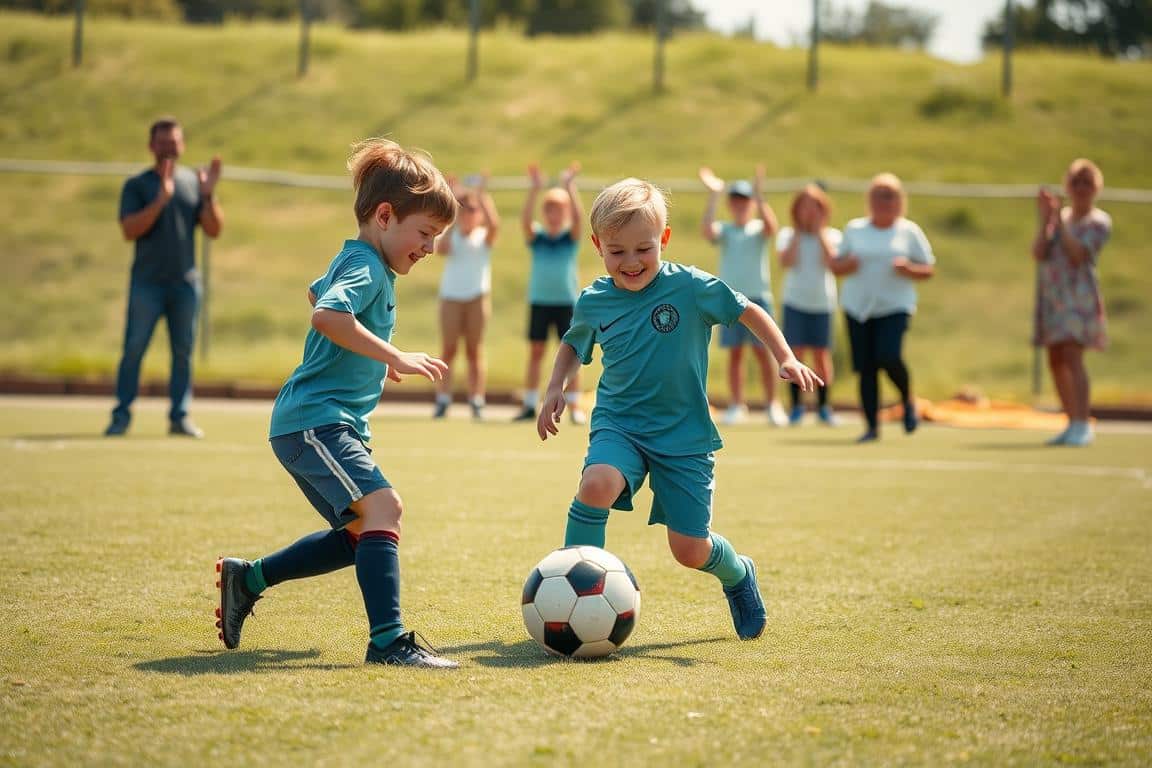
I write this as a simple, friendly guide to help you back your child as they learn to protect the goal and lead the back line. I know the nerves and the pride that come with watching them grow on the field, and I want to make support easy and practical.
In plain steps, you will learn what a defender does, why positioning matters, and how small habits build confidence. I focus on clear actions you can use at home, at practice, and during the game.
We’ll cover basics like staying goal-side, holding the line, using side-on stance, and making calm choices under pressure. I also share simple sideline phrases and at-home drills that need little gear.
Key Takeaways
- I set a calm tone: praise effort and keep feedback clear.
- Defenders win with positioning, timing, and smart passes.
- Use short calls like “Man on!” and “Step!” to organize the team.
- Practice recovery runs and 1v1 control in quick drills at home.
- Focus on calm decisions: clear when unsure, tackle with timing.
Why defense matters in youth soccer
I believe defense shapes how a child plays and grows. A calm back line makes the whole club steadier. When kids learn this role, they get practical skills and real confidence.
The defender’s role: protect the goal, read the game, lead the back line
A defender’s main job is simple: protect the goals and guide the back line. They stop shots, intercept passes, and mark opponents. Strong positioning often beats raw speed.
Staying goal-side and holding the line helps catch attackers offside. Defenders also talk with the goalkeeper and midfielders. Reading the game early cuts down risky last-second tackles.
Benefits for your child: work ethic, teamwork, decision-making, and confidence
Playing defense builds work ethic. Every play matters, so focus and effort grow fast. Teamwork improves because defenders move and talk as one unit.
- Good positioning helps stop chances before they start.
- Clear communication keeps shape strong.
- Quick, smart choices under pressure carry into life off the field.
A solid back line supports the whole team and builds habits that make the game more fun. After games, a short reflection helps mental toughness and steady progress toward good soccer.
Soccer parenting for young defenders
Begin each week with one simple target your child can see and track. A clear goal turns busy practice into focused progress.
Set clear goals with your child and coach
Sit with your child and the coach to pick one or two visible goals. Use phrases like “stay goal-side” or “call ‘Step!’”.
Build simple home routines that support defense skills
Keep sessions to 10–15 minutes. Do ladder footwork, wall passes, and first-touch control.
Repeat short drills three times. Quick reps build confidence under pressure.
Keep feedback short, specific, and positive after games
Praise effort and note one smart choice with the ball. Ask your child what felt hard and what went well.
Share one-line updates with the coach so the home plan and team plan match.
| Focus | Example Goal | At-home Drill |
|---|---|---|
| Positioning | Stay goal-side every play | Ladder footwork (10 reps) |
| Communication | Call “Step!” when the line moves | Wall passes with shout cues (5 minutes) |
| Ball play | Short, firm passes with both feet | First-touch control and quick pass (8 reps) |
Core defending principles your child should learn
Teaching a few clear defending rules will help your child feel calm and ready. Keep the lessons short and repeat them at practice. Use one idea per session so it sticks.
Positioning basics
Have your child stay between the ball and the net. That reduces dangerous central space and makes play upstream easier.
Hold the defensive line to catch an attacker offside and to keep shape tight. Anticipate forward movement and shift as a unit.
1v1 defending
Teach a side-on stance and small steps. Calm feet let them react.
Patience wins: delay, force wide, and wait for a loose touch. Good 1v1 defending is about timing more than speed.
Tackling and control
A defender must pick the right moment to step in. Tackle only when control and timing are clear to avoid fouls.
Practice foot placement and body control. Stay low for balance and quick direction changes.
Recovery runs
Teach sprinting on smart angles, not straight lines. Focus on the ball and the runner to close space fast.
Use urgent speed and keep eyes on the play to time a safe challenge.
- Stay goal-side and protect central space first.
- Delay and force wide in 1v1s.
- Tackle with control and good timing.
- Use smart recovery angles on breaks.
| Principle | Simple Drill | Goal |
|---|---|---|
| Positioning | Hold line walk (5 reps) | Protect central space |
| 1v1 defending | Contain and force wide (6 reps) | Patience and feet |
| Recovery runs | Angle sprints (4 reps) | Close space quickly |
Game-day support: how parents can help from the sideline
On match day, small, steady actions from parents help kids play with confidence. I focus on calm praise that keeps thought clear during pressure moments. Let the players and coach manage tactical calls.
Focus on effort, decisions, and teamwork over results
Cheer effort, smart choices, and teamwork rather than only the score. Call out good decisions like holding the line or forcing opponents wide.
Use calm language; avoid tactical shouting
Keep your voice low so your child can think under pressure. Avoid giving tactical orders from the side; that confuses the team and the coach.
- Say simple positives: “Great effort,” “Nice read,” “Good recovery.”
- Don’t call at the player on the ball; it distracts decision-making.
- Model composure so your child stays calm on the side and in play.
- Support all defenders and the back line to build team trust.
After the match, ask one open question: “What felt good today?” Keep the ride home light and caring to make the next game fun.
Ball control, passing, and clearances from the back
Good control at the back turns pressure into opportunity. Teach simple actions that keep play safe and start attacks. Use clear rules parents can watch during games.
Passing under pressure: short, firm passes with both feet
Encourage short, firm passing to midfield or wide players in space. Practice both feet so your child can switch play when marked.
Look for calm first touch. A steady touch sets up the next pass and avoids turnovers.
When to play simple and when to clear the ball
If the back line is under heavy pressure and unsure, clear the ball early. Safety first beats a risky pass near your net.
Point out moments to play simple versus risk a tight pass in the field. Reset play when the team needs a breath.
Heading basics: timing, direction, and bravery
Teach timing: jump at the highest point. Direct headers upfield or wide, not back into danger.
Focus on safe body shape and bravery in crowded areas. Praise clear decisions that keep the team organized.
- Practice short passes under pressure with both feet.
- Look up and find space to pass into.
- Track one passing goal per game (example: five clean passes).
| Skill | Drill | Game cue |
|---|---|---|
| Passing | Two-touch circle with pressure | “Short and firm” |
| Clearance | Timed clear and chase | “Clear if unsure” |
| Heading | High-ball timing reps | “Up and wide” |
Communication, leadership, and mentality for defenders
Clear calls and small habits build a defender’s on-field leadership. I coach simple words that shape team movement and calm play.
On-field calls that shape team shape
Teach your player three key calls: “Man on,” “Step,” and “Switch.” Use them with names when space is tight.
Keep the voice confident and short. Calm words speed up reactions and avoid panic.
Stay locked in and bounce back fast
A defender must talk early and often. That guides teammates and keeps the line compact.
Use a quick reset habit: one deep breath, then focus on the next play. After a mistake, say “Next ball” and move on.
- Use names in calls to speed reactions.
- Assign set piece roles so marks and movement are clear.
- Lead with body language: hands up, steady steps, and calm eyes.
- Reflect after the game: one win, one lesson, one goal.
| Situation | Call or Habit | Goal | Example |
|---|---|---|---|
| Close mark | “Man on” | Alert nearby teammates | Say name + “Man on” to warn a player |
| Line movement | “Step” | Keep offside line and compact shape | Short “Step” when line moves up |
| Switch play | “Switch” | Move ball to free side | Point and call “Switch” to change direction |
For extra tips on game-ready focus and goalie support, see this useful guide on goalkeeping drills and game habits: goalkeeper tips and routines.
At-home drills and training ideas for young defenders
Try short sessions that copy game pressure. Keep reps quick and clear. Ten quality reps beat long, tired sets.
1v1 and 1v2 reps: contain, delay, then tackle
Set a 10-yard lane. Attacker starts with the ball; defender uses a side-on stance to contain and delay. Force the attacker to the side and only go to win ball on a loose touch.
For 1v2, angle the body to block the pass and protect central space. Guide play to the sideline then recover to position after each rep.
Block tackle basics
Plant the non-kicking foot beside the ball. Keep the body low and meet the ball with firm contact. Stay balanced and follow through to keep control.
Footwork and passing patterns
- Ladder In & Out: quick feet through each square; stay light on the balls of the feet.
- In & Out – Double: faster rhythm for balance and movement control.
- Side-to-Side: shuffle, face the play, keep knees bent to build lateral speed on the field.
Wall passes and decision game
Two-touch wall routine: use the weak foot on one touch, set control on the first touch, finish with a firm pass.
Decision game: parent acts as opponents with visual cues. Child chooses pass, delay, or clear. Track small wins to keep youth players motivated.
| Drill | Reps | Goal |
|---|---|---|
| 1v1 contain | 10 | Delay and win ball safely |
| 1v2 angle defend | 8 | Block pass, protect space |
| Ladder patterns | 3 sets | Foot speed and balance |
| Passing wall | 12 touches | Weak-foot control and clean pass |
Keep it short, safe, and fun. I suggest you focus on quality over quantity and use clear counts so the coach and family can track progress.
Conclusion
Strong defense begins with small, repeatable habits that build confidence game after game. Keep practice short and clear. Focus on position, 1v1 control, calm passing, and safe clearances so your child learns to read the attacker and protect space.
Praise smart choices, clean tackles, and quick recovery runs. Work a few short drills at home and partner with the coach on simple goals. This steady approach helps a player grow skills and feel reliable on the field.
Defense is the base that lifts the whole team. Stay patient, keep it fun, and celebrate progress. Your steady support makes big development possible in youth soccer.