
Build Stamina with Soccer for Kids – Easy Plan

Watching your little athletes sprint toward a goal brings joy, but seeing them tire out early feels tough. I enjoy helping them because stamina is easier and more fun than you might think! Young players find better endurance away from intense gym sessions or long runs.
Instead, training feels like a game, keeping youth athletes excited while moving. Conditioning supports skill growth and confidence. Developing bodies need playful approaches so they stay motivated.
Active drills help a soccer team gain stamina while mastering ball skills. Youth sports require avoiding mistakes while focusing on real results. Improving endurance through training helps players stay active longer.
This simple plan keeps games fun and effective. Explore ways every child can improve naturally while having a blast. Positive encouragement helps everyone feel like a star on the soccer field!
Key Takeaways
- Game-based activities improve endurance naturally.
- Avoid long-distance running in early development.
- Focus on fun soccer drills.
- Conditioning should blend into skill practice.
- Recognize that every child develops at their own pace.
- Simple drills create lasting physical confidence.
Why Stamina Matters for Young Soccer Players
I have seen many talented kids lose their spark halfway through a game because they were tired. It breaks my heart when young players have the skill but not the energy to finish strong.
Soccer is not just about speed or how well you kick the ball. It is about lasting the full match and giving your best effort until the final whistle blows.
If your child runs out of steam, it is usually a matter of stamina. Building good endurance helps your child stay focused and energized throughout the entire game. When players have high fitness levels, they make fewer mistakes and feel more confident on the pitch.
Tired bodies often lose their form. This makes your child more vulnerable to strains or sprains, so staying fit actually helps with injury prevention.
| Advantage | How It Helps |
|---|---|
| Steady Focus | Helps kids make smart choices during a match. |
| High performance | Keeps the quality of play high until the very end. |
| Stable energy | Prevents the mid-game slump that can hurt self-esteem. |
I want you to know that building endurance is about more than physical health. Improving stamina ensures all players enjoy the sport more because they are not constantly struggling to keep up!
Understanding Youth Fitness Needs
Did you know that a child’s physical needs are very different from what a pro athlete requires? I want to help you understand that your child’s body does not work like an adult body when building fitness. We must respect their growth to keep them safe and happy!
How Kids Build Endurance Differently Than Adults
Young athletes are not miniature professionals. Their development depends on fun and variety rather than repetitive laps around a big track. Young players actually recover much faster than we do between quick bursts of movement.
Because their bodies are still growing, youth athletes thrive on stop-and-go activities. Long-distance running often bores them and doesn’t help their ability to play the game. Instead, young athletes build endurance best through game-like training that keeps them moving and thinking.
Key Physical Qualities Young Players Need
I want you to focus on five specific areas for your soccer players. These qualities help them stay active and happy throughout a full match. Youth soccer fitness should always feel like play rather than a chore.
Building endurance happens naturally when young players prioritize specific skills in their training. These qualities prepare them for the real demands of the game:
| Physical Quality | Soccer Benefit |
|---|---|
| Acceleration | Helps with quick starts to reach the ball first. |
| Agility | Allows for fast changes in direction during play. |
| Aerobic Capacity | Provides the lasting energy needed for the whole game. |
| Ball Control | Helps kids keep the ball even when they feel tired. |
| Recovery | The speed at which a child catches their breath after a sprint. |
When we respect the development stage of our athletes, they learn to love the game. They will gain the strength they need without even realizing they are working hard! I promise to keep soccer players engaged with the ball at all times.
How to Build Stamina with Soccer for Kids
Let me share the best way to help your child keep up on the pitch without it feeling like a chore. I believe that training should always be fun and exciting for every young player. Instead of separating fitness from the game, I recommend blending them together to see the best results.
The Game-Based Approach
The secret to how to build stamina with soccer for kids is to make every exercise feel like a game. This approach ensures that your child dribbles, shoots, and moves with the ball while they grow stronger. It is a fantastic method to how to improve soccer stamina for because they focus on play rather than fatigue.
I want you to think of every session as a chance to improve skills and fitness at the same time. You can use specific drills that mimic real game situations to keep things interesting. This type of soccer conditioning prepares youth players for the actual movements they will use during a Saturday morning match.
Why Traditional Distance Running Does Not Work
I have seen too many players forced to run laps around the field, and it simply does not work. Soccer is a sport of quick sprints, sudden stops, and fast changes in direction. Long-distance running teaches a steady pace, which is the opposite of what a real match requires.
Standard conditioning without the ball can also bore youth athletes and make them dislike their training. When you remove the soccer ball, you lose precious time that could be spent on technical development. High-energy bursts are much better for building the right kind of energy for this fast-paced sport.
Effective training should always mirror the demands of the sport to be truly useful. You will see much better progress when your child feels like they are just playing a soccer game with friends. Let’s compare the two methods to see why the game-based style is the strong winner for families.
| Feature | Game-Based Training | Traditional Running |
|---|---|---|
| Primary Focus | Skill and Movement | Steady Pacing |
| Kid Engagement | Very High and Fun | Low and Often Boring |
| Match Readiness | Prepares for Sprints | Only Builds Basic Endurance |
| Ball Involvement | Always Included | Rarely Involved |
Six Effective Drills to Build Stamina
Building endurance doesn’t have to be a drag, so let’s jump into these six fun soccer drills designed for young stars! I am excited to share these specific drills that will transform your child’s fitness levels without making exercise feel like a boring chore. Each activity focuses on a different part of the game to keep things fresh and interesting.
You can easily mix these exercises into your weekly routine to see great progress. These activities help your child stay energized until the very last minute of their match. Let’s look at how these simple movements make a huge difference on the field.
1. Interval Running: Sprint for 20 Seconds, Jog for 40 Seconds
Interval running is one of the best exercises for building match-level fitness quickly. You should have your child sprint hard for 20 seconds and then jog slowly for 40 seconds. Repeat this pattern for about 15 to 20 minutes to get the heart pumping.
This drill trains both quick-burst energy and recovery ability. These are exactly the skills that soccer games demand from young players. Doing this two or three times a week helps the body bounce back faster after a hard run. It is a simple way to build a strong foundation for any exercise routine.
2. Shuttle Runs Between Cones
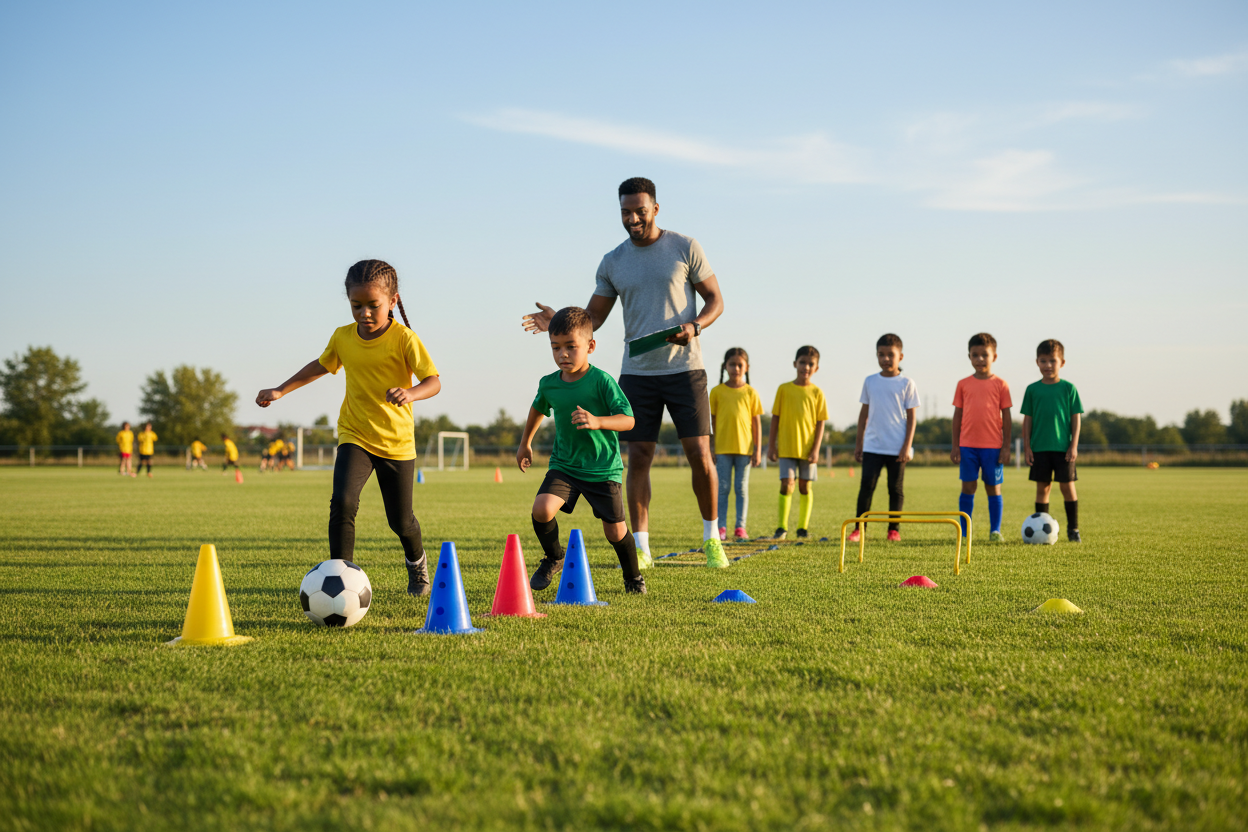
To start this shuttle activity, set up cones 5 to 10 yards apart depending on your child’s age. The players must sprint from cone to cone while focusing on explosive first steps. This shuttle technique teaches them how to stop under control and change direction fast.
Encourage your child to maintain a low body position during the shuttle runs to improve agility. These drills build incredible speed and help kids master their movement on the pitch. Focus on a strong start for the first three steps to get the most out of every repetition.
3. Dribble, Shoot, and Return Drill
For this drill, your child starts with the ball at the midfield line. They should dribble at high speed toward the penalty area and take a controlled shot. After the shot, they must immediately turn around and jog back to the starting point.
This activity combines essential ball skills with cardiovascular conditioning. It helps players learn how to control their recovery pacing while staying focused on the goal. Using these drills ensures your child stays comfortable with the soccer equipment even when they feel tired.
4. Small-Sided Games: 3v3 or 4v4
Small-sided games are honestly my favorite exercises because kids don’t even realize they’re working on stamina! These mini games provide constant movement and quick transitions on a smaller pitch. This setup increases the number of touches each child gets during the session.
A smaller soccer environment forces quick decision-making under fatigue. This conditioning method feels like pure play, which keeps the energy high and the stress low. It is a fantastic way to improve game awareness while naturally boosting heart rates through active competition.
5. Core Conditioning: Planks and Variations
A strong core builds the strength needed for balance and posture during a physical match. You can have your child perform an elbow plank for 30 seconds to one minute. Side planks and flutter kicks are also great exercises to include in this session.
These movements strengthen the muscles that help your child stay balanced and absorb contact. Targeted strength work protects the body and helps prevent common sports injuries. Aim to include these core drills about three times a week for the best physical support.
6. Movement Games and Play-Based Activities
Games like tag, dodgeball, or obstacle courses provide phenomenal conditioning effects while being very fun. These play-based exercises add variety to the week and keep younger players excited about their training. Fun is the best way to ensure they want to keep coming back.
When the heart rate stays elevated during a fun drill, the body builds endurance naturally. This type of exercise focuses on muscles used for balance and coordination without the pressure of a formal match. Always allow for a short rest period between high-intensity rounds to keep things safe.
Each of these activities serves a specific purpose for a young athlete. Whether you are focusing on agility or recovery, consistency is the key to seeing real change. Remember to include enough rest so that your child stays motivated and ready for the next fun challenge!
| Drill Name | Primary Focus | Recommended Frequency | Duration |
|---|---|---|---|
| Interval Running | Endurance and Recovery | 2-3 Times Weekly | 15-20 Minutes |
| Shuttle Runs | Agility and Speed | 2 Times Weekly | 10-15 Minutes |
| Core Planks | Balance and Strength | 3 Times Weekly | 5-10 Minutes |
| Small-Sided Games | Game Awareness | 1-2 Times Weekly | 20-30 Minutes |
Training Frequency and Session Length
One of the most frequent questions I hear from parents involves the ideal amount of time a child should spend on the field. I am happy to give you clear answers to help you find that perfect balance. Youth soccer players thrive when they have a consistent but manageable schedule that keeps them excited about the game.
I want you to focus on quality over quantity every single week. Building endurance is a gradual process that requires patience and steady effort. Shorter, engaging sessions always beat long, exhausting ones that might wear your child down too quickly.
How Many Times Per Week?
For most youth, having training sessions two to three times per week is the ideal sweet spot. This frequency allows the body to adapt to the physical intensity while providing plenty of time for recovery. If your child already plays on a team that practices regularly, you rarely need to add much extra work at home.
You can try interval running 2-3 times a week to boost stamina during the off-season. I also suggest 5-10 minutes of skipping or complementary movements three or four times weekly. Keeping the training intensity varied with bursts of effort followed by active recovery helps soccer players stay sharp and motivated.
Recommended Duration by Age
The time your child spends practicing should change as they grow older and stronger. I always recommend keeping things fun and fast-paced to prevent burnout or decreased enthusiasm. Use the table below to help you manage your training schedule effectively based on your child’s age group.
| Age Group | Session Duration | Sessions Per Week |
|---|---|---|
| 6-8 Years | 30-45 Minutes | 2-3 Sessions |
| 9-12 Years | 45-60 Minutes | 2-3 Sessions |
| Home Work | 15-20 Minutes | Optional Addition |
Remember that rest between sessions is just as important as the practice itself for young, growing bodies. This gradual approach ensures your youth athlete builds endurance in a healthy and sustainable way. Keep the energy high and always prioritize the joy of playing!
Common Mistakes Parents and Coaches Make
I need to be honest with you about three big mistakes I see parents and coaches make all the time with youth soccer conditioning! Sometimes, our enthusiasm leads us to use methods that do not actually help players grow. Avoiding these traps ensures your child stays happy and healthy on the pitch.
Focusing Too Much on Distance Running
One common error is making kids run long laps around the field. Soccer is about sprinting and stopping, not steady running for long periods. This way of training does not prepare kids for the quick bursts they need during a real match.
Separating Conditioning from Ball Work
Many coaches separate fitness work from the ball, which wastes valuable time. When kids do drills without a ball, they miss a chance for skill development. It is much better to keep the ball at their feet during most training sessions.
Starting Too Intense Too Soon
Pushing youth players too hard at the start of the season is a major mistake. This often leads to injury or burnout before the games even begin. I recommend that adults use a gradual approach to conditioning to keep everyone safe.
Using fun drills is a safer training method than aggressive sprinting. This protects them from injury while building their love for the game. I want you to remember that gradual conditioning always beats aggressive tactics!
| Common Mistake | Better Approach | Benefit |
|---|---|---|
| Long Distance Laps | Short Sprints | Match Readiness |
| Running Without Ball | Ball-Control Games | Skill Growth |
| Extreme Intensity | Gradual Progress | Less Burnout |
Tips to Keep Training Fun and Effective
Building endurance is much easier when your young athlete looks forward to every session. I want to help you create an environment where kids thrive without feeling pressured. Consistent success develops from a balanced training plan that feels light and joyful.
Mix Up the Activities
Variety is the spice of life for youth players. I recommend changing your exercises and movements every week to keep things fresh. This variety keeps soccer interesting and prevents boredom from setting in.
Prioritize Enjoyment Over Exhaustion
I always choose a happy player over a tired one. I encourage you to focus on maintaining high energy and giving positive feedback during the training session. High effort comes naturally when players are having fun rather than pushing to total exhaustion.
Add Competition and Challenges
Competitive games are a secret weapon for coaches and parents. Use small drills with points or timers to create a sense of urgency. These soccer challenges encourage players to give their best effort.
Participating in match games allows youth players to release stress after a long school day. It is the most effective way to spark natural movement on the field. Your soccer sessions will be much more effective when they feel like play.
| Strategy | Main Benefit | Action Step |
|---|---|---|
| Game-Based Play | Natural Effort | Finish every session with a 3v3 match. |
| Weekly Variety | Prevents Boredom | Rotate between different soccer activities. |
| Positive Energy | Boosts Confidence | Give two praises for every one correction. |
| Goal Setting | Better Focus | Set personal records for dribbling speed. |
Conclusion
Building a strong foundation for your young player starts with the right approach to movement and fun. You now have all the tools to help your child build stamina through soccer in a fun way. The key is to remember that youth athletes build endurance best through active games rather than boring distance running. Coaches who prioritize these methods see better results during development.
When you use these drills to build stamina, your child gains more than just physical fitness. They develop the confidence and soccer intelligence needed for a great match performance. I encourage coaches and parents to prioritize enjoyment because consistent play helps players build endurance naturally over time.
Start with two or three sessions each week to improve stamina and watch their speed and agility grow. Avoid heavy conditioning and keep the ball involved to support healthy youth development. Your child has the ability to improve stamina and reach their full potential while loving every minute of youth soccer!
I believe in your child’s potential to build endurance and excel on the team. Take action today to improve stamina and boost fitness performance for all your players. Smart conditioning and extra soccer practice will help your young athletes build stamina and thrive in this amazing soccer game!