
Family Soccer Workout Ideas – Fun Together
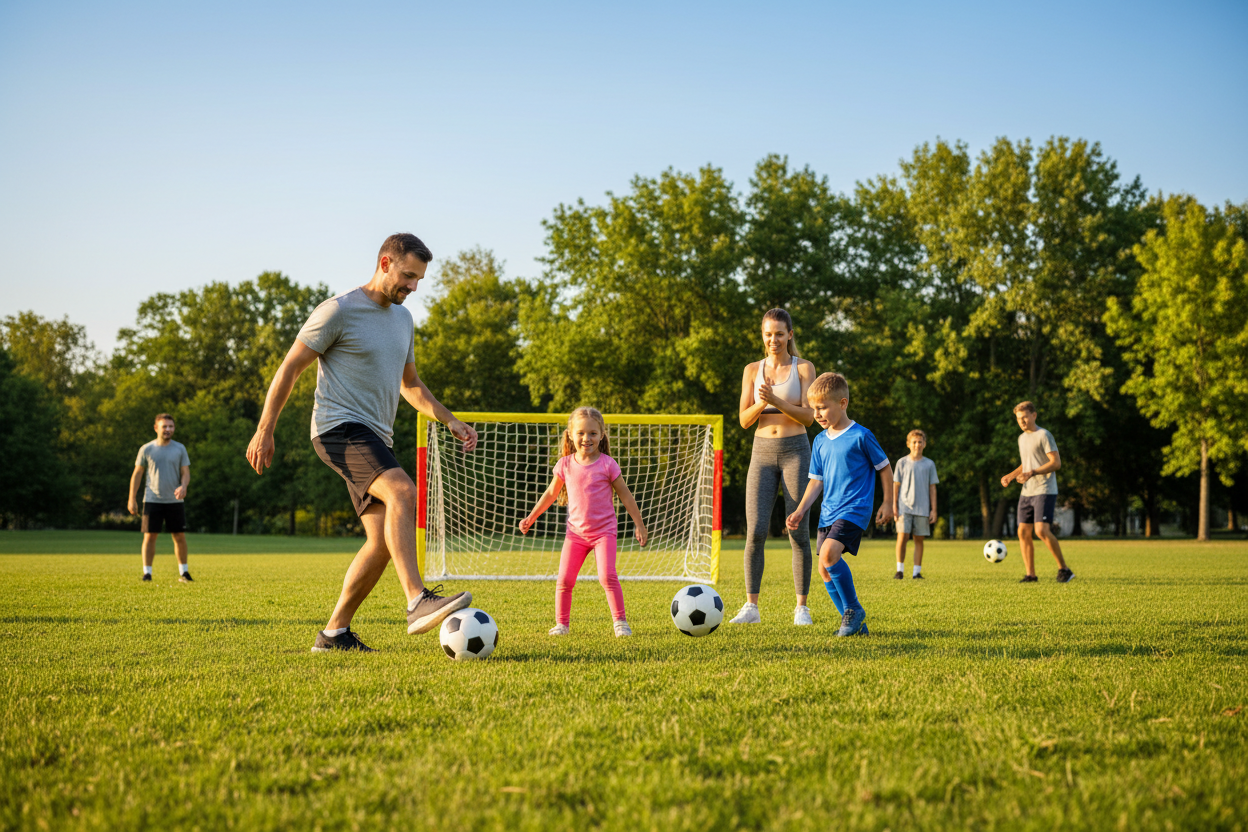
Imagine your backyard turning into a mini stadium where the only score that counts is the number of belly laughs. I’ve found that trying family soccer workout ideas for parents and kids is the best way to trade dull routines for stronger relationships.
You don’t need to be a pro athlete to have a blast with your kids on the grass. Kicking a ball creates a special spark that lasts much longer than any screen time ever could.
I love watching how a simple soccer match gets everyone moving without it feeling like a chore. Spending just thirty minutes to play together helps everyone stay healthy while building valuable memories. You will love seeing your little ones grin from ear to ear!
Key Takeaways
- Strengthen your bond through active movement.
- No expert skills and no fancy equipment required.
- Replace digital distractions with physical activity.
- Focus on fun rather than high-pressure competition.
- Create memories through simple ball activities.
- Improve fitness plus health of everyone.
Why Soccer Workouts Strengthen Family Bonds
I have seen how a simple game of soccer can change the way families connect. When you play together, you create a space where everyone feels safe. This quality time helps parents and kids laugh while chasing a ball!
In a fun training session, the walls between you and your children come down. Kids feel free to make mistakes without any fear. This positive vibe motivates them to be more creative on the field.
Shared physical activity builds a strong team spirit within the home. I believe these moments build trust because you are trying new things alongside your kids. You show them that fitness is a joy rather than a chore!
Shy children often gain massive confidence when their parents join the game. You offer constant support as they learn at their own pace. Playing soccer together creates lasting memories and healthy habits for life.
| Benefit | How it Works | Result |
|---|---|---|
| Trust Building | Trying new skills together | Stronger family bonds |
| Self-Esteem | Support during mistakes | Braver children |
| Health Habits | Fun physical activity | Lifelong fitness |
- Break down walls through laughter and shared movement.
- Encourage creativity by making the environment safe for mistakes.
- Build confidence as shy children see their parents participate.
Benefits of Playing Soccer Together as a Family
I want you to see the amazing rewards that come from a simple family game on the grass. Spending this time together does more than just fill an afternoon. It builds a foundation of health and happiness that lasts a lifetime.
Creates Quality Time Through Play
You give your children undivided attention when you play outside. I’ve noticed that families who move together often communicate better in their daily lives. You create natural teaching moments where children absorb lessons without feeling lectured.
This shared activity teaches your family that fitness is a core value, not just a rule. It is a great way to boost the mood for everyone involved!
Builds Physical Fitness for Everyone
You build cardiovascular health for both adults and kids through constant movement. Running and kicking help strengthen muscles and improve overall endurance. This active play helps everyone develop better coordination and balance.
| Benefit | Adults | Children |
|---|---|---|
| Cardio Health | Improved heart health | Better stamina |
| Coordination | Staying agile | Developing motor skills |
| Mental Health | Stress relief | Boosted confidence |
Teaches Kids Skills Through Fun
The years between five and twelve are the golden age for learning. I’ve seen kids learn techniques quickly when training feels like a game. Young players stay motivated when they pick up movements through play.
Parents can teach kids new skills by demonstrating them during the match. This positive environment keeps them motivated to master the game of soccer. Using fun games helps them learn soccer without getting bored quickly.
Family Soccer Workout Ideas for Parents and Kids
I love finding new ways to make family time active and exciting through sports. You do not need to be a pro to enjoy a family soccer workout together.
My goal is to help you create a positive environment where everyone feels successful. Let’s look at how to start your journey.
Match Activities to Age and Skill Level
I recommend starting with your child’s current ability level rather than pushing too hard too fast. You should choose activities that challenge everyone without frustrating anyone in the family.
I’ve learned that matching drills to age prevents boredom for older kids. It also keeps younger players from feeling overwhelmed by tasks that are too hard.
You can modify any drill to make it easier for little ones or harder for teens. This helps everyone improve their skills without feeling unnecessary pressure.
Focus on Fun Over Competition
Young children do well when they learn through play and imagination. I think the moment a game feels like work is when kids start to resist.
You should celebrate effort and improvement rather than focusing on the final score. I have seen families succeed when they use storytelling to make drills feel like adventures!
This approach makes each training session feel fresh and engaging for the whole family. It keeps the energy high and the smiles wide.
Keep Practice Sessions Short
I suggest keeping your practice between 20 and 30 minutes. Little players wear out easily and can lose their focus quite quickly.
You will get better results from shorter, energetic sessions than from long, exhausting ones. Making the activities fun ensures that kids stay interested until the very end.
| Age Group | Main Activity | Session Goal |
|---|---|---|
| Ages 4-5 | Soccer Adventures | Basic Movement |
| Ages 6-7 | Creative Drills | Ball Control |
| Ages 8-9 | Small Challenges | Teamwork Skills |
Easy Warm-Up Games to Start Your Family Session
I always begin our backyard sessions with simple games to get our blood pumping and spirits high! You need to prepare your children’s bodies for activity to prevent injuries and soreness later. These easy activities ensure everyone has a blast while getting ready for soccer fun.
Fox Tails Chase Game
I love Fox Tails because it requires no prior soccer experience and gets everyone laughing immediately. You set up a small space using cones and have every family member tuck a bandana in their waistband like a tail. The players must try to grab as many tails as possible while keeping their own safe.
Hospital Tag
I think this game teaches kids body awareness while burning energy fast. Mark a play area and have at least four players place their ball outside the boundary. When you yell “Go,” everyone runs around and tries to tag each other inside the game area.
If someone tags you, scream “ouch” and hold that body part with one hand. You must keep playing while holding the “injured” spot to stay active. It is a hilarious way for players to practice balance and quick movement.
The Cone Chase
You will find The Cone Chase perfect for families because it involves racing and quick decision-making. Divide your family into two groups and stand 20 yards apart on the field. Assign each person a specific number and place a ball or a marker behind each person.
When the coach calls two numbers, those players sprint to the opposite side. They must grab the ball or cone that the other person just left and bring it back home. I recommend playing these for 10 minutes to get everyone excited!
| Warm-Up Activity | Main Skill Focus | Equipment Needed |
|---|---|---|
| Fox Tails | Awareness & Speed | Bandanas or Socks |
| Hospital Tag | Reflexes & Balance | Open Space |
| The Cone Chase | Reaction Time | Cones and Balls |
- Keep it light: The goal is moving, not winning.
- Drink water: Take short breaks between these quick bursts.
- Use praise: Cheer for every “tail” caught or fast sprint!
Best Soccer Drills for Ages 4-5
I find that 4-5 year olds need drills that feel like games with tons of imagination! You should keep your practice sessions short to keep their attention high. These drills help toddlers enjoy the sport without any pressure.
Hit the Coach
I’ve used this drill countless times because it teaches control while keeping preschoolers engaged. You stand in a box marked by cones while kids kick a ball trying to hit your legs. It is a fun way to practice kicking and dribbling together.
Once they hit the coach, they choose an animal for you to act out! This keeps their feet moving and makes everyone laugh. As a coach, I see huge improvements in how they move the ball across the grass.
Pac Man on the Court
I recommend Pac Man for indoor sessions with at least five players. All players stand on the court lines with their balls ready to move. One person starts as Pac Man and tries to tag the other players.
The kids must keep the ball close to their bodies as they run. You will see them learn to change direction and speed quickly. Each child tries to keep the ball under their own power while staying on the lines.
Red Light Green Light with Soccer Balls
I love this drill because most kids already know the basic rules. You call out colors while the children dribble toward you with a soccer ball. This game is perfect for teaching young children to stop properly and watch their surroundings.
A green light means go fast toward the finish line. A red light means the player must stop the movement immediately by putting their foot on top of the ball. This helps them balance and listen to instructions while they play.
| Activity Name | Main Skill Focus | Equipment Needed |
|---|---|---|
| Hit the Coach | Kicking Accuracy | Cones and Balls |
| Pac Man | Dribbling on Lines | Indoor Court |
| Red Light Green Light | Stopping and Speed | Open Space |
Active Soccer Games for Ages 6-7
I find that children in this age group are ready for activities that involve more strategy and ball protection. At six and seven years old, kids start to develop a better awareness of their surroundings on the field. They love to test their skills against others while learning how to shield the play from defenders.
Sharks and Minnows
You can play Sharks and Minnows to help them practice these essential skills. First, use markers to build a grid about 20 by 25 yards wide. Two players start in the middle without a ball as the sharks, while the rest stand along the edge.
When the coach gives the signal, minnows must dribble the ball across the sea to the other side. Sharks attempt to steal possession from the minnows as they pass through. If a shark takes the ball, that minnow joins the shark team for the next round of the game.
Pirates of the Pugg
I recommend Pirates of the Pugg to teach players how to handle pressure. Create a circle ten yards in diameter and place a small Pugg goal post in the center. Nine players start with a ball while three pirates hunt for them without one.
The pirates must tackle and try to steal from the others. Once a pirate gets the ball, they immediately try to score on the small goal. If they are successful, the person who lost the ball becomes the new pirate for this exciting game!
Guard the Spaceship Defense Drill
I invented Guard the Spaceship to make defensive soccer drills feel like a heroic mission for the whole family. Set up a few cones to represent a spaceship and place two children on offense and one on defense. Tell the defenders they are protecting their ship from “bombs” trying to destroy it.
Adding imagination to these drills helps kids connect with defensive concepts and teamwork. You should encourage them to work together to keep the soccer ball away from the goal area. It makes practicing defense feel much more engaging and rewarding!
| Activity Name | Main Objective | Area Setup |
|---|---|---|
| Sharks and Minnows | Controlled Dribbling | 20×25 Yard Grid |
| Pirates of the Pugg | Ball Shielding | 10 Yard Circle |
| Guard the Spaceship | Defensive Teamwork | Small Cone Goal |
Soccer Training Activities for Ages 8-9
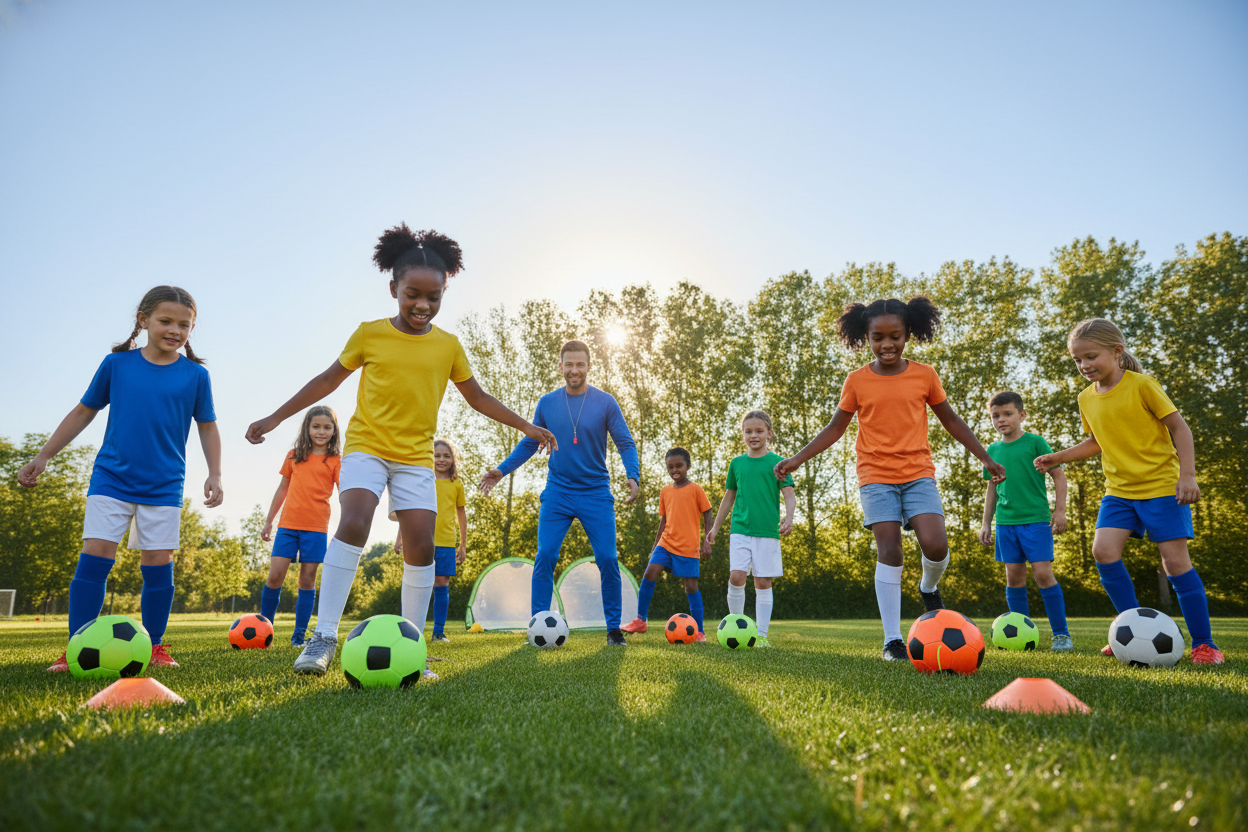
I think 8-9 year olds are finally ready for activities that blend healthy competition with skill development. At this stage, I love to introduce soccer drills that focus on ball control and smart decision-making. I have found that kids this age enjoy testing their skills against each other in a friendly way!
I always emphasize good sportsmanship during these competitive moments. It keeps the energy positive and helps everyone grow as a teammate. These activities will help your young athletes feel more confident on the field while having a blast.
First Pass 1v1 Challenge
To start, you can set up a grid that is 15 yards by 15 yards. Divide the players into two teams and have each group stand in a line on opposite sides. One player starts with the ball and sends a crisp pass to the first person on the other side.
As soon as the teammate receives it, both enter the grid for a 1v1 duel. The round ends when one person successfully tackles the other to dribble across the opposite line. I have seen this drill teach kids how to receive a ball under pressure and fight for possession.
4v4 to Mini-Goals
For this session, set up a play area about 25 yards by 25 yards. Use small cones or pugg goals to create a goal on two opposite sides. Divide your group into even squads of four players plus a goalkeeper for each of the goals.
You can make this training more exciting by creating custom scoring rules. For example, tell the kids that a through pass is worth extra points. This encourages them to look for open teammates and think about their next move before they even get the ball.
The Battle Ball Control Game
I love “The Battle” because it creates intense competition while developing great footwork. To play, the coach kicks the ball into the center and yells out two names. Those two kids race to the ball to see who can claim it first.
The goal is to get the ball and dribble it back to the coach without losing it. If one person has it, the other must try to steal it away. These types of drills are perfect for teaching kids how to shield the ball from an opponent!
| Activity Name | Main Skill Focus | Space Required | Players Needed |
|---|---|---|---|
| First Pass 1v1 | Receiving & Tackling | 15 x 15 Yards | 2 players per round |
| 4v4 Mini-Goals | Teamwork & Passing | 25 x 25 Yards | 10 players total |
| The Battle | Shielding & Stealing | Open Space | 2 players per round |
Dribbling Drills the Whole Family Can Enjoy
I think dribbling drills work best when they feel like adventures rather than repetitive exercises! You can transform your backyard into a magical field where your kids learn to guide the ball with ease. I have found that adding a bit of imagination keeps everyone moving and laughing the whole time.
Snake in the Grass
In this drill, you use four cones to create a square grid about 15 yards wide. Choose two players to be the snakes who lie on their stomachs in the grass. When I shout “snake on the grass,” the other players start dribbling the ball inside the grid while avoiding the snakes.
Every one of the players who is touched by a snake becomes one too! This drill teaches control because you must watch for danger while keeping the soccer ball close to your feet. I’ve watched kids laugh hysterically while trying to escape the slithering snakes.
Little Little Big Kicking
For this activity, everyone starts on one side of the field and races to the other end. I recommend this game because it teaches kids how to adjust the strength of their kicks. You move across the grass by doing a little kick, a little kick, and then one big kick.
Encourage your kids to yell “little, little, big” to match their physical rhythm. This turns basic practice into a musical game that helps with coordination. You will see their confidence grow as they reach the finish line.
Volcanoes Cone Maze
Set up a bunch of cones in a random pattern to act as “volcanoes.” Kids must navigate through the maze without hitting any obstacles. I love making a loud explosion sound if a player bumps a volcano!
You can start slow and then challenge them to go faster each time they pass through. This setup is one of the best dribbling games because you can easily change the difficulty for everyone. Keeping the ball close is the secret to winning this challenge.
| Drill Name | Main Skill | Fun Element |
|---|---|---|
| Snake in the Grass | Spatial Awareness | Slithering Snakes |
| Little Little Big | Kick Power | Rhythmic Shouting |
| Volcanoes | Tight Navigation | Explosion Noises |
Passing Practice for Parents and Kids
I believe that working on passing helps families learn to trust each other during a match. When you share the ball, you build a strong connection with your children! It is the best way to move down the field as a team.
I recommend starting with simple movements to help everyone get comfortable. You can encourage your kids to look up and see where their teammate is standing. This makes the pass much more accurate and successful!
Triangle Combination Passing Drill
This drill requires four players per group to work effectively. You should place three cones in a triangle about 10 yards away from each other. Place one person at each cone and have the fourth person stand behind the first person.
The first person kicks the ball toward the second person and immediately runs to that spot. The second person receives it and quickly sends it to the third person. I’ve seen this improve timing and communication very quickly!
| Activity Name | Main Skill | Setup Tip |
|---|---|---|
| Triangle Drill | Body Balance | Use four players |
| The Tunnel | Kicking Accuracy | Spread legs wide |
| Keep Away | Defensive Speed | Stay in a circle |
The Tunnel Kick
I love using “The Tunnel” to teach accuracy to younger children. You simply spread your legs wide to create a goal for your child to aim for. The goal is to send the ball straight through your legs using a soft touch.
I recommend teaching kids to use the inside of their foot for better control. Many young children need you to physically touch the side of their shoe to show them where to hit. This prevents them from just using their toes!
Keep Away Game
Keep Away is a classic game that everyone in the family can enjoy together! You have a few people on the outside trying to pass while one or two people in the middle try to steal it. This helps players practice their big moves while working on defensive positioning.
I think this activity teaches both accuracy and how to find open space naturally. You should celebrate every successful connection and encourage your kids when they make mistakes. It makes the passing practice feel like a fun party rather than a chore!
Defense and Teamwork Drills
Defense and teamwork are the heart of any great family soccer game. These drills help your kids understand how to protect their goal while working with others. I love seeing how young players grow when they learn to trust their teammates. Valuable team lessons start with learning to guard space together as a unit!
You will see your children become more confident as they support one another on the pitch. It makes the game much more rewarding for everyone involved! These activities focus on protecting the goal and helping friends.
Attack and Pass Drill
Set up cones to represent a goal and keep one defensive player back. Have two offensive players work together to move the ball down the pitch. They must wait for you to yell “Pass” before they can switch positions with one another.
When you yell “Attack,” the defender moves to the field to stop them. This teaches the importance of passing rather than just playing alone. It helps kids see that working as a team is the best way to win the game.
Top Dog Competition
I recommend these drills to improve dribbling and ball protection. Active players move inside a small designated square. On your command, everyone tries to keep their own ball while kicking others’ balls out of the grid.
The last person remaining inside the square is the “Top Dog.” This friendly competition naturally teaches kids how to shield the ball from pressure. It is a great way to build confidence and coordination in a group setting!
Crab Grass Soccer
I think this is a hilarious way to teach children to protect their space! If a coach touches a player’s ball, that player sits down in a “crab” position. These new defenders use their feet to kick at anyone passing by.
It forces kids to look at all angles of the field to stay safe from the crabs. This creates hilarious moments while teaching kids to guard against many obstacles at once. It keeps the energy high and the smiles wide for the whole family!
Escape from Montesano
Everyone starts on one side of the playing area. Their task is to reach the other side without being caught by “sheriffs.” If the defenders tag a player, that person must freeze until the end of the round.
When players reach the end safely, they feel a great sense of success! This teaches children to keep the ball close while moving quickly under pressure. It is an exciting way to wrap up your practice session with a high-energy finish.
| Drill Name | Main Skill Focus | Family Fun Level |
|---|---|---|
| Attack and Pass | Cooperation | High |
| Top Dog | Protection | Very High |
| Crab Grass | Awareness | Hilarious |
| Montesano | Agility | High |
How to Make Soccer Practice Fun for Everyone
I believe that a happy training session is where real growth happens for young players. Focusing on enjoyment keeps kids engaged on the field. You will see their skills improve naturally through laughter and movement.
Use Imagination and Storytelling
Imagination transforms a basic soccer practice into an exciting adventure. I recommend giving drills creative names like “Guard the Spaceship” instead of “defensive drill.” You can pretend that the cones are hot volcanoes or that the balls are treasure to protect. Storytelling makes abstract concepts concrete for young minds still developing.
Give Positive Feedback Often
I believe every child deserves to hear what they are doing right. You should praise their effort and improvement rather than just celebrating a goal. When you create a safe environment, they feel comfortable to play and make mistakes. This safety helps them try harder next time.
| Strategy | Action | Result |
|---|---|---|
| Storytelling | Use fun names | High Engagement |
| Positive Praise | Highlight effort | Confidence Growth |
| Leadership | Rotate roles | Ownership |
Let Kids Take Turns Leading
You should let your kids take turns being the coach to build their confidence. I have watched shy children blossom when they demonstrate a drill for the family. This is a great way to teach kids how to take ownership. As a lead coach, your support makes the practice much better. Every child should contribute ideas to help the whole group succeed.
- Let children choose the next game.
- Praise the leader for clear instructions.
- Encourage others to follow the new leader.
Tips for Running Successful Family Soccer Sessions
I have found that a little preparation goes a long way when coaching your own family. You want to keep the energy high and the stress low. Successful soccer sessions depend on your ability to adapt to the mood of the group.
I recommend starting with one or two simple rules rather than overwhelming everyone with instructions! You should focus on making every movement feel like a win. This approach builds confidence and keeps the atmosphere light and happy.
Start with Simple Rules
Young kids often need to hear rules multiple times before they fully understand them. I’ve learned to demonstrate what I want rather than just explaining it. Showing the movement helps everyone catch on much faster.
Even basic tasks like forming a line can be a lesson for new players. You can turn these moments into a fun challenge to keep them engaged. Focus on clear, short directions to keep the practice moving forward.
Mix Up the Activities
You should plan to switch activities every five to eight minutes. This matches the short attention span of younger players. I believe variety prevents boredom while allowing the repetition of important skills.
You can rotate between dribbling, passing, and a fun game to keep interest high. Having a number of activities ready ensures you never run out of ideas during the session.
| Activity Type | Ideal Duration | Primary Focus |
|---|---|---|
| Warm-up Games | 5 Minutes | Movement |
| Skill Building | 8 Minutes | Ball Control |
| Final Scrimmage | 10 Minutes | Teamwork |
Watch for Tired Kids
I always watch for signs that children are getting tired or losing focus. You are better off ending on a high note after 25 minutes than pushing through exhaustion. Use this time to ask which game they enjoyed the most.
I suggest having four or five drills prepared but remaining flexible about what you use. Letting your family choose the final activity gives them a sense of voice and choice! This simple tip makes every session more enjoyable for everyone involved.
Basic Equipment for Family Soccer Workouts
I want you to know you don’t need expensive equipment to start family soccer workouts! You can begin with just one soccer ball, though having one ball per person works much better. I recommend choosing a specific number for ball sizes based on the age of your children.
Use size 3 balls for kids under 8 and size 4 balls for kids 8-12 years old. Inexpensive disc cones or even household objects work perfectly as markers for your field. I suggest buying a number of 12-20 cones to set up grids for different drills.
| Age Group | Ball Size | Suggested Equipment |
|---|---|---|
| Under 8 | Size 3 | Small disc cones |
| Ages 8-12 | Size 4 | Pop-up goals |
| Adults | Size 5 | Mesh storage bag |
You can use portable pop-up goals or simply place two cones to mark goalposts. This keeps soccer practice simple and affordable for every family. A basic mesh bag helps keep all your balls organized and easy to transport to the park.
You don’t need fancy equipment like agility ladders to have effective soccer sessions. I have run many successful practices with just balls, cones, and imagination. Always invest in comfortable shoes and bring water to every ball game!
Conclusion
I hope you feel excited and ready to start your family soccer journey today! You now have dozens of drills and games to choose from for every age and skill level. I believe the most important thing is simply getting outside and playing together regularly as a team.
You do not need to be a professional soccer coach to create meaningful experiences with your kids. I have shown you that these workouts can strengthen your family bonds while building fitness. You have the knowledge to make practice time fun rather than feeling like an obligation.
Starting with just 20 minutes twice a week can create a lasting healthy habit. You will discover that the laughter and memories matter more than perfect technique or winning. I encourage you to try two or three drills this week to see which ones your family loves to play.
You can learn how to start right soccer practice for beginners to keep things simple for everyone. You are ready to create active, joyful moments with soccer!