
Learn Soccer Concepts Kids Learn Before Age 5 Now

Imagine your toddler giggling while chasing a ball for the first time as they master the soccer concepts kids learn before age 5. You can actually introduce these basics much earlier than most parents realize. Even at twelve months, your tiny athlete can start building a physical foundation for a lifetime of healthy movement.
I want to welcome you to this guide where I demonstrate how play builds essential coordination and confidence. It is all about having fun together without any pressure to perform or compete immediately. You can easily assist them to improve footwork through lighthearted activities in your backyard.
By the time your child reaches these milestones, they will be ready for more structured group environments. I am here to support you through these early steps with warmth and simple suggestions. Let’s start this exciting developmental adventure today!
Key Takeaways
- Toddlers as young as twelve months can begin exploring basic motor skills.
- Focus on lighthearted engagement rather than rigid training routines.
- Coordination and social skills develop naturally through active gaming.
- Simple home activities effectively prepare youngsters for future team environments.
- Success comes from positive encouragement and a pressure-free atmosphere.
Why You Should Start Soccer Training Before Age 5
Starting soccer training before age 5 is an amazing way to help your child grow physically and socially. I believe these early years are a golden time for discovery.
You can help your child build a strong foundation through simple games and laughter. It is about creating positive memories while they are young.
How Soccer Builds Coordination and Motor Skills
At this age, kids begin to develop better balance and body control. Simple soccer training builds these movement patterns in natural, playful ways.
Your child will learn how to move their feet while keeping an eye on the ball. This practice improves fundamental motor skills that stay with them forever.
Social Skills Kids Gain from Team Play
Playing on a team teaches your child how to communicate and share with others. They learn to take turns and work together toward a goal.
This is a wonderful choice for four-year-olds to build social confidence. These kids also learn how to resolve small conflicts while having fun.
Why Ages 3 to 5 Are Perfect for Soccer Basics
Children in these ages are naturally curious and full of energy. They love to move and are finally ready to follow simple instructions from a coach.
Starting now helps them develop a love for the game before competition becomes the focus. It is the perfect entry point into active sports.
| Growth Area | Key Benefit | Long-term Impact |
|---|---|---|
| Physical Development | Better Body Control | Improved Agility |
| Social Learning | Team Collaboration | Strong Friendships |
| Emotional Health | Self-Confidence | Resilience |
Soccer Concepts Kids Learn Before Age 5
I will walk you through the core soccer ideas your child learns before age five. We start with the basics of ball control and getting comfortable with the equipment at their feet. Getting young players comfortable with movement is a massive achievement for this age group.
At this stage, kids begin to develop coordination skills and can follow simple directions. The main goal of most drills is to get the player comfortable with the ball. They learn to stay in one place and keep the object under control as best as possible.
Understanding Ball Control
You will discover that ball control means your child learns to keep the object close to their body. They practice touching it gently with different parts of their foot. This teaching helps the player learn how to stop the ball whenever they need to.
I want to show you how these small touches build lasting confidence. When children feel they can manage their movements, they enjoy the soccer game much more. This is the first step toward becoming a great soccer player one day.
Learning to Move with the Ball
I want to show you how learning to move with the ball helps your child develop. They build dribbling skills by pushing the object forward with tiny touches. This keeps the movement steady while they walk or run across the grass.
Moving while keeping the ball close is a vital skill for all players. It requires balance and spatial awareness that improves with every practice session. Your child will soon feel natural and happy while moving during play.
Following Coach Instructions
Following coach instructions is a key concept where your child practices active listening. They learn to stop when told and follow simple one-step directions. This habit is essential for safety and organized play on the field.
A coach uses fun games to teach these listening habits to the group. When they hear a specific command, the children learn to stand still immediately. This helps them focus on the next part of their exciting lesson.
Recognizing Teammates and Opponents
I will explain how recognizing teammates and opponents helps your child understand the game. Kids begin to see the difference between playing with a team and playing against others. This awareness is the start of true sportsmanship and respect.
These fundamental concepts build the foundation for everything your child will learn later. I promise these ideas are simple and focus on basic awareness for new players. Mastering these concepts makes soccer feel fun and very achievable for everyone!
| Soccer Concept | Core Action | Main Benefit |
|---|---|---|
| Ball Control | Gentle touches | Keeps the ball close |
| Movement | Pushing forward | Develops dribbling |
| Listening | Following the coach | Ensures safety and focus |
| Team Awareness | Identifying friends | Introduces group play |
Core Soccer Skills to Teach Children Ages 3 to 5
I want to help you guide your little athlete through the fundamental movements that make soccer so much fun. Teaching these basics at a young age helps build confidence and physical coordination.
Getting young players comfortable with the ball at their feet is a major achievement for three to five year olds. I promise to keep each skill simple so your child never feels overwhelmed.
Every young player needs to learn how to move, stop, and share. Let’s look at the specific ways you can help your toddler grow on the field!
Dribbling: Moving the Ball Forward
Dribbling is the art of moving with the ball while keeping it very close. I teach kids to keep the object within reach so they always have control. This movement requires focus as they step forward.
Inside Foot Dribbling
In this technique, your child uses the inside part of their foot to gently push the object. This is often called the “big toe” side or the arch. It provides a large surface area, making it the easiest way for beginners to start.
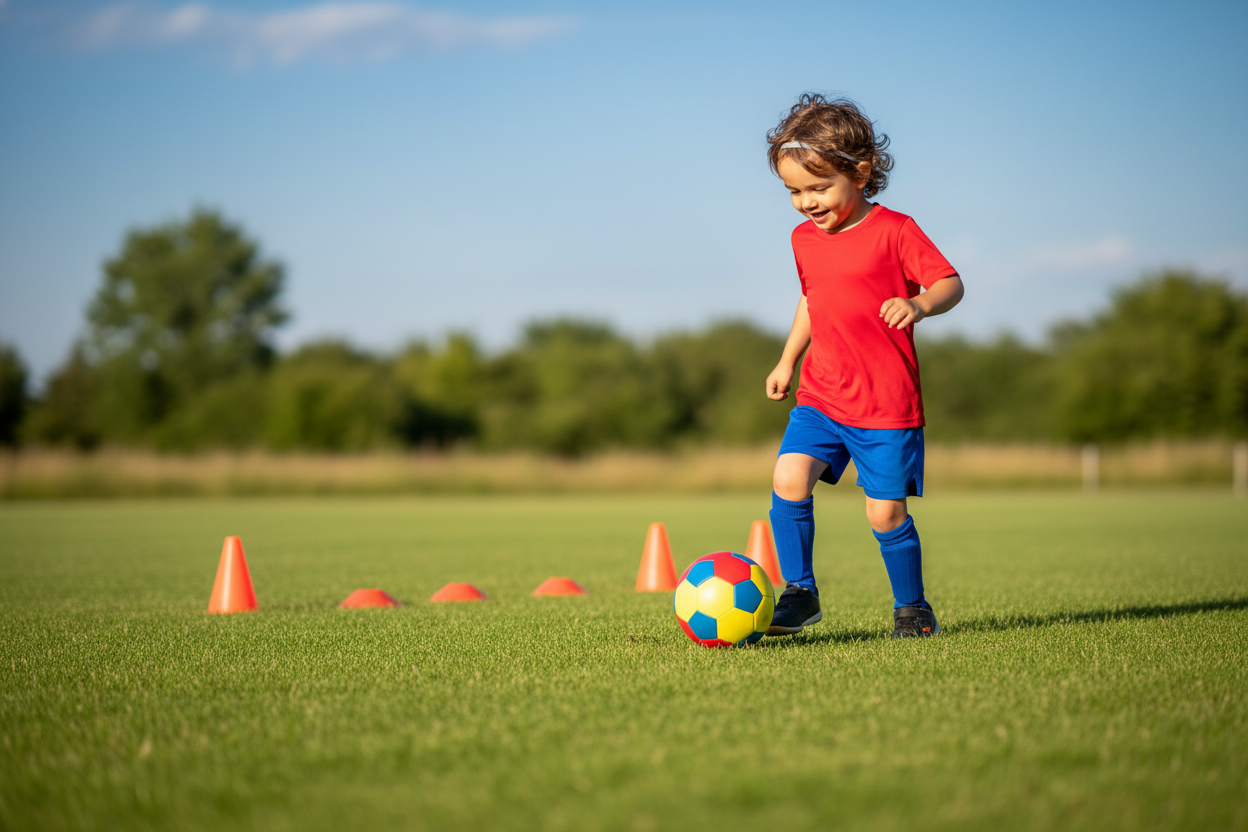
Outside Foot Dribbling
I also show them how to use the outer side of the foot. This involves using the area near the pinky toe to nudge the ball forward. Using both feet in this manner helps your child develop better balance and agility.
Kicking: Making Contact with the Ball
Kicking is how your child moves the object over longer distances or toward a goal. I encourage them to look at the center of the ball before they make contact. This helps them stay balanced and keep their feet moving correctly.
Little Kicks vs Big Kicks
I explain the difference between soft, controlled “little kicks” and strong “big kicks.” Little kicks help them navigate tight spaces during dribbling. Big kicking movements are for sending the object far away or scoring a point.
Inside Foot Kicks
I want you to understand that inside foot kicks are the most accurate method. By using the inside of the foot, the child can better direct where they want the ball to go. It is the best foundation for a great inside foot pass later on.
Stopping: Controlling Ball Speed
Stopping means bringing the ball to a complete halt by placing a foot on top of it. I teach them to “trap” the object to regain their composure. This simple action gives them a moment to think before their next move.
Passing: Sharing the Ball with Teammates
Passing means sharing the ball with other players on the same team. I show them how to use an inside foot strike to send the object gently toward a friend. This helps them realize that soccer is a team sport where everyone works together!
| Soccer Skill | Main Action | Key Benefit |
|---|---|---|
| Dribbling | Small, controlled touches | Improves coordination |
| Kicking | Striking with power | Builds leg strength |
| Stopping | Placing foot on top | Increases focus |
| Passing | Sharing with teammates | Teaches social play |
Best Soccer Games and Drills for Kids Under 5
I want to share the best soccer games and drills for kids under 5 that make learning feel like playtime. These activities keep your child excited and engaged throughout the entire session. My favorite part is seeing young players smile while they master new movements on the field.
Turning every practice into an adventure makes teaching soccer a joy for both you and your child. These simple games provide a healthy point of connection while building essential athletic skills. These activities are perfect for active three and four-year-olds who love to move.
Hit the Coach (Ball Control Game)
This game is always a crowd-pleaser for little players because it involves a bit of silliness. It encourages kids to focus on a specific target while they move around the area.
How to Set Up the Game
Set out four cones to create a box big enough to contain your whole team with extra space to move around. You stand in the middle of the cone square while the children surround you with their equipment.
What Kids Learn
Children kick the ball to hit the coach‘s legs. Once they hit you, they get to tell you what animal to act out. This keeps their feet moving and helps them learn ball control, kicking, and dribbling.
Red Light Green Light with Soccer Ball
This activity is a classic playground favorite that adapts perfectly to the soccer pitch. It teaches children how to listen for instructions while they are in motion.
Game Rules and Setup
This is just like the regular game but with a soccer ball at their feet. The coach yells green light to signal the start of the race. A green light means go fast, a yellow light means go slow, and a red light means stop immediately.
Skills This Game Develops
It works on ball control and speed adjustments during the practice session. Every player learns to react quickly whenever they hear green light or red light commands. Stopping the ball with their foot builds great balance and control.
The Battle (One-on-One Drill)
Kick the ball and yell out the names of two players. The two children battle it out, run to the ball, and try to get it first. They must bring it back to the coach to earn a point. This provides great practice for ball control and learning how to steal a ball from an opponent.
Guard the Spaceship (Defense Practice)
The box by the goal is the spaceship and the little players must defend it. The extra balls are bombs trying to destroy the ship. Children protect the goal by kicking the bombs away into open space. This fun activity builds defense skills and introduces the basic goals of a goalkeeper.
Toe Taps (Warm-Up Exercise)
Place the ball in front of the player‘s feet. They tap the top of the ball with the sole of their left foot, then the right foot, in a repetitive motion. Each player stays inside their small cone area to maintain focus. This exercise gets the player comfortable with the ball and helps them stay in one space under control.
| Activity Name | Primary Skill | Equipment Needed |
|---|---|---|
| Hit the Coach | Kicking Accuracy | Cones, Soccer Balls |
| Red Light Green Light | Dribbling Speed | Cones, Soccer Balls |
| The Battle | Ball Shielding | Single Soccer Ball |
| Guard the Spaceship | Defensive Clearing | Goal, Multiple Balls |
| Toe Taps | Foot Coordination | One Ball Per Child |
Soccer Equipment You Need for Young Kids
Getting your little one ready for the field doesn’t have to cost a fortune or involve heavy bags of gear. I want to help you find exactly what you need to start without any stress. You only need a few basic items to make their first soccer experience a total success.
Size 3 Soccer Ball for Ages 3 to 5
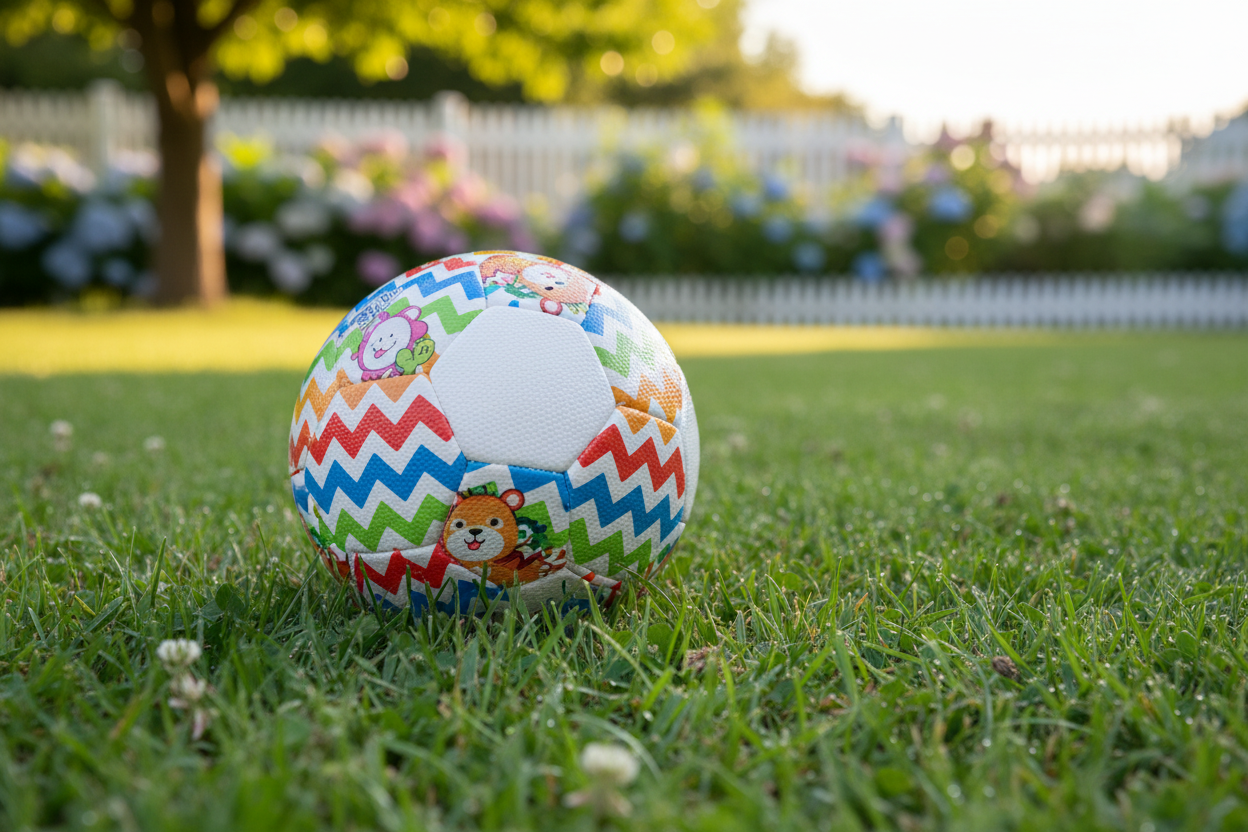
A size 3 ball is the perfect choice for toddlers and young children. It is much smaller and lighter than the balls used by older players. This specific size makes it much easier for little feet to control and kick.
Most four-year-olds can handle this ball weight with great confidence and joy. Using the correct equipment ensures your child stays engaged and avoids frustration. It is the most important item for their growth in the sport!
Training Cones for Drills and Games
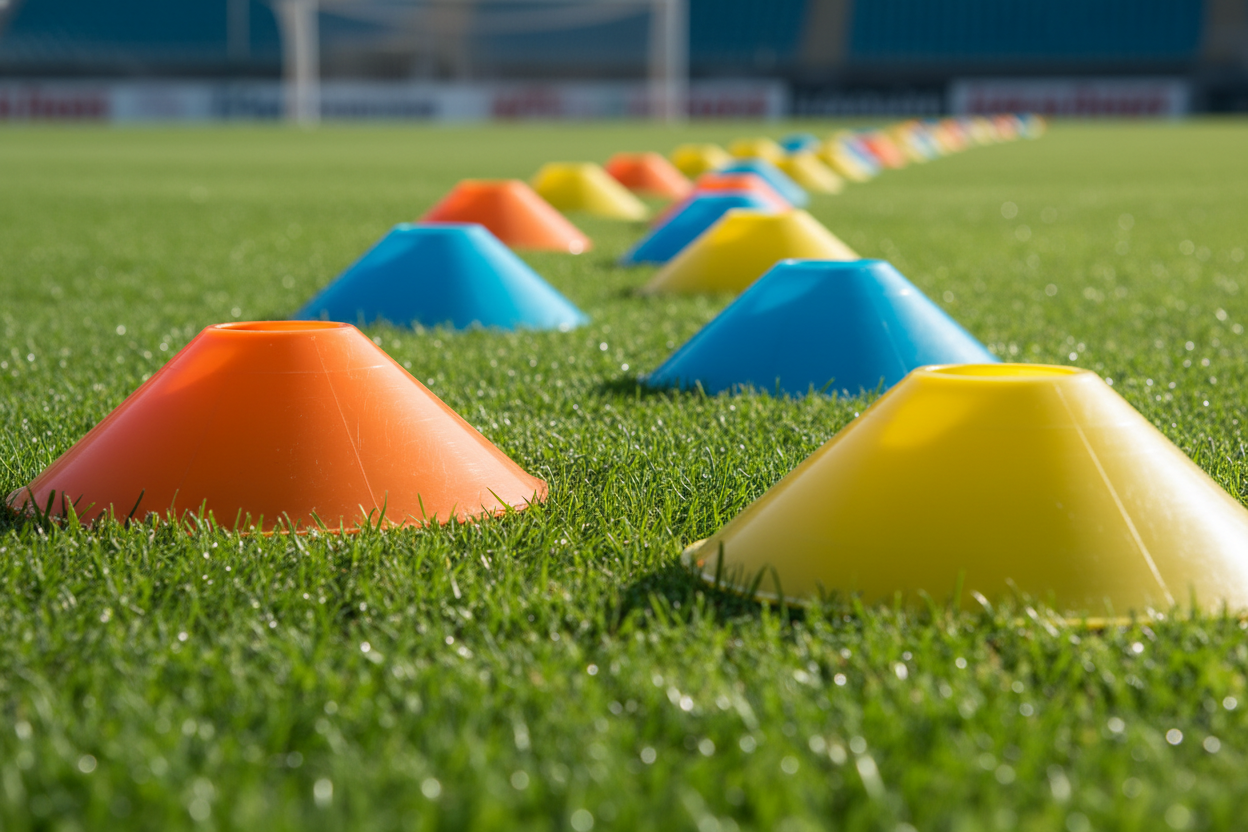
I highly recommend getting a soccer training cones set for your backyard. Each colorful cone helps you mark boundaries or create fun obstacle courses for your player. You can use a cone to show them where to stop or turn during a game.
These cones are very affordable and easy to store in a small bag. If you are creative, one single cone can even become a target for kicking practice. These simple tools keep the area organized and make the games feel official!
Small Portable Goals for Practice
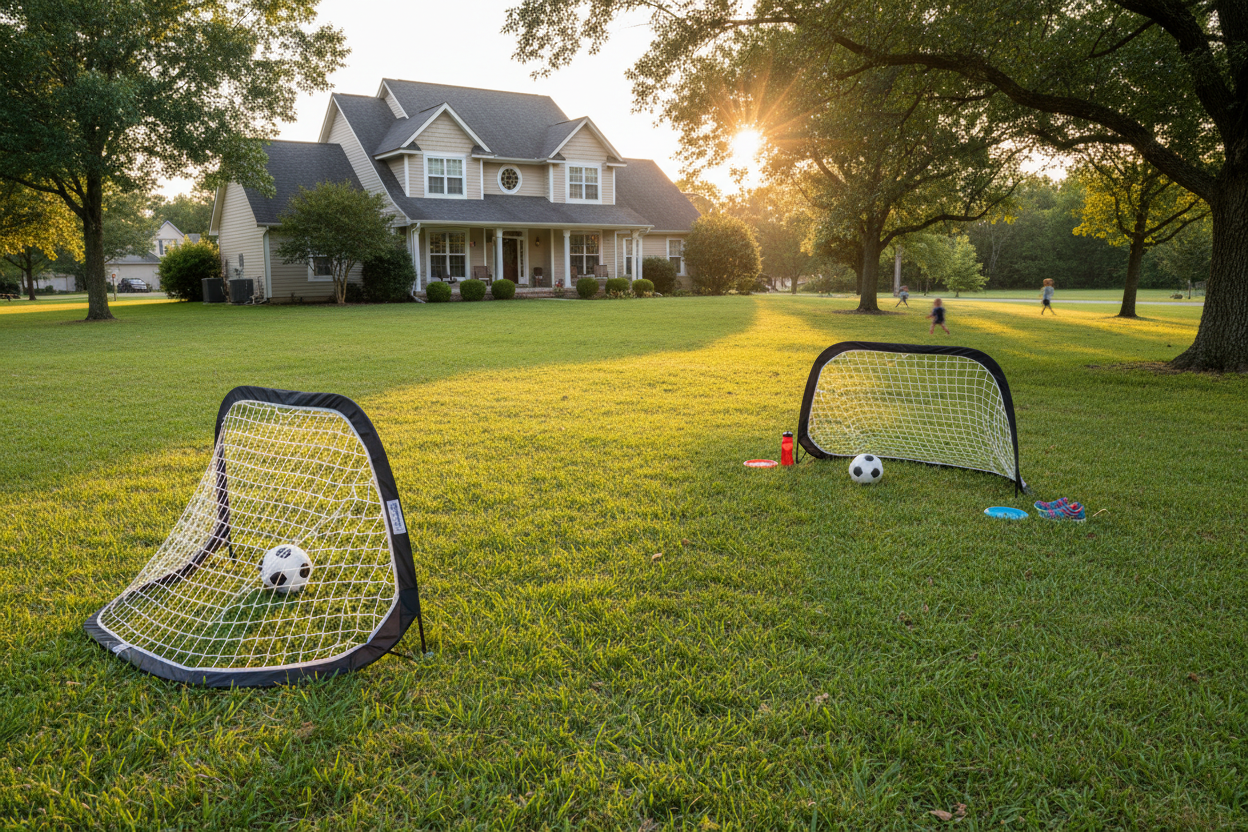
Having real goals makes every practice session feel like a real match for your little athlete. These small goals are usually lightweight and very easy to move around. If you are on a budget, you can always use cones to mark a goal instead.
Setting up a clear goal helps your player understand where they need to aim. They will love the sound of the ball hitting the net. It is a fantastic way to celebrate every successful score together!
Proper Footwear: Cleats or Athletic Shoes
Choosing the right shoes helps your little one stay safe while they run and play. If you are playing on a damp field, cleats provide better traction to prevent slipping. However, simple athletic shoes work perfectly for three-year-olds who are just starting out.
Make sure the shoes fit snugly but comfortably to support their growing feet. Good footwear gives them the stability they need to move fast. You don’t need expensive brands to have a great time on the grass!
Open Grassy Area Requirements
You need a safe, open space for all your sporting activities and drills. A soft grassy area is best because it cushions falls and prevents painful scrapes. Ensure the ground is flat and free of large rocks or hidden holes.
A local park or your own backyard can serve as the perfect training spot. This safe environment allows your player to run and explore freely. With the right size equipment and a soft space, they are ready to play!
How to Teach Soccer to Kids Under 5 Successfully
I want to share some proven tips to help you teach soccer to your little ones successfully. Every practice should be productive and enjoyable for everyone involved. I promise these skills will help you feel like a confident coach, even if you are new to the field on kids sports days.
Keeping a young child engaged is the most important part of the process. I have found that following a few simple rules makes the experience better for every player on the team. You can guide young players toward success by focusing on patience and fun.
Keep Each Practice Session Under 30 Minutes
Young kids have very short attention spans and tire quickly. You should keep each session under 30 time minutes to ensure they stay happy. This limited time helps maintain high energy from start to finish.
Turn Drills into Fun Games
I love to add imagination and stories to our soccer drills. You can turn a simple dribbling exercise into a game about escaping defenders or finding space. Children stay excited when drills feel like a grand adventure.
Give Simple One-Step Instructions
As a coach, you should tell your player one thing to do at a time. Multiple steps often confuse four-year olds who are still learning how to move their bodies. Simple directions help them succeed without feeling lost.
Use Positive Words and Encouragement
I recommend that every coach celebrates small wins with plenty of high-fives. Use positive words to keep the mood light and the feedback supportive. A happy player is much more likely to try a new skill again next week.
Start with Basic Skills Only
I suggest focusing on the absolute basics to prevent overwhelm. Even the best players in the world practice simple ball control every single day. Building strong soccer skills now leads to great talent later.
Let Kids Progress at Their Own Speed
Every youngster learns at a different pace, so please be patient. When basic tasks become too easy, I move the player to more difficult drills. This way, we avoid frustration and keep the game fun for everyone.
Make Practice Feel Like Playtime
I want the soccer field to be a place of joy. When you make a session feel like playtime, you help the team develop a genuine love for sports. This positive connection is the best point to start their long journey.
| Strategy | Playtime Side | Rigid Side |
|---|---|---|
| Coach Role | Supports the team | Pressures every player |
| Game Point | Focus on joy | Worry about defenders |
| Action Goal | Learn to pass ball | Pressure to pass |
| Session Time | Short 30 minutes | Long and tiring |
| Equipment | Fun with the ball | Strict drill use |
Conclusion
Watching your player develop new skills through play is the best part of being their first coach. Teaching soccer to kids under the age of five is a rewarding journey that builds lasting confidence. You are helping them grow through sports while having a great time together on the field.
You now have the tools to teach essential skills like dribbling with the inside of the feet. Use simple games to show them how to pass ball to a teammate or aim for the side of the goal. These basics create a strong foundation for their future on the soccer team and improve their motor skills.
I encourage you to grab a ball and head outside later this week. Results will not come after just one session, but consistent practice leads to great progress over the months. Your child will learn to move their legs with purpose and focus on every task you give them.
Your child will eventually master passing and know when to pass back during a game. Soon, your little athlete will navigate around defenders to score many goals. Remember to keep the energy high and the instructions very simple to ensure they enjoy the process and stay excited, as their coach, you make all the difference!