
Fun Indoor Soccer Fitness Games for Kids
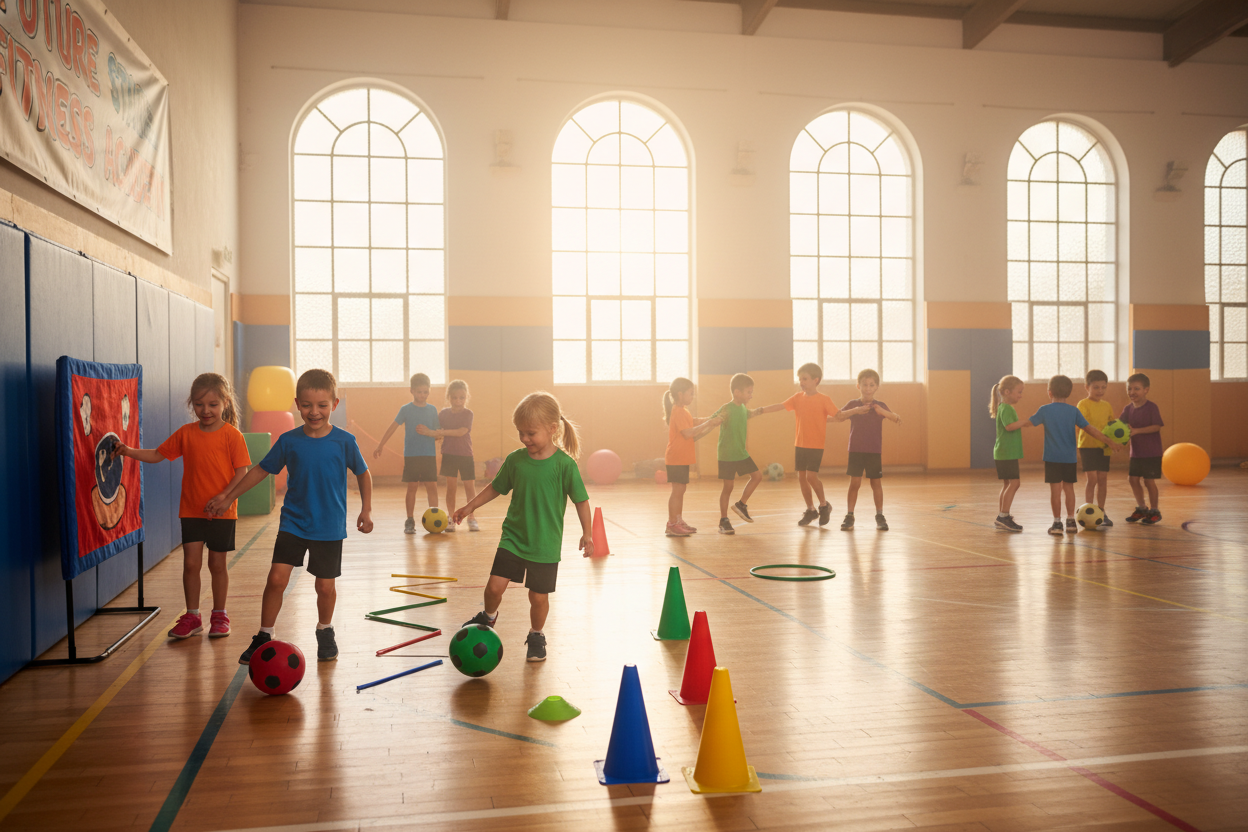
Imagine the disappointment on your child’s face when dark clouds cancel practice, but then realizing your living room is actually a perfect stadium. You can keep the energy high with fun soccer fitness games for rainy days that turn any small space into a training ground.
I want to show you how a gray afternoon can become a great time for movement. Indoor activity doesn’t require a massive field or expensive equipment to be very effective. You can help your little athletes stay sharp and happy right in your hallway or garage.
These simple drills focus on building coordination and quickness. By using these ideas, you ensure your kids are still learning while having a great time. Check out these fun indoor soccer fitness games for to keep them moving today.
Most of these ideas use items you already have at home. They provide plenty of excitement without the stress of complex rules. Whether you are a parent or a coach, you’ll find these tips help kids stay active and healthy.
Key Takeaways
- Keep children active when the weather is poor.
- Improve ball skills in small indoor spaces.
- Build coordination with very simple drills.
- Use basic household items as equipment.
- Enjoy stress-free and exciting practice sessions.
- Strengthen athletic fundamentals through creative play.
Why Indoor Soccer Games Matter for Kids
Have you ever wondered how playing inside can actually help your child become a better soccer player? I have seen how indoor soccer sessions give kids many more chances to handle the ball compared to outdoor practices. Research shows that indoor training provides 33% more ball touches for every player.
This means your child gets 33% more opportunities to build muscle memory and confidence. Smaller spaces force kids to focus on close ball control because they have less room to make mistakes. These opportunities help them master the basics that turn good players into great ones.
Regular practice inside helps children develop fundamental skills while staying active on rainy days. You will notice big improvements in your child’s coordination and balance through these sessions. Consistent practice in any weather teaches them dedication and keeps them connected to the sport.
- Speed up development with 33% more ball touches per game.
- Refine close control by playing in smaller, tighter spaces.
- Maintain fitness levels and prevent skill loss during bad weather.
- Build confidence as kids get more comfortable with the ball at their feet.
| Feature | Indoor Practice | Outdoor Practice |
|---|---|---|
| Ball Contact | High (33% more) | Standard |
| Space Size | Small & Focused | Large & Open |
| Weather Impact | Play Anytime | Weather Dependent |
How to Set Up Your Indoor Soccer Space
You can turn almost any room in your house into a mini soccer field today. I want to help you create a safe space using items you already have at home. You do not need a fancy gym to build a functional practice area for your children.
Equipment You Need
You only need basic equipment to begin training in your hallway or basement. I recommend using a soft foam ball to protect your walls and interior furniture. This choice ensures that movement prep remains fun without causing any damage.
If you lack plastic cones, you can easily use water bottles or shoes instead. These common household items offer a simple way to create obstacles for dribbling practice. Small setups allow for stationary drills and improved mobility in tight quarters.
Creating Safe Boundaries
I suggest clearing all breakable items from the training area before you begin. This gives your kids enough room to move freely and prevents unnecessary accidents. You can also use painter’s tape to mark boundaries if you want more structure.
Set up your cones to make a small “soccer box” for focused footwork drills. This confined space helps kids master ball control while staying very safe indoors. Keeping the ball close to their feet is the best strategy for success!
- Garage or Driveway: Perfect for ball mastery and footwork drills.
- Basement: Ideal for stretching, mobility, and stationary work.
- Living Room: Great for movement prep and core exercises.
- Small Backyard: Enough room for agility work and cone drills.
Warm-Up Games to Start Strong
Before we jump into the main activities, we always spend a few minutes on warm-up drills to wake up those soccer muscles! These quick exercises help increase your heart rate and effectively prepare the body for a fun game.
Ball Control Exploration
I love seeing kids experiment with ball control by using different parts of their feet. Encourage your little athlete to use small touches and move into open spaces on the floor. This exploration helps them understand how the object reacts to different surfaces of their shoes.
| Foot Part | How to Use It | Main Benefit |
|---|---|---|
| Inside | Gentle pushes | Better accuracy |
| Outside | Light flicks | Quick turns |
| Bottom | Roll the foot | Stability |
Stop and Go Soccer
In this activity, children dribble as fast as they can until they hear a loud whistle. They must stop ball immediately and keep it still with the sole of their shoe. If a player keeps moving, they simply go back to the start and try again!
These drills teach them how to use their feet to keep the ball nearby at all times. It is a simple way to practice how to stop ball while improving their foot coordination and balance. I find that this method builds great confidence before we move to faster activities. Move the ball with speed and focus on that perfect stop!
Fun Soccer Fitness Games for Rainy Days
Rainy days do not have to end your training session. You can still build fitness and coordination inside your home or a small gym. I love these three classic games because they combine basic skills with movement that keeps kids laughing!
These activities help every child stay active while they improve their touch on the ball. They are simple to set up and require very little equipment to get started. Use the table below to see which skills each activity focuses on.
| Activity Name | Main Skill Focus | Equipment Needed |
|---|---|---|
| Soccer Freeze Tag | Passing and Teamwork | Balls and Pinnies |
| Red Light Green Light | Ball Control | One Ball per Child |
| What Time Is It Mr. Fox | Dribbling and Speed | Markers or Cones |
Soccer Freeze Tag
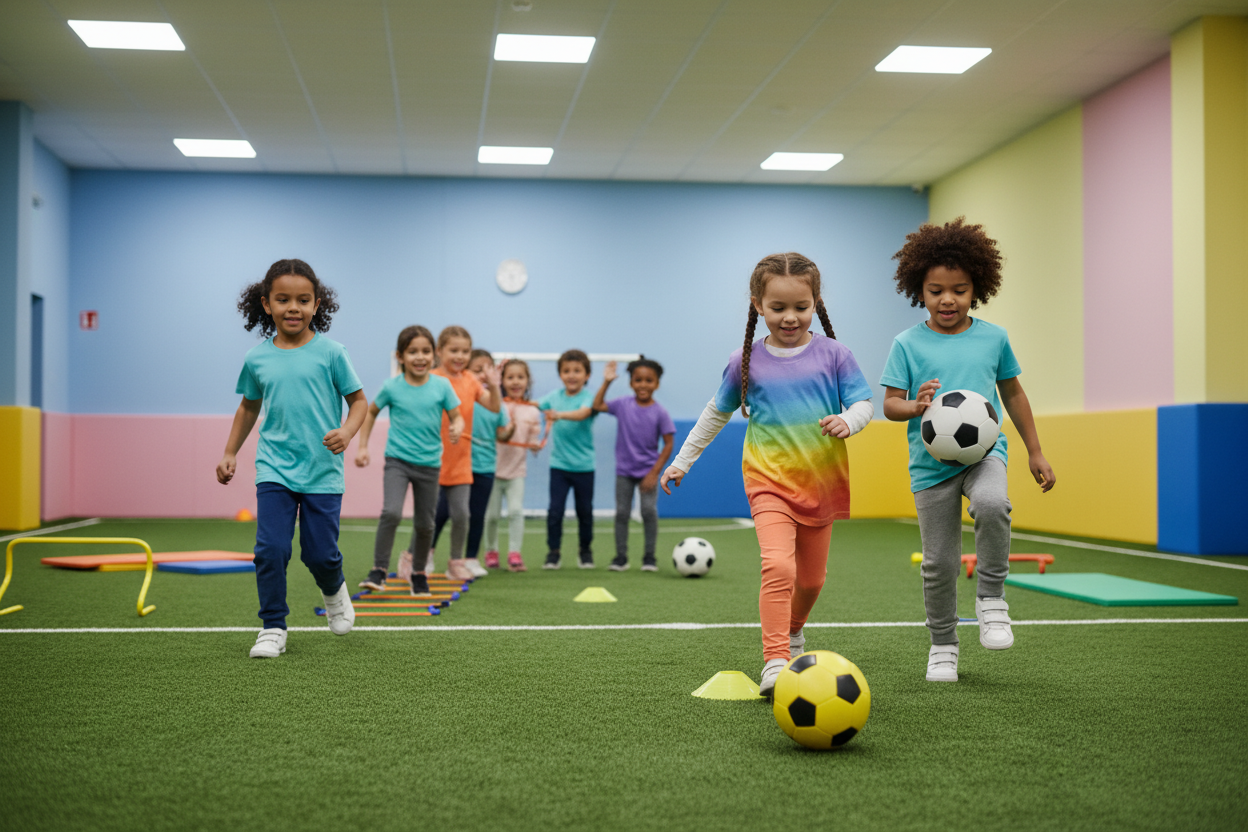
This game is a fantastic way to encourage teamwork. It gives every child a ball while adding the excitement of a chase. It works well in any open indoor space where kids can move freely.
How to Play
Give each child a ball to start. Choose specific players to act as the taggers and give them pinnies. All the other kids must dribble their ball around the room without hitting obstacles.
Taggers attempt to tag someone to “freeze” them in place. Once a player is tagged, they are frozen and must stop moving. They put the ball on their head and spread their legs to create a small goal shape.
To get “unfrozen,” a teammate must pass a ball through the frozen person’s legs. This teaches accuracy better than most standard soccer drills. It keeps the players engaged and moving constantly throughout the session.
Red Light Green Light
This classic game is perfect for teaching kids to keep the ball close to their feet. It develops great listening skills and the ability to stop and start movement with precision. You can adjust the speed to match the skill level of your group.
How to Play
Every student needs one ball for this activity. I act as the “police officer” and stand in the middle of the area. When I shout “Green Light,” the kids dribble forward.
“Yellow Light” means they move slowly, and “Red Light” means they must stop the ball with their feet. This helps every player learn to control their speed and balance. It is a simple way to build confidence with the ball.
If a ball is still moving on a “Red Light,” that student must go back to the starting line. You can also have them do five ball touches as a small challenge. This keeps the energy high and ensures everyone follows the rules.
What Time Is It Mr. Fox
This activity adds a lot of excitement to the indoor session. Kids love the suspense of waiting for the time to change before they sprint. It focuses on listening and quick changes in direction.
How to Play
One ball is given to all players to keep them focused. The group asks, “What time is it Mrs. Fox?” as they stand at one end of the room. If I say “6 o’clock,” everyone takes six steps forward and stops.
Note that these are steps and not kicks to keep the ball very close. When I finally shout “MIDNIGHT,” all the kids must dribble their ball to the opposite end line. They try their best not to get tagged during the game.
This is a great way to play while practicing a quick escape with the soccer ball. Your children will build stamina and soccer skills without even realizing they are training! It is the perfect way to burn off energy when it is too wet to go outside.
Ball Mastery and Skill Games
Mastering the ball doesn’t have to be boring when you turn basic drills into exciting indoor challenges. I love seeing kids realize how much better they get after just a few minutes of focused play! These activities help your child develop a soft touch and better coordination.
Toe Taps Tabata
This game combines a classic soccer skill with fun interval training to keep energy high. Your child will alternate tapping the top of the ball with each toe as fast as they can. I recommend starting slowly to find a good rhythm before picking up the pace!
Doing toe taps is an excellent way to improve stamina and balance. This movement strengthens the quadriceps, glutes, and core muscles all at once. Your child will get a great workout while mastering their toe touches.
Dribbling Through Gates
Set up about 16 sets of color-coordinated cones or gates throughout your space. Each gate should be approximately three feet wide to allow for easy movement. Challenge your child to see how many gates they can dribble through in one minute!
The key to this game is total control. Encourage them to use all parts of their foot while changing speed and direction. This is one of my favorite 10 fun soccer games for kids to because it builds confidence quickly.
| Movement | Muscles Targeted | Main Benefit |
|---|---|---|
| Toe Taps | Quads and Core | Heart Health |
| Gate Dribbling | Hip Flexors | Agility |
| Ring Placement | Feet and Legs | Accuracy |
Deck Ring Soccer
This is a simple exploration game where kids count how many deck rings they can place their ball into. They must use only their feet to move the object into the center of each ring. It is a fantastic way to practice a gentle touch.
This activity helps kids discover the importance of using every part of each foot. It teaches them how small touches allow for better accuracy in tight areas. You can use these drills to make any rainy day productive and full of toe tapping fun!
Chase and Tag Games
I love chase and tag games because they get kids running and practicing soccer skills at the same time! These activities build cardiovascular endurance and agility while keeping the energy high. You can use these fun variations to burn off extra energy on rainy days.
Sharks and Minnows
This classic game starts with “sharks” in the middle of the space without a ball. Minnows start at one end with their own balls. When the players yell “SHARKS” and “MINNOWS,” the fun begins.
The minnows try to dribble to the other side without a shark kicking their ball away. If that happens, the player becomes a shark for the next round. This keeps the whole team active and engaged.
Hospital Tag
In this version, everyone dribbles a soccer ball around the area. If you get tagged, you must put a “Band-Aid” on that spot by holding it with your hand. After three tags, you go to the “hospital” on the side.
You must complete a few exercises like ten toe touches to “heal.” After you finish, you can jump back into the game with no Band-Aids. This teaches balance and ball control in a silly way.
Snake Game
One player starts as the snake and calls out a jersey color. Those players try to dribble to the opposite line without getting tagged. If the snake tags you, you must join hands with them.
As the snake gets longer, it is much harder for the remaining players to cross safely. This encourages quick thinking for the rest of the team. These movements help kids learn how to shield the ball from defenders.
| Activity Name | Skill Developed | Special Rule |
|---|---|---|
| Sharks and Minnows | Speed Dribbling | Become a Shark |
| Hospital Tag | Ball Handling | Band-Aid Tags |
| Snake Game | Awareness | Join the Snake |
Team Competition Games
Bringing kids together for friendly contests is a great way to boost their soccer spirit! I want to introduce you to team games that teach cooperation and strategy in small indoor spaces.
These activities build a healthy team spirit while keeping the energy high for everyone involved. They are perfect for teaching children how to work together toward a common goal while having fun.
Single Cone Soccer
This simple team activity uses just one cone to act as a shared goal. Two evenly matched players compete to touch the cone with their soccer ball to score.
It is an amazing way for a player to learn defensive positioning and smart strategy. I love how it turns a small area into a focused and high-energy fitness workout!
Pin Knockdown
Divide your group into two small teams for this exciting game. Both teams set up five to seven cones or pins along their own baseline as targets.
The primary goal is to knock over the other side’s pins using accurate passes. When a pin falls, the winning team collects it and sets it up on their own side to win!
Ball Possession Challenge
In this challenge, opposing teams must work together to keep the ball away from others. Most kids start with a ball, but a few players try to win possession through a strong team effort.
If you have the ball, protect it by shielding or making a smart pass to a friend. The hunting teams race to apply pressure while others make creative passes to stay safe and keep control.
This naturally teaches kids how to support each other during play. Using a quick pass helps them find space and maintain a successful team play strategy.
| Activity Name | Key Focus | Setup Needs |
|---|---|---|
| Single Cone | Defense Strategy | One Target cone |
| Pin Knockdown | Shooting goal | Multiple cones |
| Possession | Long passes | Small teams |
Tips for Success with Indoor Soccer Games
I want to share some helpful tips that make your indoor soccer sessions more effective and enjoyable for kids. Give each child their own ball whenever possible to maximize individual touches. This strategy keeps everyone actively engaged during the entire session.
- Start every training time with a proper warm-up to prepare young muscles.
- Keep your instructions simple and demonstrate each game before starting the play.
- Focus on ball control and teaching kids how to find empty space.
| Focus Area | Recommended Action | Primary Benefit |
|---|---|---|
| Ball Ratio | One ball per player | Maximum engagement |
| Instruction | Visual demonstration | Clear understanding |
| Environment | Small sided games | Increased confidence |
I recommend keeping each group small during your indoor activities. This provides more individual opportunities for every student to develop essential skills. It also ensures that nobody feels left out during the fast-paced action.
Coaches should rotate through different games every five to ten minutes. This is a great way to maintain high energy and prevent boredom in the gym. Coaches who celebrate effort rather than perfection help build lasting motivation in their players.
Remember that the goal is fun and improvement for every participant. Keep your training positive and encouraging to help children master new skills. This supportive atmosphere ensures that soccer remains a highlight of their physical activity!
Conclusion
Indoor soccer training turns any small space into a great field for players.
I hope these soccer games give you the tools to keep kids active.
You can use a garage, basement, or even a bedroom.
This indoor environment provides 33% more ball touches per player.
Training at home ensures your child stays fit regardless of the weather.
Every small area offers a new chance for growth.
I believe your children can practice a ball skill using cones.
A ball session builds agility, speed, and strength.
Use household items if you do not have a cone or cones handy.
A ball player needs a ball to improve.
Move the ball with your feet during every drill.
Top foot control is a great asset for every young athlete.
Training sessions develop close ball control and quick direction changes.
Use a number of cones to help with agility.
This number of drills creates new opportunities for a ball touch.
A ball group needs a ball to practice effectively.
A player uses foot control for direction.
Speed agility helps players and prevents wasted training time.
Every soccer ball needs a ball drill to master.
A ball skill needs a ball and ball cones.
Use a number of ball drills to improve ball control and ball direction.
A ball player needs a ball to stay sharp.
A soccer session with a group using cones on top of feet helps each foot.
Soccer is a game that teaches itself, so let them play!
| Training Location | Main Fitness Benefit | Required Equipment |
|---|---|---|
| Garage or Basement | Agility and Strength | Ball and Cones |
| Bedroom or Living Room | Close Ball Control | Soft Ball or Socks |
| Small Backyard | Speed and Direction | Household Markers |