
Soccer Vocabulary for Preschool Kids A Simple Guide
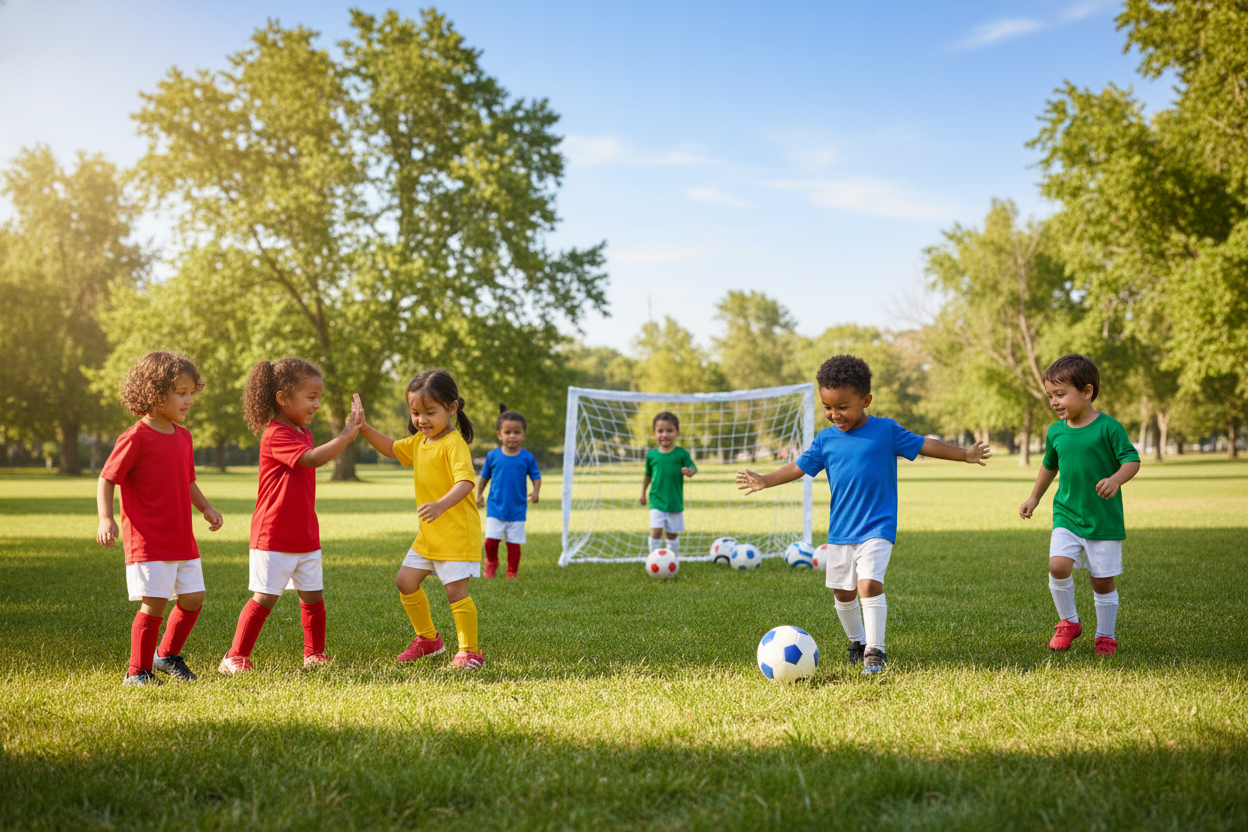
Imagine your little star dashing across the green grass, their face lighting up as they explore soccer vocabulary for preschool kids for the very first time. It is a beautiful way to build lasting confidence through the joy of movement and shared words.
I am so excited to guide you through the basics of soccer using a friendly approach that avoids any pressure. Learning these simple terms makes every game much more meaningful for your energetic little one.
When your child knows how to control the ball or aim toward the goal, they feel truly proud. Using this clear language helps kids talk to their new friends and feel like a vital part of the team.
We will focus on the ball and the goal using plain words that are easy to remember. My mission is to make sure all kids have a blast while picking up this new language at their own comfortable pace!
Key Takeaways
- Teach simple words to boost your child’s confidence on the field.
- Focus on fun and play rather than strict technical rules.
- Use everyday words to explain how to move and score.
- Help your child connect with teammates through shared terminology.
- Break lessons into small, manageable steps to avoid overwhelm.
- Encourage active listening and speaking during every practice session.
Why Soccer Vocabulary for Preschool Kids Helps Young Players
I believe that knowing simple soccer words helps young players feel more confident during their first match. Learning these basics helps your child understand exactly what the coach wants them to do on the field.
When your little one understands the language used during practice, they can enjoy the play much more. It makes the whole experience less scary and much more exciting for a preschooler.
Mastering simple terms allows kids to follow instructions quickly. This focus helps them have fun instead of feeling lost or confused during the game.
Knowing the right words also helps players talk to their team during practice. It builds a sense of belonging and helps them make new friends while they stay active.
- Clear Communication: Your child can talk to their teammates about what is happening on the field.
- Better Listening: Teaching these words gives your preschooler the tools to understand their coach.
- Boosted Confidence: Preschoolers feel braver when they know exactly what a “kick” or “pass” means.
- Strong Foundation: Early word skills help your child as they continue to grow in the sport.
Early learning creates a strong foundation for their future in soccer. Your child will feel brave and ready to participate in every fun drill.
I have seen how teaching this language reduces confusion for little kids. It allows them to focus on the ball and their movements without feeling frustrated.
This early learning stage is all about making the soccer journey exciting! Simple words turn a confusing activity into a clear and happy adventure for every child.
| Main Benefit | How It Works | Result for Kid |
|---|---|---|
| Better Listening | Child follows coach instructions | Improved skills |
| Social Growth | Talks easily with friends | More fun |
| Self-Belief | Knows what to do next | High confidence |
Basic Soccer Field Terms
I want to help you explain the different parts of the soccer field using words your child already knows. It is much easier for a preschooler to learn when we use simple names for things they see every day. Let’s take a look at the basic spots where your little player will run and kick during their first practices.
Goal
The goal is the big frame located at each end of the grass where players try to score points. You can describe it as a large target that catches the ball when someone kicks it correctly. This area is the most exciting part of the pitch because it is where all the celebrations happen.
Goal Line
The goal line is the mark on the ground that runs right under the net to show the end of the grass. For a point to count, the ball must cross the goal line completely and enter the net. The goal line marks the boundary where the goalie stands to protect their team from the other players.
When the ball reaches the goal line but stays outside the posts, the game might stop for a special kick. Teaching your child to watch the goal line helps them understand when a point is actually scored.
Field (Pitch)
The field is the large green space where all the fun action happens during the game. Some coaches might also call this grassy area the pitch when they are teaching the kids. It has clear boundaries to help the children know exactly where they should stay while they play.
Sideline (Touchline)
A long line marks the edge on each side of the grass to keep the ball in play. This is known as the sideline, and it helps the children understand the limits of the playing space. If the ball rolls over this mark, a player will usually throw it back to a teammate.
Center Spot
The center spot is a small mark or circle located in the very middle of the field. This is where the soccer fun begins at the start of every game and after every point. It acts as a meeting place where players gather to restart the match with a fresh kick.
Corner
A corner is the specific spot where the goal line and the long side line meet together. There are four of these spots on the field, and they often have small flags to make them easy to find. You can point these out to your child so they can see the shape of the whole playing space.
| Field Term | Simple Description | Why It Matters |
|---|---|---|
| Center Spot | Small circle in the middle of the field. | It is where the game starts. |
| Goal Line | The boundary that runs under the net. | The ball crosses the goal line to score. |
| Sideline | The long edges of the grass. | It keeps the ball inside the game. |
| Goal | The target frame at each end. | Players kick the ball here to win. |
Understanding the Soccer Ball
I want to help you teach your preschooler about the most important piece of equipment in soccer—the ball! This round object serves as the center of every activity on the field. Your child will spend most of their time learning how it moves and where it goes.
The soccer ball is round and players move it around the grass during play. It is designed to roll easily when pushed or tapped. Helping your child understand its purpose is the very first step to enjoying the game together.
Your child should learn that they control the ball using their feet. They must not use their hands, unless they are playing as the goalkeeper! Learning to keep hands away helps them build great balance and coordination early on.
Preschoolers usually use smaller, lighter versions that are easier to kick. These smaller sizes are perfect for little legs and help kids feel successful. When the equipment fits their size, they stay motivated and have much more fun.
Teaching your little one to recognize the ball is a simple and exciting process. Practicing with the ball at home helps your preschooler get comfortable with its weight. You can show them how to move it gently from one spot to another in your backyard.
| Feature | Why It Matters | Fun Activity |
|---|---|---|
| Round Shape | Allows it to roll | Push it to a partner |
| Small Size | Fits tiny shoes | Practice soft taps |
| Light Weight | Protects little toes | Aim for a target |
Soccer Player Positions Explained Simply
I want to show you how to explain soccer roles to your preschooler so they feel like a star! Every player on the team has an important job to do during a game. Knowing where to stand on the grass helps players feel more confident and happy while they run.
At the preschool level, these roles are usually very flexible. Children often run toward the ball in a big group or “beehive.” However, teaching these basics helps every player learn about teamwork and moving together as a group.
Helping your players understand their spots on the field makes the game more organized. It also gives them a sense of purpose during their time on the pitch.
Goalkeeper (Goalie or Keeper)
The goalkeeper is the only person on the field who can use their hands to touch the ball. This goalkeeper stands right in front of the net to catch or block shots. They act like a brave guardian who stops the ball from going into the goal.
You can help your child understand this position by comparing it to a castle guard. If the ball gets past everyone else, the goalkeeper is there to save the day! This role is very important for keeping the ball out of the net.
Defender (Back)
A defender stays closer to their own goal to protect it and keep it safe. They try to stop the other team from scoring by blocking shots or kicking the ball away. This defender acts like a strong shield for the goalie.
When the other side comes close, the backs work hard to move the ball toward the middle. This role helps the whole group feel protected and secure. Teaching your little one about this job shows them that defense is a big part of winning!
Midfielder
The midfielder is the busy helper who runs around the middle of the field. They help the defense keep the ball away and then pass it up to the front for a shot. This position connects the whole field together during a soccer match.
Midfielders get to run a lot and see all the action from both sides. They are the bridge that moves the ball from the back to the front. Your child will love this role if they have lots of energy and like to help their friends.
Forward (Striker)
A forward, whom we also call a striker, stays near the opponent’s goal to score points. Their main job is to kick the ball into the net using speed and skill. This position is perfect for kids who love the thrill of making a big play!
Forwards are often the fastest runners on the field during the game. They wait for a good pass from a teammate and then take a shot. It is a very exciting role that focuses on movement and scoring.
| Position Name | Main Responsibility | Fun Role Comparison |
|---|---|---|
| Goalkeeper | Blocks shots using hands | Castle Guardian |
| Defender | Protects the home goal | Shield or Bodyguard |
| Midfielder | Helps both sides of the field | The Busy Connector |
| Forward | Tries to score goals | The Speed Star |
Basic Soccer Actions and Moves
I’ll help you teach your preschooler the basic soccer actions they will use every single time they play the game! These simple moves build confidence and make the sport fun for every young player. You can practice these steps in the backyard to help your little one feel ready before their first match.
Teaching these movements early helps children understand how to interact with the ball. Focus on encouragement and keep the atmosphere light. When kids feel successful with small movements, they become much more excited to join the team on the field.
Kick
A kick is simply when your child strikes the ball with their foot to move it. This basic kick helps them send the object in any direction across the grass.
Encourage them to use different parts of their feet to see how it travels. It is the most common way to start a game and keep things moving forward.
Pass
A pass happens when one player kicks the object directly to a teammate. This action helps the whole team work together during play to reach the other side.
Teaching a short pass is a wonderful way to show how friends help each other. It ensures everyone stays involved in the action throughout the afternoon.
Dribbling
Dribbling is when your child moves the object forward using small, gentle touches. This skill allows a young player to stay in control while they navigate the field.
Good dribbling makes it much easier to keep the object away from the other team. It requires patience and focus but becomes natural with a little bit of practice.
Shooting
Shooting is the exciting action of kicking hard toward the goal to score a point. It is often the favorite part of the game for many active children!
It takes some effort to aim well, so always celebrate every attempt they make. A big strike toward the net is a great moment for a loud cheer.
Running with the Ball
This means your preschooler keeps the object very close while they move across the grass. It is different from just kicking it as far as they can.
They learn to balance their speed while keeping the object nearby. This move is fantastic for building coordination and burning off lots of extra energy.
Stopping the Ball (Trap)
Stopping the ball, or a trap, is when your child uses their feet to stop a moving object. This helps them get full control of the ball before their next move.
Once they stop the object, they can decide whether to pass or try for a goal. Learning to stop a fast-moving object is a vital skill for every beginner.
| Soccer Action | What It Means | Why It Matters |
|---|---|---|
| Kick | Striking with the foot | Moves the object quickly |
| Pass | Kicking to a teammate | Builds great teamwork |
| Dribbling | Small, quick touches | Maintains total control |
| Shooting | Kicking at the goal | Scores points for the team |
| Trap | Stopping a moving ball | Prepares for the next move |
Scoring and Goal Terms
I want to help you explain the exciting moment of scoring and the parts of the goal to your preschooler! Seeing the ball hit the net creates a wonderful memory for every young child on the field. It represents the ultimate reward for all their hard work and movement during the game.
Putting the Ball in the Net
To score goals, a player must kick the ball completely across the white line between the vertical poles. When a goal scored occurs, the team earns exactly one point for their efforts. Every goal brings a massive sense of accomplishment to the whole group and builds their confidence.
Team scoring is a beautiful part of soccer where kids learn to cooperate and share the ball with their friends. Instead of just one person doing everything, they pass and move together to find an opening. This type of scoring teaches them the value of friendship and supporting one another on the pitch.
Making a Big Save
A save is an amazing defensive move where the goalkeeper prevents the ball from entering the net. This specific teammate is the only one allowed to use their hands while they are inside the large box area. Making a save helps the team stay competitive and keeps the game exciting for everyone watching.
The Horizontal Crossbar
The crossbar is the long horizontal piece of the frame that sits high above the ground. It connects the two side poles and marks the top limit of where a shot can go to count as a point. If the ball flies over this bar, the goalkeeper usually gets to restart the play with a kick.
Vertical Side Posts
The post is one of the two tall vertical poles that hold the net open on the sides. When a child takes a shot, they must aim their kick between these two sturdy objects to be successful. You can help your child by pointing out these parts of the frame during your next backyard practice session!
Learning how to score goals takes practice, but seeing a goal scored is always worth the extra effort. You should encourage team scoring and celebrate every goal to make the experience fun for the little ones. Every scoring opportunity is a chance for your child to grow and enjoy the game of soccer.
| Soccer Term | Simple Definition | Why It Matters |
|---|---|---|
| Goal Scored | Ball crosses the line | It gives the team a point |
| Save | Keeper blocks the ball | It keeps the other team from scoring |
| Crossbar | The top horizontal bar | It marks the height of the goal |
| Side Post | Vertical side bars | They define the width of the target |
Simple Soccer Rules for Young Kids
Teaching your preschooler the basic soccer rules is easier than you might think! I’ll help you teach your preschooler the basic soccer rules in a way that’s easy to understand and remember. These simple rules help your child understand how to enjoy the game correctly while being a good team member.
I focus on keeping instructions direct so children stay engaged and happy. You can practice these simple concepts at home before the first match. This preparation helps your little athlete feel confident when they step onto the grass for the first time.
Hands Off the Ball
The most important rule is hands off the ball. Players cannot touch the ball with their hands during the match, except for the goalkeeper. This is often called a “hand ball” because it involves an illegal touch with the arm or hand.
Your child needs to learn to keep their hands at their sides or behind their back when they play. They should use only their feet to control the object and move it forward. Encourage them to “pretend your arms are frozen” to help them remember this tricky concept!
Stay Inside the Lines
Players must stay inside the field lines during play. This means the players and the ball should remain within the white boundaries on the ground. If the ball rolls over the line, the action stops for a moment to bring it back in.
Learning boundaries helps children stay focused on the active area of the pitch. You can use cones or even jump ropes at home to mark a small “stay inside” zone. This simple practice makes the real boundary lines much easier to follow later.
Taking Turns
Taking turns is important because everyone on the team gets a chance to touch the ball. Soccer is a game where sharing makes the experience better for every child involved. When kids learn to pass, they realize that working together is the fastest way to reach the goal.
I suggest praising your child whenever they look for a teammate instead of just running alone. This builds a positive environment where everyone feels included. It also teaches the value of cooperation early in their sporting journey.
Playing Fair and Safe
Soccer emphasizes fair and safe behavior for all participants. This means no pushing, kicking, or hitting other people while trying to get the ball. We want to ensure every child leaves the pitch with a big smile on their face!
You should remind your preschooler that being kind is just as important as scoring. These simple rules create a fun atmosphere where safety comes first. Using gentle language helps them understand that soccer is a friendly competition between friends.
| Rule Name | What to Do | Why It Matters |
|---|---|---|
| No Hands | Use only your feet. | Keeps the ball moving fairly. |
| Stay In Bounds | Keep the ball inside the lines. | Keeps the action in the right spot. |
| Fair Play | Keep feet and hands to yourself. | Ensures everyone stays safe and happy. |
Special Kicks and Restarts
Let’s look at the special ways players get the ball moving again after it goes out of bounds. I will explain the special kicks and restarts your preschooler will see during a soccer game. These moments help keep the game moving when the ball goes out or after someone scores a goal.
Kickoff
A kickoff is the first touch that starts the match. It happens at the center of the field with one player taking the first touch. You will see this at the start of each half and after every score.
Goal Kick
A goal kick happens when the attacking team hits the ball over the end line. The defending team then gets to restart play from near their own net. The goalkeeper or a defender usually takes this to move the play away from their zone.
Corner Kick
A corner kick occurs when the defending team puts the ball over their own line near the goal. This is an exciting chance for the attacking team to score.
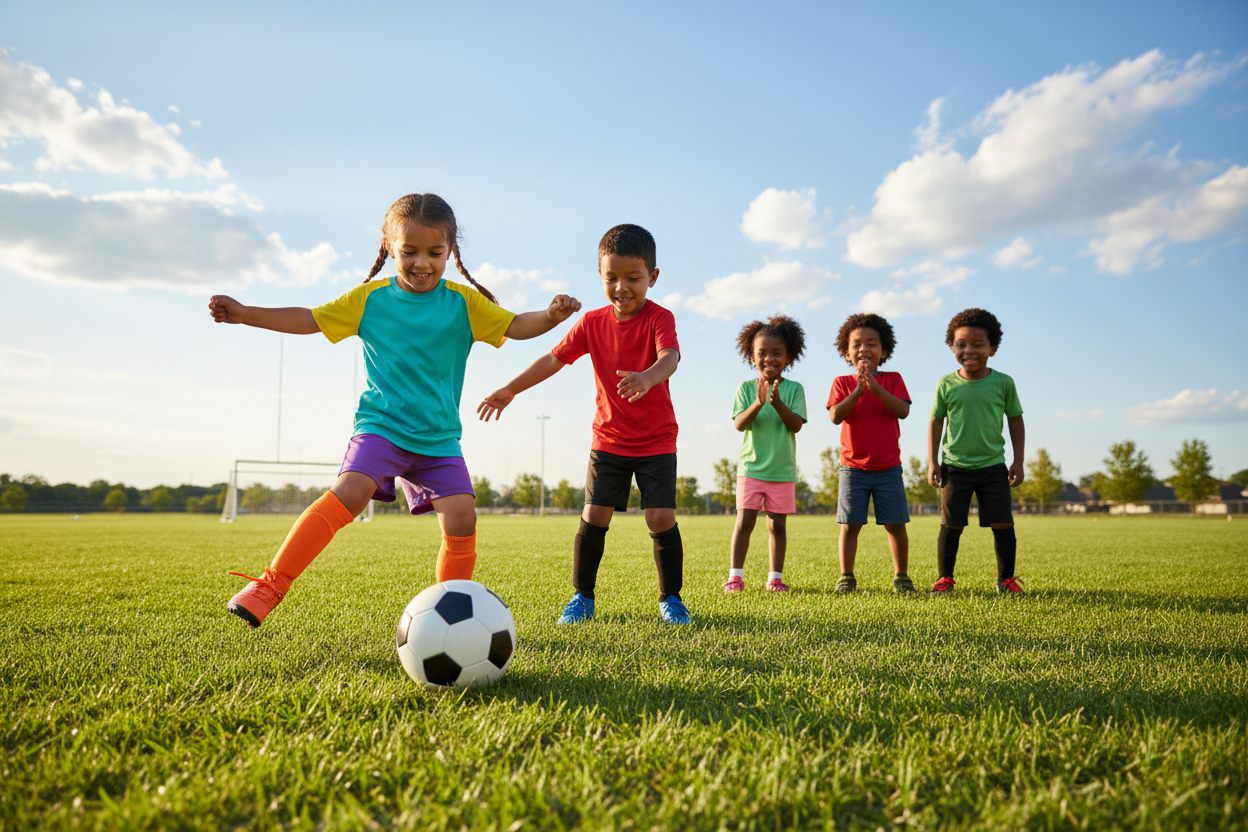
A player from the attacking team takes a kick from the small arc in the corner of the field. This allows them to pass the ball right in front of the opponent’s net.
Throw-In
A throw-in restarts the match when the ball goes out over the side lines. This is different from other kicks because a player uses their hands to return the ball. They must throw the ball with both hands from behind their head while keeping their feet on the ground.
Your child will learn when each restart happens by watching games and playing with their team. You can even practice these moves at home to build their confidence! Use this simple guide to remember where the play starts.
| Restart Type | Body Part Used | Starting Point |
|---|---|---|
| Kickoff | One big kick | Center Spot |
| Corner Kick | Foot | Field Corner |
| Throw-In | Hands | Side Line |
| Goal Kick | Foot | Near the ball |
- Practice the overhead motion for the throw-in at home with a soft ball.
- Watch where the player places the ball for a corner during a professional match.
- Cheer loudly when your little player takes their first big kicks in a real game!
Soccer Team Words
I’ll help you teach your preschooler important words about the people they play soccer with and against! Learning these terms helps your child understand that the game is all about working together. It makes the experience much more social and fun for everyone.
Your little one will learn to recognize their team by the uniform color. You can point out the different shirts during the game to help them see who is on their side. This simple step builds a sense of belonging early on.
Team
A team is the group of players who wear the same color uniforms. They work together to score goals and move the ball down the field. Everyone in this group has the same goal and helps each other win the game.
You can encourage your child by cheering for the whole group. Explain that they are all one big family on the grass. This helps them learn that sports are about more than just one person.
Teammate
Your child’s teammate is any other player on their own side. These are the friends who help during the play by passing the ball and sharing. They are the people your child will work with most often.
A teammate is a partner who makes the game more enjoyable. You can remind your child to high-five their friends after a good try. It builds great sportsmanship and strong friendships from the very first day.
Opponent
An opponent is someone who plays on the other side. Your child will play against them to try and get the ball. Knowing who is an opponent helps your child understand which direction to move during the match.
Understanding the difference between friends and an opponent helps your child know who to work with. You can point out the other players to reinforce who is an opponent. This ensures the team knows exactly what to do when the whistle blows!
| Soccer Word | Who They Are | Their Role in the Game |
|---|---|---|
| Team | The entire group in one color | They work together to score goals |
| Teammate | A friend on your side | They pass and help you play better |
| Opponent | A player on the other side | They try to get the ball from you |
Soccer Equipment and Gear for Little Players
I’ll help you understand the basic soccer equipment your preschooler needs to play safely and comfortably! Having the right items makes every young player feel confident when they step out for their first practice.
Most programs will give you a list of required items before the season starts. Getting these pieces ready early ensures your child is prepared for fun and active play.
Soccer Cleats
Soccer cleats are special shoes with small bumps on the bottom. These bumps help players run on the grass field without slipping or falling down.
Your child should wear cleats during their sessions because they provide a much better grip. This specialized footwear helps prevent unnecessary tumbles while they learn to kick and run.
Shin Guards
Shin guards are protective pads that sit on the lower legs. They stay hidden under long socks to keep the shins safe from accidental bumps.
You should always check that your child has their shin guards on before they start. These pads are essential for keeping them protected and happy during the game.
Soccer Uniform (Jersey)
The soccer uniform is a special outfit that makes your child feel like a real athlete. It usually includes a matching shirt, shorts, and long socks.
The shirt is often called a jersey and identifies which team your little player belongs to. Letting your child help pick out their colors is a great way to build excitement for their new hobby!
- Choose shoes that fit snugly but do not pinch the toes.
- Look for Velcro straps if your child cannot tie laces yet.
- Always bring a water bottle to keep them hydrated.
- Check with your coach about specific color requirements.
| Gear Item | Where it Goes | Main Purpose |
|---|---|---|
| Cleats | Feet | Prevent slipping |
| Shin Guards | Lower Legs | Safety and protection |
| Jersey | Upper Body | Team identification |
Game Time and Match Terms
I will help you explain the different time-related words your preschooler will hear during their big event! Understanding these terms helps your child know what to expect. It makes the time spent at the field much more enjoyable for the whole family.
Match (Game)
A match is the full event where two groups compete. In the United States, families usually call this a soccer game. Every match is a great opportunity for kids to learn and have fun together.
Half
Most preschool games are split into two parts called a half. This structure gives each team a short break to rest or drink water. Having a first half and a second half ensures the kids do not get too tired during the game.
Play Time
Play time refers to the actual minutes when the ball is moving on the field. For young children, the total game usually lasts between 20 and 40 minutes. The whole team will learn that the referee uses a whistle to signal when to start or stop play.
It is a wonderful time for kids to play and stay active! Every soccer game offers a new chance to learn how the clock works in sports.
To help you keep track of these moments, here is a simple guide to common game day terms.
| Term | What it Means | Why Kids Love It |
|---|---|---|
| Match | The whole soccer event | They get to wear their uniform |
| Half | A part of the game | They get a snack and water break |
| Play Time | When the ball is moving | They get to run and kick the ball |
Fun Soccer Moves for Preschoolers
I want to share some cool soccer moves your little player might notice during a big game. These actions are often too advanced for toddlers right now. You can explain these tricks to help your child enjoy watching older teammates.
Exploring advanced plays helps your child understand the game. You can watch for these three specific actions during a match:
- Using the upper body to direct play.
- Sending passes from the sidelines.
- Using feet to take the possession away.
Header
This action happens when a player strikes the ball with their head to pass it. While it looks impressive, this move is not allowed in preschool soccer leagues. We prioritize safety for young children as their bodies grow and develop.
Your child might see a professional player use their head to score a goal. It is a good idea to explain that this is a special skill for later. They will learn how to safely use their head when they get much bigger!
Cross
This is a special kick from the side of the field. The player sends the ball toward the area in front of the goal. This helps a teammate get ready for a fast shot on the net.
Teaching your child about this cross helps them understand how teammates help each other. Moving the ball into the center is a smart strategy. A long kick can create the perfect chance for a winning shot.
Tackle
In soccer, this is when you use your foot to take the ball away. It is very different from the way players hit in American football. Your child should know that they must never knock another player down.
A good stop requires careful timing and a gentle touch. This defensive move protects the net and gains control. Your little one will practice this skill as they improve their footwork and balance.
| Play Type | Method | Result |
|---|---|---|
| Aerial Play | Upper Body | Scores |
| Sideline Pass | Long Launch | Assists |
| Defensive Stop | Foot Skill | Regains Possession |
The Penalty Area and Penalty Spot
I’ll help you explain the penalty area and penalty spot to your preschooler, even though these terms are more important for older kids! The penalty area is the large box marked on the field in front goal zones. It is a special space with specific rules that help the game stay fair and exciting.
Only the goalkeeper can use their hands to touch the ball when they stay inside the penalty area. This area gives the goalie a safe place to protect the goal. If they move past the line, they must use their feet just like their teammates.
The penalty spot is a small mark inside this box where players take special penalty kicks. A referee awards a penalty kick after a defensive player breaks an important penalty rule. These penalty kicks usually happen right in front goal where the action is most intense.
Most preschool games do not use a penalty because the little ones are still learning the basics. However, your child might see a penalty on TV or at an older kid’s game. This space creates excellent scoring opportunities because players are very close to the opponent goal.
Understanding this area helps your child know why the goalkeeper has special privileges near the front goal. It makes watching the game more fun when they recognize the box. A penalty kick is a big moment that often leads to a goal for the team!
Players work hard to move the ball toward the opponent goal to find scoring opportunities. When the ball crosses the line inside the penalty area, the excitement grows for everyone. Every penalty rule exists to keep the players safe while they have fun on the field.
| Feature | What It Is | Preschool Use |
|---|---|---|
| Penalty Area | A large rectangular box in front goal. | Used mostly for the goalie to use hands. |
| Penalty Spot | A small mark for taking a penalty kick. | Rarely used in toddler matches. |
| Penalty Kick | A direct shot given after a penalty foul. | Fun to watch in older kids’ games. |
Important People in Soccer Games
I’ll introduce you to the important people your preschooler will see at soccer games who help make everything run smoothly! These friendly faces work hard to ensure every player stays safe while having a great time on the field.
Referee
The referee is the person in charge of the game who makes sure all players follow the rules. Your child should listen to them because they control when play starts and stops by blowing a whistle.
In some recreation leagues, the referee might be quite young. They are often just a few years older than the kids and are still learning how to manage the field.
Coach
The coach is the adult who teaches your preschooler and their team how to play soccer. They focus on helping every player learn new skills and stay encouraged during the match.
During games, the coach decides which players go onto the field to participate. They provide helpful instructions and support the team from the sidelines with a positive attitude.
Assistant Referee (Linesman)
An assistant referee, also called a linesman, is a helper who stands on the sideline to watch for specific rules. They help the main official identify when the ball goes out of bounds or if a foul occurs.
Most preschool soccer matches do not have these extra officials on the field. However, you will see them more often as your young player grows up and joins older divisions.
| Role | Main Goal | What They Use |
|---|---|---|
| Referee | Keep the match safe | Whistle and cards |
| Coach | Help the team learn | Cones and clipboards |
| Linesman | Watch the sidelines | Bright signaling flags |
How to Teach Soccer Words to Preschool Kids
Teaching your little one the language of the field is easier than you might think! I believe that learning soccer vocabulary is just like learning any other new language at this age. You can easily introduce soccer to kids by using simple terms during your daily routines.
Start by using these terms naturally while you play together in the backyard. You might say, “Pass me the ball,” or “Let’s kick it toward the goal!” This helps kids connect the action to the word without feeling any pressure.
Focus on keeping your teaching sessions short and very energetic. Preschoolers learn best through play rather than long, boring explanations. You can point out different parts of the game while you watch a match together on TV.
Try making up quick games to keep things interactive and exciting. For example, ask your child, “Show me how the goalkeeper catches the ball!” This physical movement makes the terms stick much better in their young minds.
Repeating the same soccer words often helps with memory and confidence. Use the language during different activities so they hear it multiple times. You will see them start to use these terms on their own very soon!
Watching age-appropriate soccer videos is another great way to learn. Talk about what the goalkeeper is doing or where the ball is going. Stay patient and always offer plenty of encouragement as they explore this new world.
- Use words during real play to build immediate associations.
- Keep sessions short to match their natural attention spans.
- Repeat terms often in different settings like the park or backyard.
- Be patient and kind as they learn at their own pace.
| Teaching Method | Target Action | Keyword Example |
|---|---|---|
| Backyard Practice | Kicking the ball | soccer pass |
| Visual Learning | Watching a match | Field terms |
| Interactive Games | Running and stopping | Action words |
Conclusion
I hope this guide gives you the tools to help your preschooler enjoy the beautiful game! Teaching your child basic soccer words creates a strong foundation for their journey. Your little one will feel more confident on the pitch when they understand how to pass or keep their position.
A striker will look for space near the opponent goal. They use their feet to create many opportunities. Learning to find space leads to better scoring opportunities during match play.
A young striker learns to move toward the front of the field. They must keep their hands away from the ball at all times. This rule is very important in the penalty area because referees watch for hands closely.
The goalkeeper works hard to stop every shot. Your child should watch the goalkeeper to find a way to score past an opponent. Using the right soccer terms helps them talk with their team and coach.
It is fun to point out the goal line or the corner spot together. These opportunities make watching soccer exciting for the whole family. Be patient as they practice each move and different kicks at home.
Your child will learn which side of the field to guard during play. They will feel proud when they face an opponent on their side. Every pass, corner, and kicks session creates more scoring opportunities for the team as they master soccer.